IV Therapy for Nurses Guide
Review IV fluids, flow rates, pumps, vascular access, complications, medication safety and nursing priorities.
1. Quick Answer and Essential Facts
Direct answer: Safe IV therapy means matching the prescribed fluid or medication to the correct vascular access, verifying the concentration and rate, tracing every line from source to patient, checking compatibility, using pumps correctly, preventing infection and recognizing complications such as infiltration, extravasation, phlebitis, occlusion, fluid overload and catheter-related infection early.
IV Therapy for Nurses: Fluids, Flow Rates, Complications, Pumps and IV Medication Safety is designed as a practical reference for nursing students and new nurses. It explains the topic in plain language, then connects that knowledge to assessment, safety, clinical judgment, documentation and patient teaching. The goal is not to replace an instructor, drug reference, institutional policy or clinical guideline. The goal is to help the learner understand why a safe nurse makes one decision rather than another.
-
Start with the patient, not the task. A technically correct action can still be unsafe if the patient is unstable, the order is unclear, the route is wrong, or the situation has changed.
-
Use trends and the whole clinical picture. One number, one symptom or one device alarm should rarely be interpreted in isolation.
-
Verify unfamiliar information in a current authoritative source. Nursing practice changes, products differ and local policies may be more restrictive than a general study guide.
-
Document what you assessed, what you did, how the patient responded and what you communicated when those details are clinically relevant.
NCLEX-RN® connection: IV therapy is directly represented in Pharmacological and Parenteral Therapies and also overlaps Safety and Infection Prevention and Control, Reduction of Risk Potential, Physiological Adaptation and clinical judgment in the April 2026 test plan.
Go deeper: Use active learning methods to turn reading into recall and application.
2. How this topic fits the April 2026 NCLEX-RN® Test Plan
The 2026 NCLEX-RN® Test Plan is effective from April 1, 2026 through March 31, 2029. The examination organizes nursing practice around Client Needs, while six integrated processes run through every content area: caring, clinical judgment, communication and documentation, culture and spirituality, nursing process, and teaching/learning. Most questions require application or higher-level thinking rather than simple recall.
-
Pharmacological and Parenteral Therapies: monitor IV infusion and maintain site; access/maintain central venous devices; titrate medications; administer blood products and parenteral nutrition; calculate medication doses.
-
Safety and Infection Prevention and Control: aseptic technique, device safety, infection prevention and error reduction.
-
Reduction of Risk Potential: recognize complications of procedures, lines and treatments.
-
Physiological Adaptation: manage acute fluid, perfusion and respiratory complications.
Practical check: A good study method therefore asks more than 'What is the fact?' Ask: What is the important cue? What could harm the patient? What additional assessment is needed? What can the nurse do now? What requires an order or escalation? What outcome would show improvement?
NCLEX-RN® connection: Expect the same fact to appear in different forms: a stand-alone question, a priority question, a calculation, a medication-safety question, a matrix or multiple-response item, or an unfolding clinical-judgment case.
Go deeper: Connect these topics to the 2026 NCLEX-RN® test plan.
3. A simple clinical-judgment method to use throughout the guide
Direct answer: Use the six clinical-judgment steps as a mental safety loop: recognize cues, analyze cues, prioritize hypotheses, generate solutions, take action, and evaluate outcomes.
Clinical judgment is not a separate subject that begins only when a case study appears. It is the way a nurse connects information to safe action. The 2026 NCLEX-RN® Test Plan names six measurable steps. Learners should practise using them during routine topics so that the process becomes automatic.
-
Recognize cues: identify the data that matter now, including symptoms, vital signs, laboratory results, medications, devices and trends.
-
Analyze cues: connect the findings. Decide which findings support the same problem and which may be unrelated.
-
Prioritize hypotheses: compare possible explanations by urgency, likelihood and risk if care is delayed.
-
Generate solutions: identify reasonable nursing actions, expected outcomes and people who may need to be involved.
-
Take action: choose the safest action that addresses the highest-priority problem within scope and policy.
-
Evaluate outcomes: reassess. Improvement, deterioration or no change tells the nurse whether the plan is working.
Avoid this mistake: Do not force every question into a rigid mnemonic. Airway, breathing and circulation are powerful priorities when they are truly threatened, but an immediate safety threat, severe bleeding, hypoglycemia, seizure activity or another time-sensitive problem may demand action first.
NCLEX-RN® connection: In case studies, new information can change the priority. Re-read the current data rather than staying attached to an earlier hypothesis.
Go deeper: Build your reasoning with the clinical judgment guide.
4. What IV therapy is and why nurses need a safety framework
Direct answer: IV therapy delivers fluid, medications, blood products or nutrition directly into the vascular system. Because the route is immediate, the nurse must verify the indication, solution or medication, access device, rate, compatibility, pump settings, site condition and patient response.
Intravenous therapy can restore circulating volume, provide maintenance fluid, correct selected electrolyte problems, deliver medications or support nutrition. The same route can also cause rapid harm if the wrong drug, concentration, rate or access is used. Safe IV nursing therefore combines device care, medication safety, infection prevention and clinical judgment.
-
Identify the therapy: fluid, intermittent medication, continuous medication, blood product, parenteral nutrition or another prescribed infusion.
-
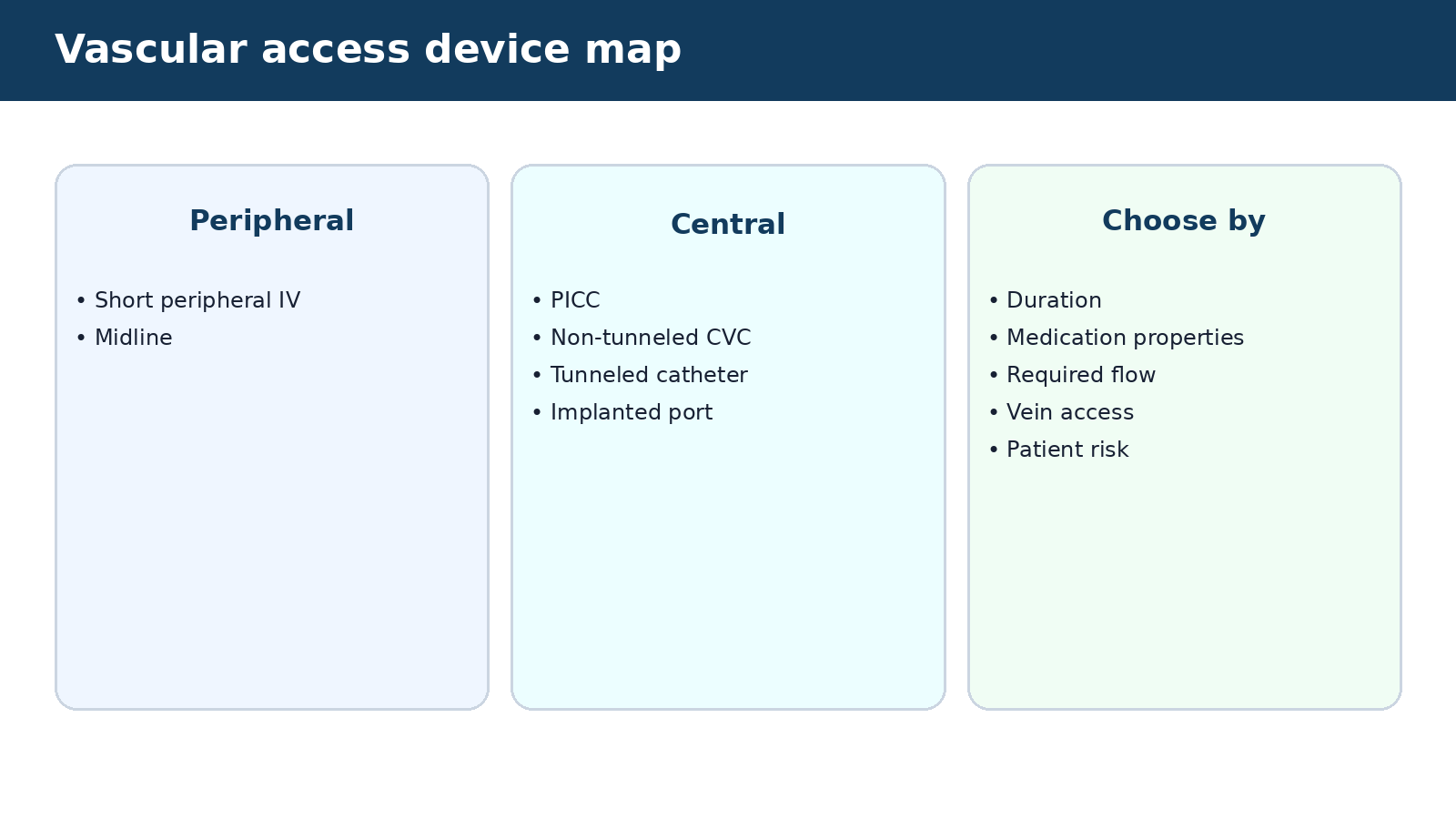
Identify the access: short peripheral IV, midline, PICC, non-tunneled central line, tunneled catheter or implanted port.
-
Trace the tubing from the patient to the source before changing a connection, rate or pump program.
-
Confirm the current order, solution/medication label, concentration, rate, start/stop time and line compatibility.
-
Inspect the site and assess the patient before and during therapy.
Practical check: IV therapy is not “set and forget.” A pump may deliver the programmed rate perfectly even when the rate, channel, line connection or drug concentration is wrong.
Avoid this mistake: Do not assume that a functioning pump proves that the IV is patent, correctly connected or clinically appropriate.
NCLEX-RN® connection: The April 2026 test plan explicitly includes monitoring IV infusions and maintaining sites, parenteral therapies, central venous access devices, high-risk medications and complication recognition.
The IV safety sequence
- Verify patient and current order
- Identify access and assess the site
- Trace tubing between patient and source
- Verify solution, concentration, compatibility and pump settings
- Reassess the patient and site after changes
5. Choosing the vascular access device: match therapy to duration and risk
Direct answer: Access selection depends on expected duration, medication characteristics, required flow, patient veins, infection risk and whether the therapy must reach central circulation. The exact device decision follows institutional standards and vascular-access expertise.
A short peripheral IV is appropriate for many short-duration non-vesicant therapies. Midlines and PICCs may be considered for longer therapy. Central devices are used when central delivery, long duration, poor peripheral access or specific therapies require them.
Practical check: In adults, CDC guidance recommends considering a midline or PICC rather than a short peripheral catheter when IV therapy will likely exceed about six days, but patient and therapy factors still drive selection.
Avoid this mistake: Do not call a midline a central line. Do not assume every central line is appropriate for every infusion without verifying lumen, compatibility and policy.
NCLEX-RN® connection: Questions often test which access can safely support the ordered therapy and which site/device finding needs follow-up.
| Device | Where it ends / general use | Key nursing safety points |
|---|---|---|
| Short peripheral IV | Peripheral vein; short-term fluids and compatible medications | Assess site often; avoid inappropriate irritant/vesicant therapy; remove for complications or when no longer needed; follow the adult/pediatric replacement guidance and local policy. |
| Midline | Peripheral catheter with tip below axilla; intermediate duration | Not a central line; medication suitability depends on product and policy. |
| PICC | Inserted peripherally with tip in central circulation | Central-line precautions; confirm tip status per policy before certain use; monitor thrombosis/infection. |
| Non-tunneled CVC | Central vein; acute care / high-acuity therapies | Strict asepsis and central-line infection prevention; verify lumens/lines. |
| Tunneled catheter | Central device designed for longer-term use | Exit-site and dressing care; long-term infection/device teaching. |
| Implanted port | Reservoir under skin connected to central catheter | Access with appropriate non-coring needle; sterile technique and device-specific care. |
6. Starting and maintaining a peripheral IV safely
Direct answer: Peripheral IV safety depends on hand hygiene, aseptic preparation, appropriate site/device selection, securement, ongoing site assessment and removal when clinically indicated.
-
CDC guidance emphasizes trained personnel, hand hygiene, appropriate skin antisepsis and catheter/site care to reduce catheter-related infection. A nurse also assesses comfort, patency and signs of infiltration, phlebitis or infection.
-
Perform hand hygiene before and after catheter contact and use clean/aseptic technique appropriate to the procedure.
-
Prepare clean skin with an approved antiseptic according to current guideline and institutional protocol; allow antiseptic to dry as required.
-
Use the smallest catheter and safest site that can support the prescribed therapy when clinically appropriate.
-
Secure the catheter so that movement and tension are minimized while the site remains assessable.
-
Assess the insertion site and surrounding tissue for pain, erythema, swelling, leakage, coolness/warmth and changes in infusion performance.
Practical check: A patent line is not simply a line that can be flushed. The nurse considers patient discomfort, site appearance, resistance, blood return when relevant to the device/therapy, and whether the infusion is actually entering the vein.
Avoid this mistake: Do not force a flush against resistance. Do not cover a concerning site so completely that it cannot be evaluated.
NCLEX-RN® connection: A patient who reports burning or swelling at an IV site requires assessment before the nurse simply increases the pump rate or silences an alarm.
7. IV fluids: understand the category before the brand name
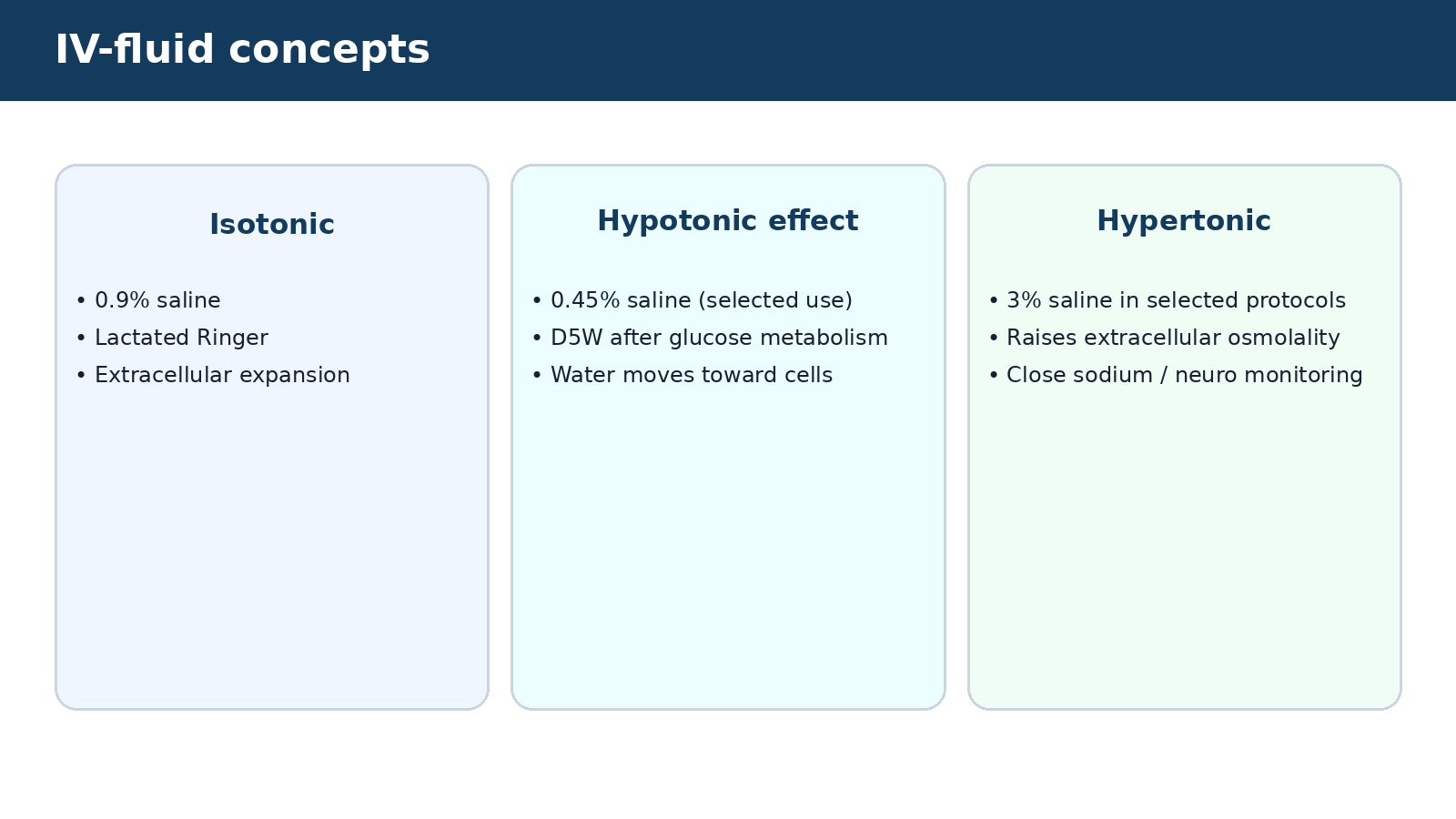
Direct answer: Common IV crystalloids can be understood as isotonic, hypotonic or hypertonic in physiologic effect. The prescribing goal may be volume expansion, maintenance water, electrolyte delivery or controlled osmolality correction.
Nurses should know what a fluid is expected to do and what complications to monitor. The same solution can be appropriate in one patient and harmful in another.
Practical check: Before hanging a new bag, compare the solution and rate with the active order, trace the line, verify the pump channel and assess whether the patient’s fluid status has changed.
Avoid this mistake: Do not treat “maintenance,” “bolus” and “keep vein open” as interchangeable concepts. Rates and indications are patient specific.
NCLEX-RN® connection: Fluid questions often pair a prescribed solution with heart/kidney failure, sodium problems, shock or neurologic disease and ask what needs closer monitoring.
| Fluid concept | Examples | Nursing focus |
|---|---|---|
| Isotonic crystalloid | 0.9% sodium chloride; lactated Ringer solution | Monitor hemodynamic response, urine output and overload risk; large chloride loads can affect acid-base balance. |
| Hypotonic effect | 0.45% sodium chloride in selected indications | Monitor sodium and neurologic status; avoid inappropriate use in patients at risk of cerebral edema. |
| Hypertonic saline | 3% sodium chloride for selected severe symptomatic hyponatremia protocols | Requires controlled administration and frequent sodium/neurologic monitoring. |
| Dextrose water | D5W | Provides free water after glucose metabolism; not a universal resuscitation fluid; monitor glucose in relevant patients. |
8. Flow rates and infusion-time calculations
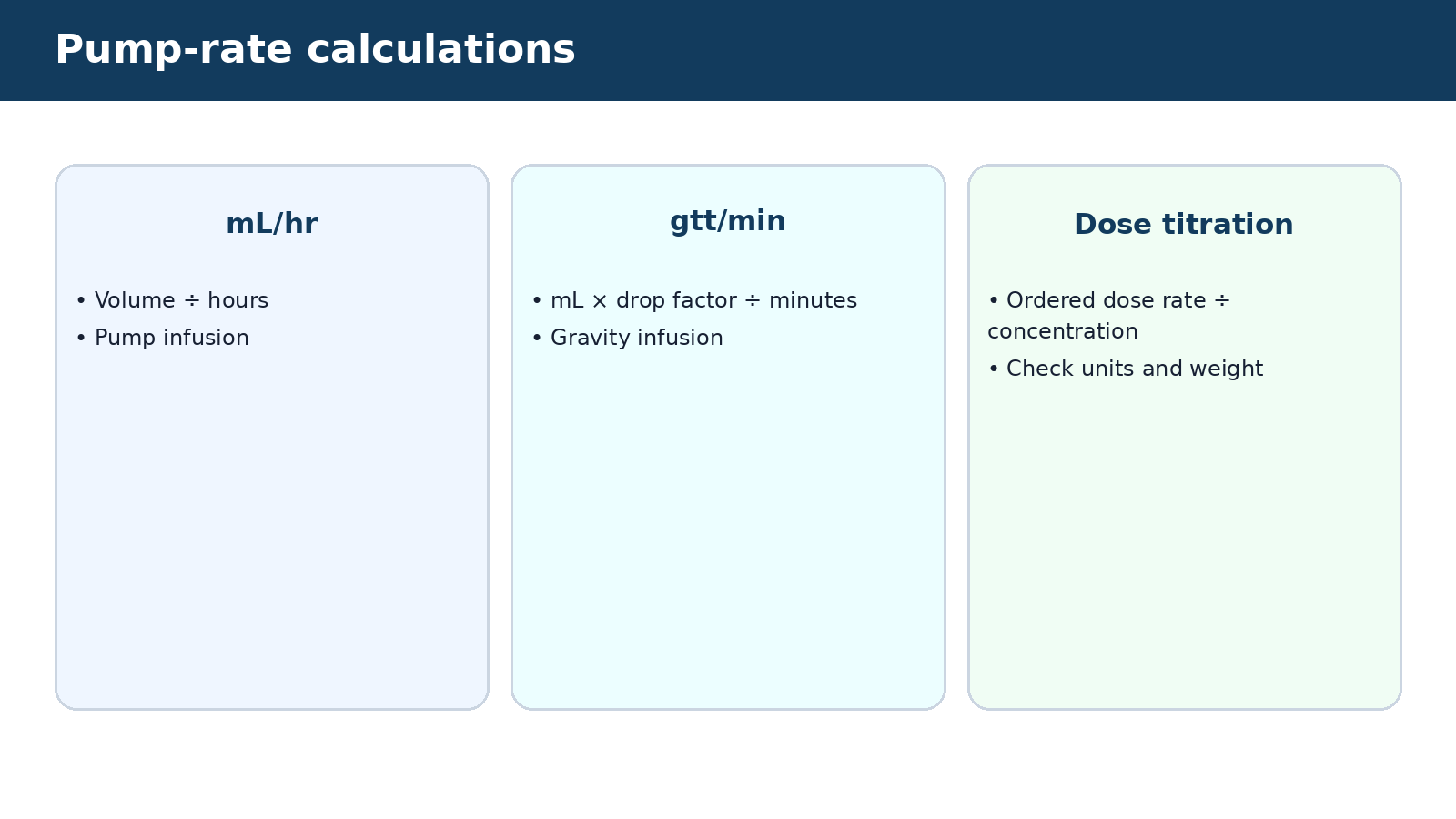
Direct answer: For pump infusions, rate is commonly expressed in mL/hour. For gravity infusions, drops/minute depend on volume, time and the tubing drop factor. Always calculate with consistent units and round only as directed.
The arithmetic is straightforward, but safe IV math also checks whether the answer is clinically plausible and whether the pump or tubing matches the order.
Practical check: After programming, compare the displayed rate and remaining volume with what you expect. A correct calculation entered on the wrong pump channel is still an error.
Avoid this mistake: Do not confuse mL/hr with gtt/min, minutes with hours or micrograms with milligrams. Do not round early in a multistep calculation.
NCLEX-RN® connection: The test plan includes calculations needed for medication administration and titration based on ordered parameters.
| Calculation | Formula | Safety check |
|---|---|---|
| Pump rate | mL ÷ hours = mL/hr | Confirm total volume, intended duration and pump channel. |
| Infusion time | mL ÷ mL/hr = hours | Convert fractional hours to minutes when needed. |
| Gravity rate | mL × drop factor (gtt/mL) ÷ minutes = gtt/min | Use the drop factor printed on the tubing package; do not assume 10, 15, 20 or 60. |
| Dose-based infusion | Ordered dose rate ÷ concentration | Use dimensional analysis; verify weight and units for weight-based titrations. |
9. Infusion pumps and smart-pump drug libraries
Direct answer: An infusion pump delivers fluid at a programmed rate. Smart pumps add drug libraries and dose-error reduction limits, but they remain dependent on correct patient, drug, concentration, channel and line selection.
-
FDA notes that pump failures or misuse can have serious consequences because pumps are often used for high-risk medications. Safety begins with inspection and correct setup, then continues with alarm interpretation and patient assessment.
-
Select the correct pump profile/care area and drug-library entry when required.
-
Verify drug name, concentration, dose/rate units and patient weight for weight-based infusions.
-
Use standardized concentrations where policy requires them.
-
Trace the line from the bag/syringe through the pump channel to the patient.
-
Investigate alarms rather than repeatedly silencing them without identifying the cause.
-
If a pump behaves unexpectedly or appears damaged, stop using it safely, replace it as needed and report the device issue according to policy.
Practical check: A pump occlusion alarm can mean a closed clamp, kink, infiltrated IV, catheter obstruction or patient-position problem. The nurse assesses the line and patient rather than simply increasing pressure limits.
Avoid this mistake: Do not bypass dose-error reduction alerts to make the screen accept a rate that has not been clinically verified.
NCLEX-RN® connection: When technology conflicts with clinical findings, the safest answer is to pause, assess and verify rather than continue because “the pump says it is fine.”
Occlusion alarm: do not just silence it
- Assess the patient immediately
- Trace the line and check clamps or kinks
- Inspect the site and catheter
- Never force a flush against unexplained resistance
- Restore safe therapy or escalate promptly, especially for a critical infusion
10. Primary, secondary and concurrent infusions: trace the line
Direct answer: Before connecting or changing any infusion, trace the tubing from source to patient and identify every connection, clamp, pump channel and lumen. This simple habit prevents wrong-line and wrong-rate errors.
-
Multiple lines create complexity: a primary maintenance fluid, an intermittent secondary antibiotic, a vasoactive infusion in another lumen and a flush line can look similar. Labeling and line tracing reduce confusion.
-
Confirm whether the secondary infusion setup will actually deliver the intended medication rather than backfilling or running at the wrong rate.
-
Verify which lumen is dedicated to a medication that should not share tubing.
-
Check compatibility before using a Y-site or shared lumen.
-
Label tubing near the patient and near pump/source as required by policy.
-
During handoff, identify high-alert infusions, concentrations, current rates, recent changes and which line/lumen they use.
Practical check: Line tracing should occur before boluses, titration, pump changes, transfers and reconnections—not only at the start of the shift.
Avoid this mistake: Do not assume a secondary bag hanging higher means it is infusing correctly; verify the pump setup, clamps, back-check mechanism and line.
NCLEX-RN® connection: Wrong-route and wrong-line prevention is a common safety concept even when the question does not use the phrase “line tracing.”
Trace the line before you change the line
- Start at the patient and identify the catheter or lumen
- Trace tubing, clamps, filters and shared connections
- Follow the correct pump channel
- Confirm the source bag or syringe matches the order
11. IV medication compatibility and dilution
Direct answer: Compatibility determines whether two IV products can safely contact each other. Dilution determines concentration for safe administration. Both are drug specific and should be verified in an approved current reference.
-
Physical incompatibility may produce precipitation, cloudiness, color change or particles, but some chemical incompatibilities are not visible. Nurses should not rely on visual appearance alone.
-
Check compatibility for medications sharing a Y-site, lumen or carrier fluid.
-
Verify the required diluent, final concentration and stability for medications prepared on the unit.
-
Use pharmacy-prepared or standardized premixed products when available and required.
-
Flush between incompatible medications according to line/device policy and drug guidance.
-
If compatibility cannot be verified, use a separate lumen or obtain pharmacy guidance rather than guessing.
Practical check: Compatibility references should match the exact drugs, concentrations, solutions and route. “These two antibiotics are usually okay together” is not enough.
Avoid this mistake: Never mix IV medications in the same syringe or bag unless a reliable source and policy specifically support the mixture.
NCLEX-RN® connection: A question may present two simultaneous infusions and ask which action prevents precipitation or loss of drug effect.
12. Infiltration and extravasation: similar appearance, different risk
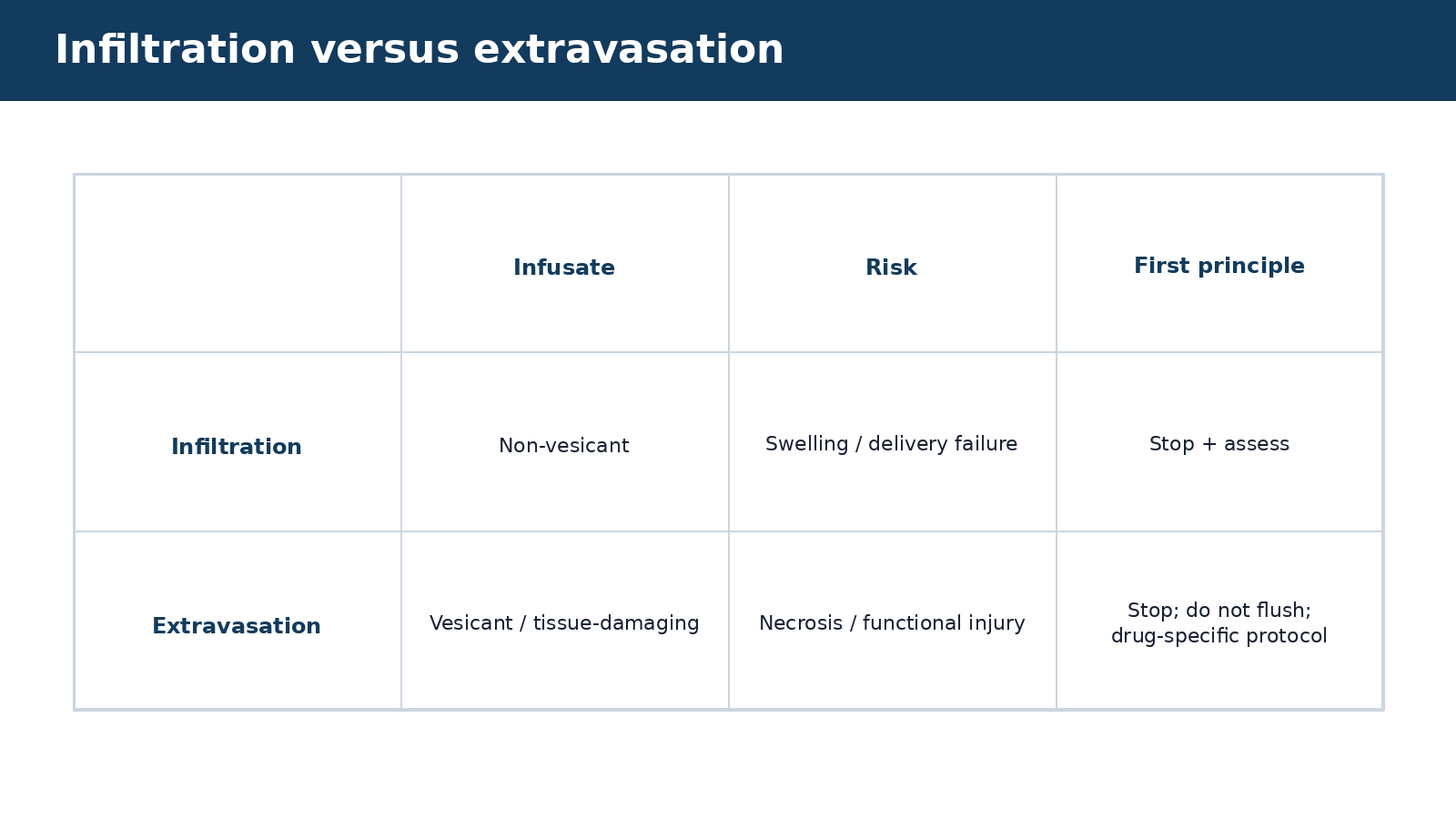
Direct answer: Infiltration is leakage of a non-vesicant IV solution into surrounding tissue. Extravasation is leakage of a vesicant or tissue-damaging medication. Both require prompt recognition; extravasation can cause severe tissue injury.
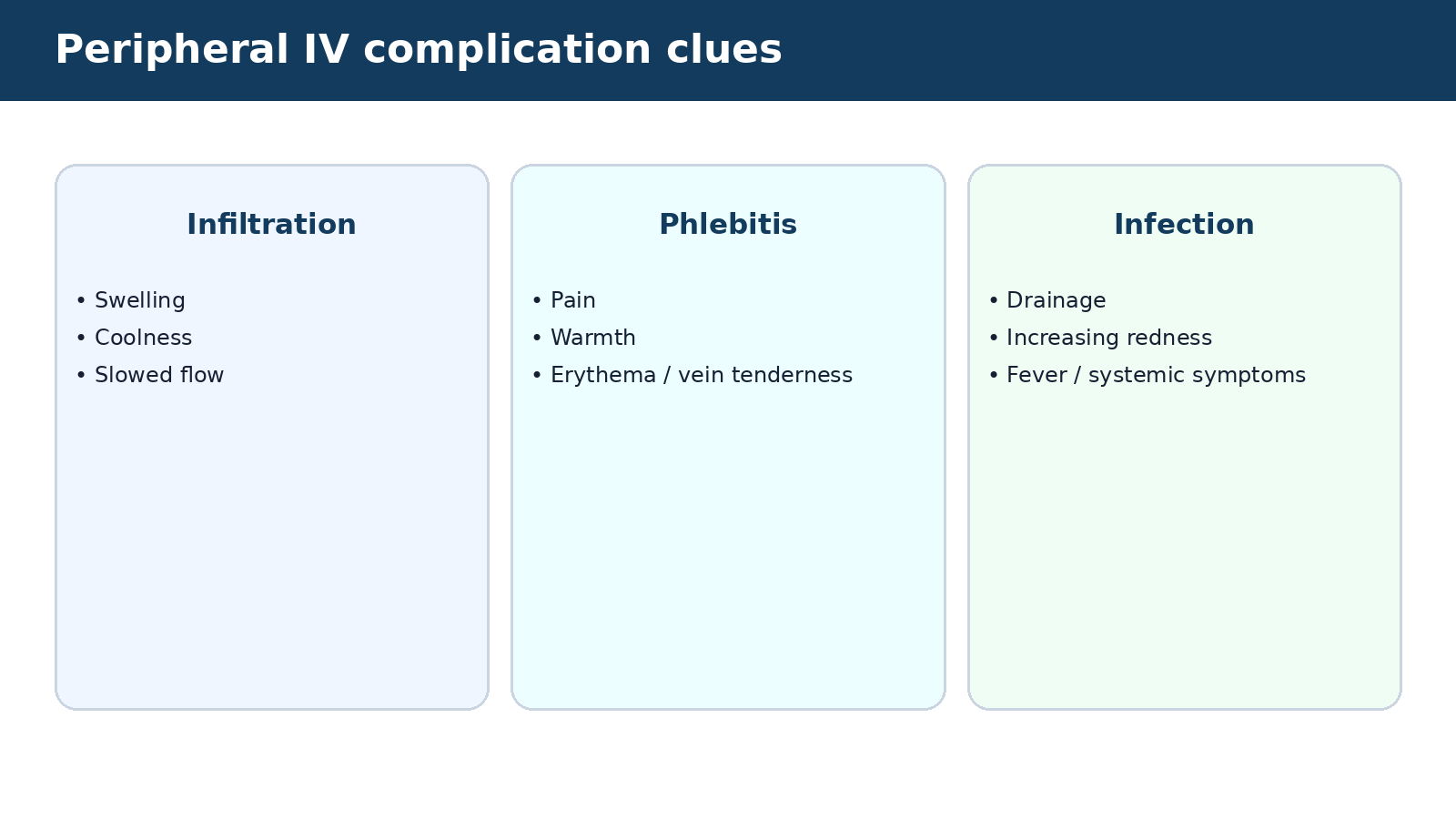
Typical local findings can include swelling, discomfort, coolness or altered skin appearance, slowed/stopped infusion and leakage. Extravasation may also cause burning, blistering or progressive tissue damage depending on the drug.
Practical check: For suspected extravasation, stop the infusion but often leave the catheter in place initially because it may be used to aspirate residual drug or administer an antidote according to the medication-specific protocol. Notify promptly and document the site, symptoms, estimated amount and actions.
Avoid this mistake: Do not automatically remove the catheter first or massage the area. Compress type and antidote depend on the drug.
NCLEX-RN® connection: The high-yield distinction is non-vesicant infiltration versus vesicant extravasation and the need to stop the infusion immediately.
| Feature | Infiltration | Extravasation |
|---|---|---|
| Infusate | Non-vesicant fluid/medication | Vesicant or tissue-damaging agent |
| Main risk | Swelling, discomfort, impaired delivery | Blistering, necrosis, functional injury depending on drug |
| Immediate principle | Stop infusion and assess; manage per policy | Stop infusion; do not flush; preserve access initially when aspiration/antidote may be needed; follow drug-specific protocol |
| Compress/elevation | Depends on fluid and policy | Drug-specific warm/cold compress instructions; do not generalize |
13. Phlebitis, thrombosis and occlusion
Direct answer: Phlebitis is vein inflammation; thrombosis is clot formation; occlusion means the catheter or lumen cannot be used normally. Pain, erythema, warmth, palpable cord, swelling or resistance require focused assessment.
-
Mechanical irritation, chemical irritation and infection can contribute to phlebitis. Central devices can also develop fibrin-related occlusion or thrombosis. Management differs, so the nurse should avoid forceful flushing and obtain appropriate evaluation.
-
Stop using a peripheral catheter with significant phlebitis and remove it according to policy.
-
Assess for extension of redness, drainage, fever or other infection signs.
-
With central-device resistance, check clamps, tubing position and mechanical causes before assuming thrombotic occlusion.
-
Never use excessive pressure to force a flush through an occluded catheter because rupture or embolization can occur.
-
Unilateral limb/neck swelling, pain or collateral veins around a central device can suggest thrombosis and requires prompt evaluation.
Practical check: Document the site/device findings and report patterns that suggest device-related complications.
Avoid this mistake: Do not “fix” every sluggish line by using a smaller syringe and pushing harder; smaller syringes can generate higher pressure.
NCLEX-RN® connection: Questions may test which IV site should be discontinued and which finding suggests a central-line complication.
14. Catheter-related infection and CLABSI prevention
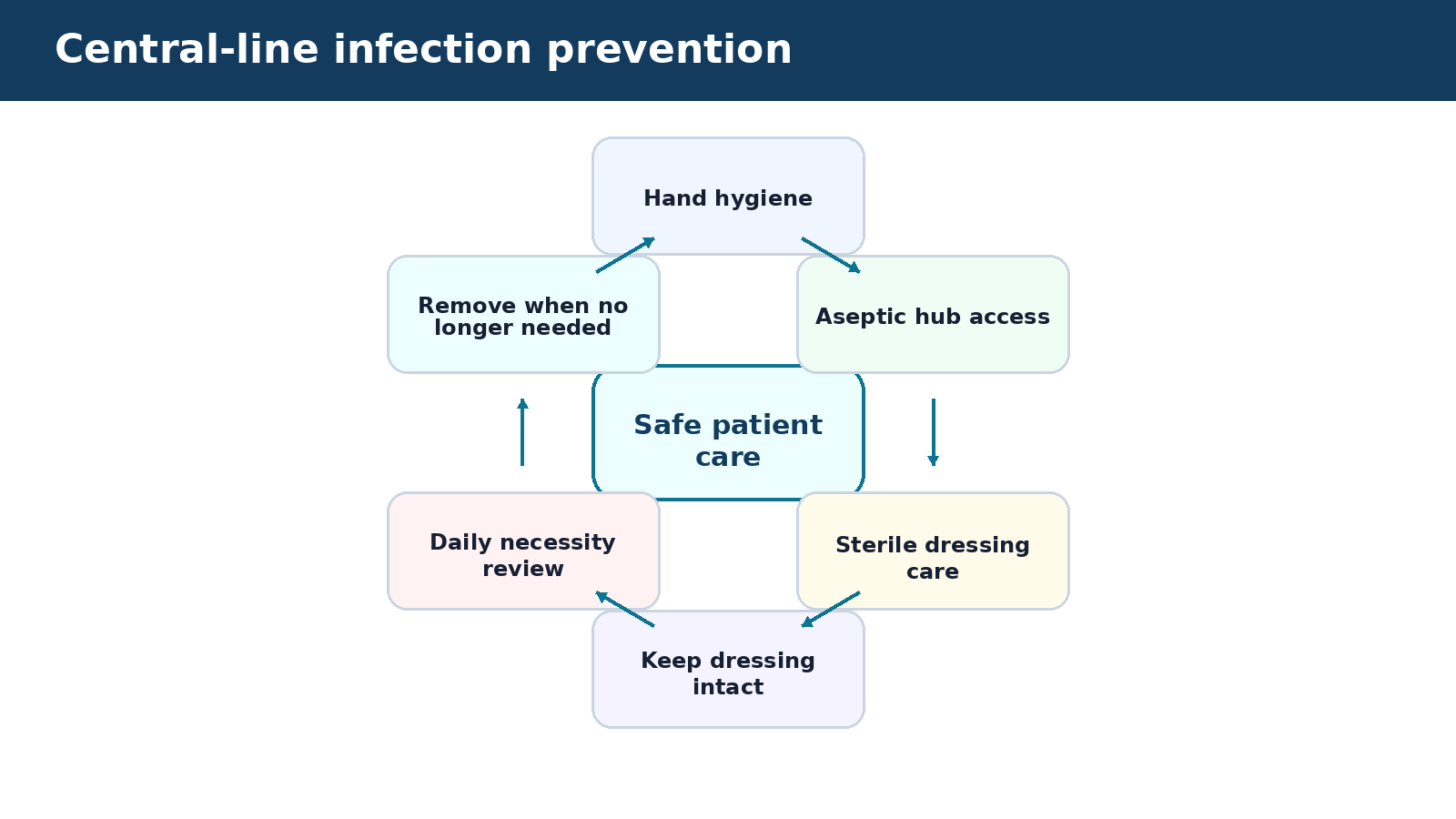
Direct answer: Preventing intravascular catheter infection requires hand hygiene, aseptic access, appropriate skin antisepsis, sterile technique for central-line procedures, clean dry dressings, hub disinfection and removal of unnecessary catheters.
CDC recommendations emphasize staff education and trained personnel, hand hygiene, maximal sterile barrier precautions for central venous catheter insertion, chlorhexidine-based skin antisepsis for many central-line procedures unless contraindicated, and prompt removal when the catheter is no longer essential.
-
Disinfect catheter hubs/connectors before access using the approved product and contact time.
-
Keep dressings clean, dry, intact and dated/changed according to device type and policy.
-
Assess daily whether central access is still needed.
-
Use sterile technique for central-line dressing changes and other procedures that require it.
-
Report fever/chills during infusion and local erythema, drainage, tenderness or tunnel/port changes promptly.
Practical check: A central line is not automatically the source of every fever. Obtain cultures and follow sepsis/device evaluation protocols rather than removing or treating based on assumption alone.
Avoid this mistake: Do not touch disinfected connection surfaces after cleaning. Catheter, dressing and administration-set replacement intervals are different; use the device-specific guidance and institutional policy.
NCLEX-RN® connection: Safety and Infection Prevention and Control can be tested inside an IV-therapy scenario, especially hub disinfection, dressing integrity and line necessity.
15. Air in IV tubing and air embolism risk
Direct answer: Small air bubbles in peripheral tubing are usually handled by standard priming and pump air-detection systems, but significant venous air entry—especially through central access—can obstruct right-heart/pulmonary blood flow and become an emergency.
Prevention is easier than treatment: prime tubing, secure connections, use clamps correctly and protect central lines from open-to-air situations. The exact amount of air that causes harm varies with patient and access, so there is no safe “universal volume” to memorize.
-
Prime IV tubing completely before connecting to the patient.
-
Clamp central lines when caps are removed or connections are open as required by device design and policy.
-
Inspect connections after patient movement or transfer.
-
If significant air embolism is suspected with sudden dyspnea, chest symptoms, hypotension or neurologic change, stop further air entry, call for emergency help and follow local positioning/oxygen/resuscitation protocol.
-
Do not delay emergency response while trying to calculate how much air may have entered.
Practical check: Central venous devices carry greater air-entry risk because the catheter terminates centrally and pressure changes can draw air inward when the system is open.
Avoid this mistake: Do not teach a single body position as a universal first action without following the current local emergency protocol; prevention and rapid support are the priorities.
NCLEX-RN® connection: Sudden respiratory/hemodynamic change after central-line manipulation should trigger emergency assessment and prevention of further air entry.
16. Fluid overload and infusion-rate errors
Direct answer: Too much IV fluid or an excessively fast rate can produce pulmonary edema, hypertension or other complications, especially in patients with heart or kidney dysfunction, infants and older adults.
-
Rate errors can result from wrong pump programming, wrong concentration, wrong channel selection, open gravity clamps or a change in the patient’s ability to tolerate fluid.
-
Compare the pump rate with the order at initiation, bag changes, shift handoff and after interruptions.
-
Monitor lung sounds, oxygen requirement, edema, weight, blood pressure and urine output in patients at risk of overload.
-
Use pediatric and neonatal safeguards carefully because small volume errors can be clinically large.
-
When an infusion finishes much earlier than expected, treat it as a potential rate error and assess the patient rather than simply replacing the bag.
-
When an infusion is behind schedule, do not “catch up” by increasing the rate unless a new order/protocol supports it.
Practical check: If new dyspnea or crackles develop, stop and assess the infusion and patient and escalate; breathing takes priority over completing the ordered volume.
Avoid this mistake: Never double the rate to make up lost time unless specifically ordered.
NCLEX-RN® connection: Questions often test whether the nurse recognizes that a pump or timing discrepancy requires assessment before adjusting the rate.
17. IV medication titration: ordered parameters, one variable at a time
Direct answer: Titration means adjusting an infusion within a prescribed protocol or order based on a measurable patient response. The nurse follows the authorized dose range, increment, interval and target rather than inventing a personal titration method.
-
Common titrated therapies include vasoactive drugs, insulin infusions, heparin and some sedatives, although specific protocols differ. Safe titration requires clear units, concentration, patient weight when used, target parameter and reassessment timing.
-
Verify that the order/protocol defines the starting dose, adjustment increment, frequency, target and maximum/minimum range.
-
Confirm the concentration and pump units before every rate change.
-
Reassess the target parameter at the required interval and after each change.
-
Document the dose/rate and patient response according to policy.
-
During handoff, independently verify high-alert titrated infusions when required.
Practical check: Titration is a clinical-judgment task: the nurse interprets the patient response within an authorized plan.
Avoid this mistake: Do not titrate outside ordered parameters because the patient “looks like they need more.” Escalate for a new order when the protocol no longer fits.
NCLEX-RN® connection: The 2026 test plan specifically includes titrating medication based on assessment and ordered parameters.
18. Blood products through IV access: identity and reaction safety
Direct answer: Blood-product administration requires strict identity verification, appropriate venous access, baseline assessment, correct tubing/compatibility and close observation for reactions according to current transfusion policy.
-
Because transfusion errors can be catastrophic, patient-product identification is a critical nursing responsibility. Exact bedside verification, vital-sign frequency, tubing and infusion time requirements follow blood-bank and institutional policy.
-
Verify the active order, consent status, patient identifiers, blood product, compatibility/crossmatch and product information using the required process.
-
Use the approved tubing/filter and compatible fluid specified by policy.
-
Remain alert for fever/chills, dyspnea, back/chest pain, rash, hypotension, anxiety or other unexpected symptoms.
-
If a transfusion reaction is suspected, stop the blood product, maintain venous access with the appropriate compatible solution/tubing per protocol, assess the patient and notify immediately.
-
Send required specimens/product materials and document the reaction process according to blood-bank protocol.
Practical check: The first response to a suspected reaction is patient safety and stopping exposure to the suspect blood product—not completing the transfusion paperwork.
Avoid this mistake: Do not restart the same blood product because symptoms improved unless the blood-bank/provider protocol explicitly determines it is safe.
NCLEX-RN® connection: The test plan specifically includes blood-product administration and evaluation of the client response.
19. Parenteral nutrition and central-line considerations
Direct answer: Parenteral nutrition delivers concentrated nutrients intravenously and can create risks from hyperglycemia, infection, electrolyte shifts and abrupt changes in delivery. Central formulations often require dedicated central access.
-
The exact formulation, infusion schedule and monitoring are patient specific. Nursing responsibilities include verifying the order/bag, maintaining asepsis, monitoring glucose/electrolytes and protecting the line from incompatible medications.
-
Compare the PN label with the order and patient identity before connection.
-
Use the ordered filter/tubing and dedicated lumen when required.
-
Monitor glucose and metabolic/electrolyte results at the prescribed frequency, especially during initiation or changes.
-
Do not abruptly stop a high-dextrose infusion without a plan when interruption could cause hypoglycemia; follow the institution’s interruption protocol.
-
Maintain central-line infection-prevention practices rigorously.
Practical check: Refeeding-risk patients can develop significant phosphate, potassium and magnesium shifts; report concerning laboratory changes promptly.
Avoid this mistake: Do not piggyback routine medications into a PN line unless compatibility and policy explicitly allow it.
NCLEX-RN® connection: Parenteral nutrition appears within Pharmacological and Parenteral Therapies and may be combined with glucose, electrolytes or central-line safety.
20. Central-line emergencies: dislodgement, breakage and loss of integrity
Direct answer: A damaged, disconnected or displaced central line can cause bleeding, infection, air entry or loss of vascular access. Secure the system, prevent further harm and obtain prompt help according to device-specific policy.
-
Different devices require different emergency techniques, so nurses should know the local procedure for clamping, dressing and escalating central-line problems.
-
If a catheter or connector breaks, clamp the line between the patient and damaged area if safe/appropriate for the device and follow the emergency protocol.
-
For accidental catheter removal/dislodgement, control bleeding and apply the specified occlusive dressing/positioning per policy.
-
Do not push a partially dislodged catheter back into the vessel.
-
If the external catheter length changes, stop using the line and obtain evaluation for tip position as required.
-
Inspect implanted ports and tunneled devices for skin breakdown, drainage, swelling or loss of integrity.
Practical check: Preserve the patient’s hemodynamic and respiratory stability first, then protect the device and obtain the necessary vascular-access/medical evaluation.
Avoid this mistake: Do not continue infusing through a line with uncertain tip position or visible damage.
NCLEX-RN® connection: Device integrity problems test priority, infection/air prevention and the need to stop using an unsafe access.
21. IV documentation and handoff
Direct answer: IV documentation should tell the next clinician what access exists, what is infusing, at what rate/concentration, the site/device condition and what complications or interventions occurred.
-
Clear documentation prevents duplicate lines, missed infusions and unsafe titration. Handoff should highlight therapies that can cause rapid harm if interrupted or misprogrammed.
-
Document insertion/site/device information required by policy.
-
Record solution/medication, rate, pump channel and clinically relevant changes.
-
Document site assessments, dressing changes and line-access procedures as required.
-
For infiltration/extravasation or reaction, document objective findings, treatment, notification and patient response.
-
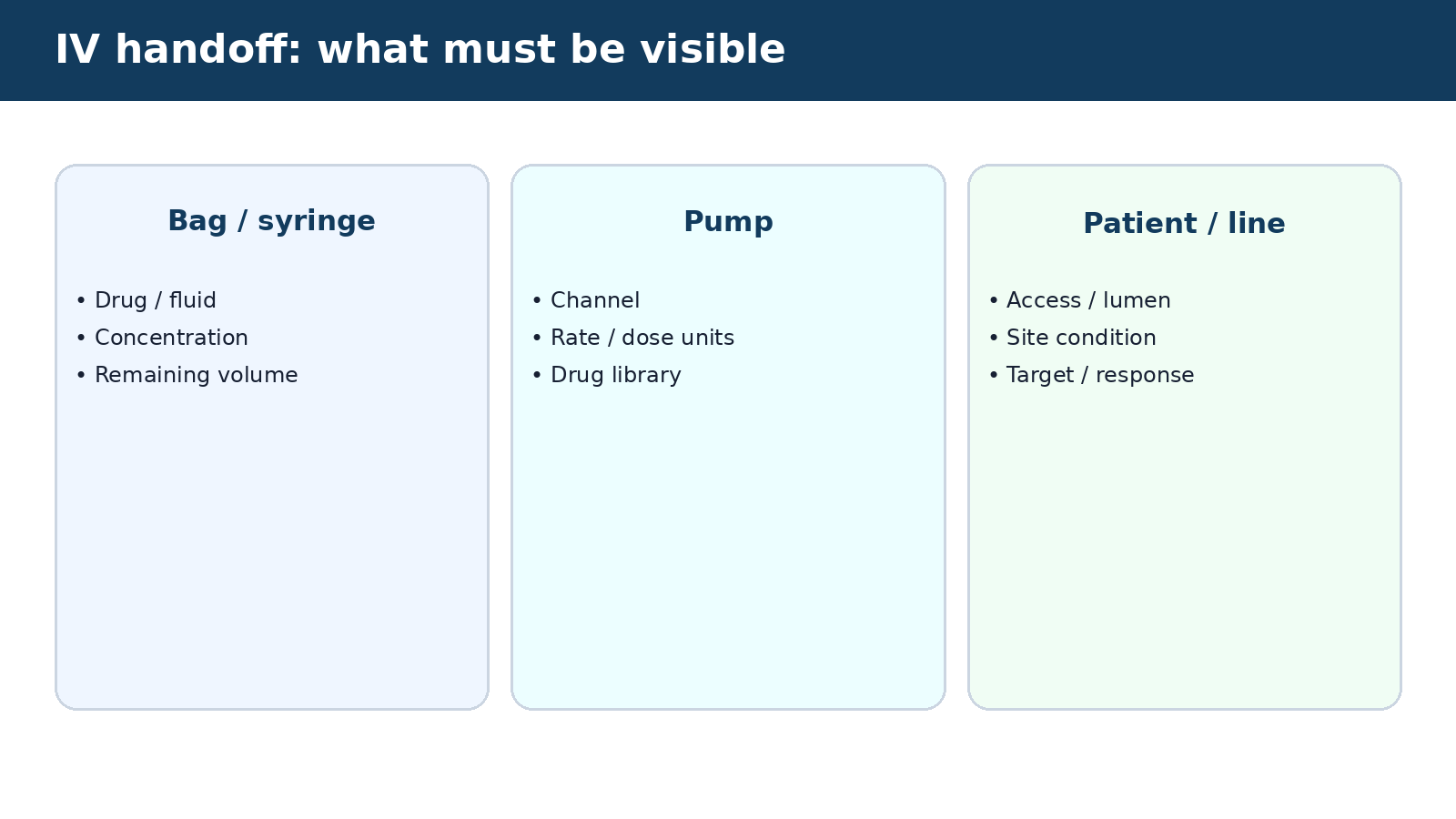
During handoff, verify high-alert infusions, dose/rate units, concentration, remaining volume and target parameters.
Practical check: The safest handoff is both verbal and visual for high-risk lines: look at the pump, bag and line rather than relying only on the report.
Avoid this mistake: Do not use vague charting such as “IV good.” Describe the site/device using objective findings.
NCLEX-RN® connection: Communication and Documentation is integrated throughout the 2026 test plan and can be embedded in any IV scenario.
22. A bedside IV safety checklist
Direct answer: Use a repeatable sequence: identify the patient, verify the order, identify the access, inspect the site, trace the line, verify solution/concentration/rate, check compatibility, assess the patient and reassess after changes.
-
This checklist works for simple maintenance fluid and can be expanded for high-alert infusions.
-
Patient: two identifiers, allergies and relevant condition.
-
Order: exact fluid/drug, concentration, route, rate, parameters and duration.
-
Access: device type, lumen, indication, patency and site condition.
-
Line: trace from source to patient; label and clamp positions; tubing/filter.
-
Pump: correct channel, profile, units, rate, volume and alarm limits.
-
Compatibility: other fluids/medications in shared tubing.
-
Patient response: breathing, circulation, neurologic state, pain, fluid status and therapy-specific monitoring.
-
Documentation/handoff: record changes and independently verify high-risk therapy when required.
Practical check: Repeat the safety check after transfer, procedure, pump change, new bag, new medication, line reconnection or unexpected clinical change.
Avoid this mistake: Do not treat the start-of-shift check as the only time the line needs verification.
NCLEX-RN® connection: When the question asks what the nurse should do before changing an IV medication or rate, “trace and verify” is often central to the safe response.
23. Clinical judgment cases
How to use the cases: Read the scenario once for the big picture. Then identify the most important cues, the priority concern, the safest immediate nursing actions, and the findings that would show whether the plan worked. These cases are original educational examples, not official examination items.
Case 1: Swollen painful peripheral IV during antibiotic infusion
An intermittent IV antibiotic is infusing through a peripheral catheter. The patient reports burning, and the site is swollen and cool with slowed flow.
| Clinical-judgment step | Reasoning |
|---|---|
| Recognize cues | Pain, swelling, coolness and altered flow indicate infiltration or extravasation depending on the medication. |
| Analyze cues | The medication may be leaving the vein. Tissue-injury risk depends on whether the drug is a vesicant/irritant. |
| Prioritize hypotheses | Stop tissue exposure and determine the drug-specific response. |
| Generate solutions | Stop the infusion, assess the site, identify whether the medication is vesicant, follow infiltration/extravasation protocol and obtain alternate access as needed. |
| Take action | Do not flush the line or increase pump pressure. For suspected extravasation, preserve the catheter initially if aspiration/antidote may be required. |
| Evaluate outcomes | Monitor swelling, pain, skin changes and neurovascular status; document and follow up per protocol. |
Case 2: Occlusion alarm on a vasoactive infusion
A patient is receiving a vasoactive drug through a central line. The pump alarms “occlusion,” and the blood pressure begins to fall.
| Clinical-judgment step | Reasoning |
|---|---|
| Recognize cues | High-alert infusion interruption plus hemodynamic deterioration. |
| Analyze cues | The line may be kinked, clamped, obstructed or disconnected; drug delivery may have stopped. |
| Prioritize hypotheses | Restore safe therapy and support circulation urgently. |
| Generate solutions | Assess the patient, trace the entire line/channel, check clamps and connections, obtain help, use an alternate appropriate lumen/access if needed, and follow the titration/emergency plan. |
| Take action | Do not silence the alarm and walk away or force flush against resistance. |
| Evaluate outcomes | Confirm blood pressure improves, correct dose is infusing and the cause of the occlusion is resolved. |
Case 3: Possible central-line infection
A patient with a PICC develops fever and chills during an infusion. The insertion site has mild tenderness but no obvious drainage.
| Clinical-judgment step | Reasoning |
|---|---|
| Recognize cues | Systemic infection symptoms in a patient with central access. |
| Analyze cues | The line may be a source, but other infection sources are possible. |
| Prioritize hypotheses | Assess for sepsis and obtain timely evaluation/cultures according to protocol. |
| Generate solutions | Stop or manage the infusion as clinically indicated, assess vitals, notify, obtain ordered cultures and follow sepsis/line protocol without assuming the diagnosis. |
| Take action | Escalate systemic symptoms promptly. |
| Evaluate outcomes | Trend hemodynamics, cultures, local site findings and response to treatment. |
Case 4: IV fluid running much faster than ordered
A patient with kidney failure has a 1,000 mL bag ordered over 10 hours. Two hours after starting, only 200 mL remains. The patient is now short of breath.
| Clinical-judgment step | Reasoning |
|---|---|
| Recognize cues | Major rate discrepancy plus respiratory symptoms in a fluid-sensitive patient. |
| Analyze cues | An infusion-rate error may have caused acute fluid overload. |
| Prioritize hypotheses | Breathing and prevention of further fluid delivery. |
| Generate solutions | Stop/pause the infusion safely, assess oxygenation/lungs/hemodynamics, call for urgent help and follow treatment orders. |
| Take action | Do not simply reprogram the pump and continue. |
| Evaluate outcomes | Monitor respiratory status, weight/urine output and clinical response; report the infusion event per policy. |
Case 5: Extravasation of a vesicant medication
During a vesicant infusion, the patient reports sudden burning and tightness near the IV site. There is early swelling.
| Clinical-judgment step | Reasoning |
|---|---|
| Recognize cues | Symptoms during vesicant infusion are high-risk for extravasation. |
| Analyze cues | Continued infusion can cause progressive tissue injury. |
| Prioritize hypotheses | Stop exposure and initiate the drug-specific extravasation protocol. |
| Generate solutions | Stop the infusion, leave access in place initially, aspirate if protocol directs, notify, apply the correct drug-specific antidote/compress/elevation measures and obtain specialist input. |
| Take action | Do not flush the line or massage the area. |
| Evaluate outcomes | Serially assess tissue, pain, perfusion and extent of injury and document measurements/photos if policy permits. |
Case 6: Suspected transfusion reaction
Ten minutes after a blood transfusion begins, the patient develops chills, dyspnea and back discomfort.
| Clinical-judgment step | Reasoning |
|---|---|
| Recognize cues | New systemic symptoms shortly after blood-product exposure. |
| Analyze cues | A transfusion reaction must be treated as possible until evaluated. |
| Prioritize hypotheses | Stop exposure and support airway/breathing/circulation. |
| Generate solutions | Stop the transfusion, maintain IV access with the compatible solution/tubing per protocol, assess vitals, notify provider and blood bank and follow specimen/product-return instructions. |
| Take action | Do not restart the same unit without formal evaluation and authorization. |
| Evaluate outcomes | Monitor hemodynamics, respiratory status, urine output and ordered laboratory results. |
Go deeper: Apply the same approach to Next Generation NCLEX® case studies.
24. Practice questions with answers and rationales
Important: These are original RN Clarity practice questions. They are not copied from, endorsed by or affiliated with NCSBN® or the NCLEX® examination.
Question 1: What is the safest action before changing the rate of an IV infusion?
-
A. Assume the pump channel is correct.
-
B. Trace the tubing from the patient to the source and verify the order/channel.
-
C. Ask the patient which bag is theirs.
-
D. Change the rate first and check later.
Answer and rationale: B. Line tracing and order/channel verification prevent wrong-line and wrong-rate errors.
Question 2: A peripheral IV site is swollen, cool and painful. What should the nurse do first?
-
A. Increase the pump pressure.
-
B. Stop the infusion and assess the site.
-
C. Cover the site with a larger dressing.
-
D. Flush forcefully.
Answer and rationale: B. These findings suggest infiltration/extravasation. Continuing or force-flushing can worsen tissue exposure.
Question 3: Which statement about extravasation is correct?
-
A. It involves only non-vesicant fluids.
-
B. The catheter should always be removed before any other action.
-
C. The infusion should be stopped, and the access may be left in place initially for aspiration/antidote according to protocol.
-
D. The site should always be massaged.
Answer and rationale: C. Drug-specific extravasation protocols commonly use the existing catheter for aspiration or antidote. Flushing and massage can worsen injury.
Question 4: What determines the drop rate for a gravity infusion?
-
A. Only the IV bag size
-
B. Volume, time and the tubing drop factor
-
C. The patient’s room number
-
D. The pump drug library
Answer and rationale: B. Gravity gtt/min uses total mL × tubing drop factor divided by total minutes.
Question 5: A pump alarms “occlusion.” What is the best nursing response?
-
A. Silence it and leave.
-
B. Assess the patient and trace the line for clamps, kinks, site problems or catheter obstruction.
-
C. Increase the pressure limit automatically.
-
D. Force flush the catheter.
Answer and rationale: B. An occlusion alarm is a clinical cue. Find the cause and protect the patient rather than bypassing the alarm.
Question 6: Which access device is a central line?
-
A. Short peripheral IV
-
B. Midline catheter
-
C. PICC with tip in central circulation
-
D. Butterfly needle
Answer and rationale: C. A PICC terminates centrally. A midline remains peripheral and should not be treated as a central line.
Question 7: Which action helps prevent catheter-related infection?
-
A. Accessing the hub without disinfection if gloves are worn
-
B. Hand hygiene and appropriate hub disinfection before access
-
C. Leaving an unnecessary central line in place for convenience
-
D. Touching the cleaned connector before connection
Answer and rationale: B. Hand hygiene and aseptic hub disinfection are core infection-prevention practices.
Question 8: A patient receiving IV fluids develops new crackles and dyspnea. What is the priority?
-
A. Increase the rate to finish on time.
-
B. Assess respiratory status and possible fluid overload and escalate.
-
C. Document intake only.
-
D. Wait until morning rounds.
Answer and rationale: B. Acute breathing changes may indicate pulmonary congestion and require prompt assessment and intervention.
Question 9: Why are smart-pump drug libraries useful?
-
A. They eliminate the need to verify concentration.
-
B. They can provide standardized drug entries and dose-error reduction limits.
-
C. They automatically know which patient is connected.
-
D. They prevent every pump error.
Answer and rationale: B. Drug libraries add a safety layer but depend on correct programming, concentration, line and patient assessment.
Question 10: What should a nurse do when IV compatibility cannot be verified?
-
A. Assume the drugs are compatible if both are clear.
-
B. Use a separate appropriate lumen or obtain pharmacy/reference guidance.
-
C. Mix them in one syringe to test.
-
D. Increase the carrier fluid.
Answer and rationale: B. Compatibility may not be visible. Use a reliable reference or separate route/lumen.
Question 11: Which statement about IV potassium is correct?
-
A. It may be given by rapid IV push for severe hypokalemia.
-
B. It must be diluted and infused at a controlled ordered rate.
-
C. It never irritates veins.
-
D. No monitoring is needed.
Answer and rationale: B. IV potassium is high risk and must be administered in a controlled dilution/rate; IV push is unsafe.
Question 12: A central line has visible damage near the connector. What is the safest action?
-
A. Continue using it if it still flushes.
-
B. Stop using it, prevent bleeding/air entry according to device protocol and obtain prompt evaluation.
-
C. Tape over it and ignore it.
-
D. Push the damaged segment back into the patient.
Answer and rationale: B. Loss of line integrity can cause air entry, bleeding, infection or catheter failure and requires immediate protective action.
Question 13: Which statement about D5W is accurate?
-
A. It is always used to resuscitate shock.
-
B. After glucose is metabolized it provides free water and acts physiologically hypotonic.
-
C. It is hypertonic in every physiologic context.
-
D. It contains sodium chloride.
Answer and rationale: B. D5W is approximately isotonic in the container but becomes free water after glucose metabolism.
Question 14: A secondary antibiotic bag is hanging but the patient is not receiving the dose. What should the nurse check?
-
A. Only the bag height
-
B. Pump programming, clamps, back-check setup and the line from source to patient
-
C. The patient’s meal tray
-
D. The room temperature only
Answer and rationale: B. Secondary delivery depends on the full system; a bag can appear correctly placed while flow is blocked or misprogrammed.
Question 15: Which finding suggests phlebitis?
-
A. Cool swelling without redness only
-
B. Pain, warmth and erythema along the vein
-
C. No symptoms and easy infusion
-
D. Distant ankle edema only
Answer and rationale: B. Phlebitis is inflammation and commonly causes tenderness, erythema and warmth along the vein.
Question 16: Why should a nurse avoid forceful flushing of an occluded catheter?
-
A. It always sterilizes the line.
-
B. High pressure can damage the catheter or dislodge material and does not address the cause safely.
-
C. It makes the pump battery drain.
-
D. It lowers blood glucose.
Answer and rationale: B. Force can cause device damage or embolic complications. Mechanical causes and device-specific occlusion management should be evaluated.
Question 17: Which action is appropriate for a suspected transfusion reaction?
-
A. Slow the transfusion and observe.
-
B. Stop the blood product and follow the reaction protocol while maintaining appropriate IV access.
-
C. Discard all documentation.
-
D. Restart the same unit after five minutes if symptoms improve.
Answer and rationale: B. Stop exposure and evaluate/treat promptly; blood-bank and facility protocol guides subsequent steps.
Question 18: What does IV titration require?
-
A. The nurse chooses any dose based on intuition.
-
B. A clear authorized order/protocol with targets, increments, intervals and limits.
-
C. No documentation if the patient is improving.
-
D. Only a pump, not patient assessment.
Answer and rationale: B. Titration is an authorized nursing adjustment within defined parameters and requires reassessment/documentation.
Question 19: Which action best reduces central-line infection risk?
-
A. Keeping a line because it might be useful later
-
B. Daily assessment of line necessity and removal when no longer needed
-
C. Opening the line to air during cap changes
-
D. Skipping hand hygiene when sterile gloves are used
Answer and rationale: B. Prompt removal of unnecessary intravascular catheters is a core prevention strategy.
Question 20: A 1,000 mL bag ordered over 10 hours is almost empty after 2 hours. What should the nurse do first?
-
A. Hang another bag at the same rate.
-
B. Assess the patient and verify how much actually infused and why.
-
C. Document “infused as ordered.”
-
D. Increase the rate further.
Answer and rationale: B. An unexpectedly fast infusion is a potential rate error and can harm the patient. Assessment and verification come first.
Go deeper: Continue with NCLEX-RN® practice questions.
25. Frequently asked questions
What is the difference between a midline and a PICC?
A midline is a peripheral catheter whose tip does not enter central circulation. A PICC is inserted peripherally but its tip terminates centrally. This difference affects medication suitability, complication risk and line-care standards.
How often should a peripheral IV be replaced?
CDC states that adult peripheral catheters need not be replaced more frequently than every 72–96 hours; its guideline leaves adult replacement only when clinically indicated unresolved. For children, CDC recommends replacement when clinically indicated. Follow the current institutional policy, assess the site and remove a catheter for complications or when no longer needed. See the CDC catheter recommendations.
What are the signs of infiltration?
Swelling, discomfort, coolness, leakage, slowed infusion and changes in site appearance can occur. Stop the infusion and assess; the response depends on the fluid/medication.
What is extravasation?
Extravasation is unintended leakage of a vesicant or tissue-damaging medication into surrounding tissue. Stop the infusion and follow the medication-specific protocol; do not flush the line.
Should the catheter be removed immediately during extravasation?
Often the catheter is left in place initially because it may be used to aspirate residual medication or administer an antidote. Follow the specific drug and institutional protocol.
What is the gravity-drip formula?
gtt/min = total mL × tubing drop factor (gtt/mL) ÷ total minutes. Use the drop factor printed on the tubing package.
Why should nurses trace IV lines?
Tracing from patient to source helps prevent wrong-line, wrong-channel, wrong-lumen and wrong-rate errors, especially when multiple infusions are present.
Can a smart pump prevent every IV medication error?
No. A smart pump cannot know that the wrong drug concentration was selected, a line is connected to the wrong patient/lumen, or the patient has developed a contraindication. Clinical verification remains essential.
What should a nurse do with an IV occlusion alarm?
Assess the patient and the entire infusion system for clamps, kinks, infiltration, catheter obstruction or other causes. Do not simply silence the alarm or force flush.
How is IV compatibility checked?
Use an approved current compatibility reference or pharmacist, matching the exact drugs, concentrations, solutions and route. Visual clarity alone does not prove compatibility.
What is the first step for a suspected transfusion reaction?
Stop the blood product and assess the patient, then follow the facility/blood-bank reaction protocol while maintaining appropriate venous access.
How does IV therapy appear on the NCLEX-RN®?
Through medication calculations, pump programming concepts, line/site assessment, infiltration/extravasation, central-line safety, blood products, infection prevention, fluid balance and clinical-judgment scenarios.
26. Official and primary references
Sources checked September 10, 2026. Use the linked guidance for the full context and follow patient-specific orders, scope of practice and local policy.
-
2026 NCLEX-RN® Test Plan — Official parenteral-therapy, IV monitoring and central-line activity statements.
-
CDC Summary of Recommendations for Intravascular Catheters — Skin preparation, catheter selection and maintenance recommendations.
-
FDA Infusion Pumps — Infusion-pump safety overview.
-
FDA Infusion Pump Risk Reduction Strategies for Clinicians — Clinical pump-risk reduction and reporting.
-
CDC Injection Safety — Safe injection and aseptic principles relevant to IV medications.
27. Educational, clinical-safety and trademark disclaimer
Educational and clinical-safety disclaimer: This guide is provided by RN Clarity for general educational and informational purposes. It does not replace the official 2026 NCLEX-RN® Test Plan, nursing-school instruction, a current drug or clinical reference, provider orders, nursing regulator requirements, institutional policy, manufacturer instructions, local infection-control guidance or professional clinical judgment. Real patients may have conditions, medications, allergies, laboratory results, age-related needs or other factors that require a different approach. When a patient may be deteriorating, follow local emergency and escalation procedures. Use of this guide does not guarantee examination success or clinical competence. Non-affiliation and trademark notice: RN Clarity is an independent educational resource and is not affiliated with, endorsed by, sponsored by, approved by or officially connected with the National Council of State Boards of Nursing, Inc. NCLEX®, NCLEX-RN®, NCLEX-PN® and NCSBN® are registered trademarks of the National Council of State Boards of Nursing, Inc. All trademarks belong to their respective owner. Their use here is for identification, commentary and educational reference only.