Next Generation NCLEX® Clinical Judgment Guide: Six CJMM Steps, Unfolding Cases and Exam Strategy
Master the six CJMM clinical judgment steps, unfolding case studies, item formats, partial-credit principles, reasoning traps and the CLARITY method — aligned with the April 2026 NCLEX-RN® Test Plan.
Quick Answer: What Is Clinical Judgment on the Next Generation NCLEX®?
Clinical judgment is the observable result of critical thinking and decision-making. In the official 2026 NCLEX-RN® Test Plan, it is described as an iterative, multistep process that uses nursing knowledge to observe and assess a situation, identify a prioritized client concern, generate evidence-based solutions, take action and compare the client's response with the expected outcome.
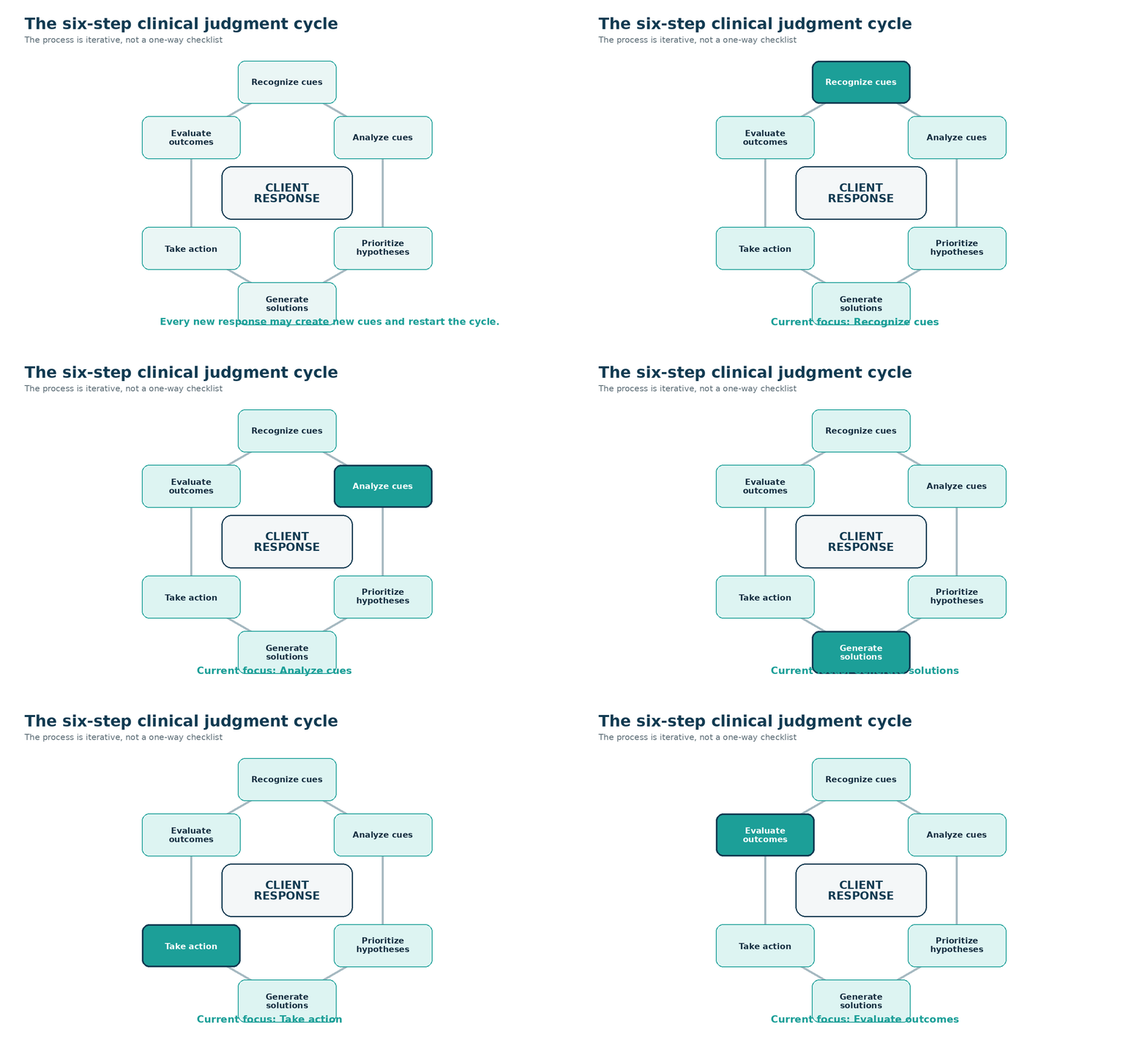
NCSBN® measures this process through six steps: recognize cues, analyze cues, prioritize hypotheses, generate solutions, take action and evaluate outcomes. Every NCLEX-RN® candidate receives three six-item clinical judgment case studies, for a total of 18 case-study items. Approximately 10% of eligible stand-alone items also explicitly measure clinical judgment, depending on examination length.
The safest preparation is not memorizing six definitions. Candidates need to practise moving from raw information to a defensible nursing decision — distinguishing signal from noise, connecting cues into patterns, ranking plausible explanations, selecting actions that are safe and within scope, and evaluating whether the plan worked.
Go deeper: For how the April 2026 NCLEX-RN® Test Plan organizes clinical judgment integration across all Client Needs categories, see the NCLEX-RN® test plan guide.
1. Why Clinical Judgment Matters
Clinical judgment is the bridge between knowing nursing content and using that knowledge safely. A student may know that tachycardia, hypotension and low urine output are abnormal. Clinical judgment is what allows the student to connect those findings, recognize impaired perfusion, consider a cause such as bleeding or sepsis, identify the time-sensitive risk and choose an appropriate nursing response.
The April 2026 NCLEX-RN® Test Plan states that the majority of examination items are written at the application level or higher because nursing practice requires complex thought processing. A candidate is not simply being asked, "Do you remember this fact?" The deeper question is, "Can you use the information to protect a client at the level expected of an entry-level registered nurse?"
Clinical judgment is especially important because real client presentations are rarely clean. A client may have chronic abnormalities, incomplete information, several diagnoses, medications that alter expected signs and social or cultural factors that affect the plan. Safe reasoning requires the nurse to decide what matters now without ignoring the whole person.
This guide therefore avoids unreliable shortcuts. "Airway is always first," "always assess before acting," "choose the least invasive option" and "never call the provider before completing everything" are not universal rules. Each can be useful in the right context and unsafe in another. The best answer is supported by the current cues, urgency, nursing scope and expected outcome.
Go deeper: For how all six CJMM steps apply inside unfolding NGN case studies, see the NGN case studies hub page.
2. Alignment With the April 2026 NCLEX-RN® Test Plan
The official 2026 NCLEX-RN® Test Plan is effective April 2026. It describes clinical judgment as one of six integrated processes used throughout the Client Needs categories. The other integrated processes are caring, communication and documentation, culture and spirituality, nursing process, and teaching/learning.
Clinical judgment is not a ninth Client Needs category. A case about respiratory failure may draw from Physiological Adaptation, Pharmacological and Parenteral Therapies, Reduction of Risk Potential, Management of Care and Safety and Infection Prevention and Control while measuring one or more clinical judgment steps. This is why studying clinical judgment separately from nursing content is not enough. The reasoning process needs accurate content knowledge.
At the minimum examination length, 18 items form three clinical judgment case studies. Each case study is a six-item set associated with the same client presentation and unfolding information. The official plan states that the six items measure recognize cues, analyze cues, prioritize hypotheses, generate solutions, take action and evaluate outcomes. Clinical judgment is also measured through approximately 10% stand-alone items depending on examination length.
The case study is counted independently of the content-area percentage distribution because clinical judgment is integrated across content. Candidates should therefore prepare for clinical judgment in adult health, maternity, pediatrics, mental health, community care, pharmacology, safety, leadership and other settings.
| Official 2026 feature | What it means for preparation |
|---|---|
| Three case-study sets | Expect three unfolding client records, each with six connected items. |
| 18 case-study items | Every minimum-length examination includes these 18 items. |
| Approximately 10% stand-alone clinical judgment items | Practise the six steps outside case studies as well. |
| Application or higher cognitive level | Use facts to make decisions; do not rely on recall alone. |
| Integrated across Client Needs | Study clinical judgment with every clinical subject. |
3. What the CJMM Is—and Is Not
The NCSBN Clinical Judgment Measurement Model, commonly shortened to CJMM, was developed as a framework for valid measurement of clinical judgment and decision-making in a standardized, high-stakes examination. Its purpose is measurement. It helps examination developers describe observable cognitive operations and connect those operations to item design and scoring.
The model is often illustrated in layers. Client needs sit at the centre of nursing decisions. The nurse's knowledge, experience and personal characteristics, together with environmental factors such as resources, time pressure, task complexity and risk, influence the process. The six measurable steps are the portion candidates most often see in study materials.
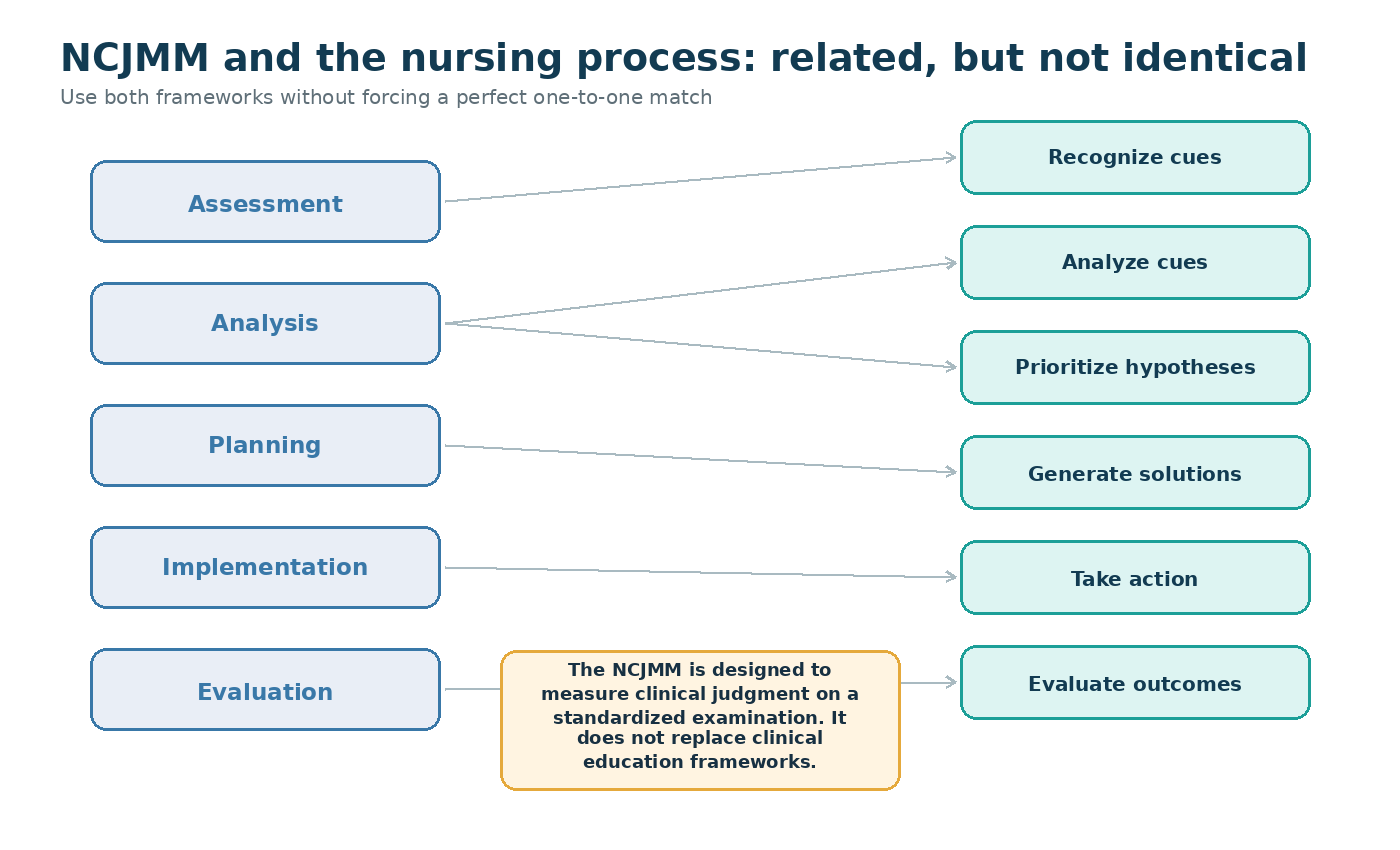
The CJMM is not a bedside policy, a substitute for clinical education or a promise that real decisions occur in six perfectly separated boxes. Real nursing care is iterative. A nurse may recognize a new cue while taking action, revise a hypothesis during evaluation or return to assessment when the client does not respond as expected.
The CJMM also does not replace the nursing process. The nursing process provides a broad professional approach to assessment, analysis, planning, implementation and evaluation. The CJMM provides a more detailed measurement language for particular clinical judgment functions. They overlap, but forcing a perfect one-to-one match can create confusion.
4. Clinical Judgment, Critical Thinking, Clinical Reasoning and the Nursing Process
| Term | Plain-English meaning | Example |
|---|---|---|
| Critical thinking | Broad disciplined thinking used to question assumptions, evaluate evidence and avoid unsupported conclusions. | The nurse asks whether a low blood pressure is accurate, expected or part of a dangerous trend. |
| Clinical reasoning | The thinking process used to collect and connect clinical information in a particular client situation. | The nurse links tachycardia, low urine output and cool skin with reduced perfusion. |
| Clinical judgment | The observable decision or conclusion that results from reasoning. | The nurse identifies possible postoperative bleeding as the priority concern and escalates care. |
| Nursing process | A professional framework for assessment, analysis, planning, implementation and evaluation. | The nurse assesses, develops a plan, implements interventions and evaluates the response. |
| CJMM | A measurement framework used to assess clinical judgment through six cognitive steps. | A case-study item asks the candidate to select the most relevant cues. |
These terms are related and sometimes used differently across schools. Candidates do not need to debate terminology during an item. They need to understand what the stem asks them to do. "Which findings require follow-up?" usually asks for cue recognition. "Which condition is most likely?" asks for hypothesis prioritization. "Which actions should the nurse take?" asks for solution generation or action. "Which findings show improvement?" asks for evaluation.
A useful habit is to translate the stem into a simple thinking instruction before reviewing options. This prevents a candidate from answering a different question. For example, a client may have a serious condition, but an item that asks what information requires follow-up is not asking for treatment yet.
5. The Six-Step Cycle at a Glance
| Step | Plain-English question | Core task |
|---|---|---|
| Recognize cues | What information matters? | Identify relevant findings from history, assessment, trends, laboratory results, medications and client statements. |
| Analyze cues | What does the pattern mean? | Organize and connect cues; compare with expected findings and pathophysiology. |
| Prioritize hypotheses | What explanation or concern comes first? | Rank possibilities by urgency, likelihood, risk, time sensitivity and consequences of delay. |
| Generate solutions | What could safely improve the situation? | Identify expected outcomes and possible interventions that fit the priority hypothesis. |
| Take action | What should the nurse do now? | Implement the highest-priority action or actions within scope and the information provided. |
| Evaluate outcomes | Did the client respond as expected? | Compare observed findings with expected outcomes and continue, revise or escalate the plan. |
The sequence is useful, but it should not become rigid. For example, taking action can produce new information. Administering a prescribed bronchodilator is an intervention; the resulting respiratory rate, air movement and ability to speak become new cues for evaluation and the next decision.
Go deeper: For worked examples of each CJMM step applied to practice questions, see the practice questions guide.
6. Step One: Recognize Cues
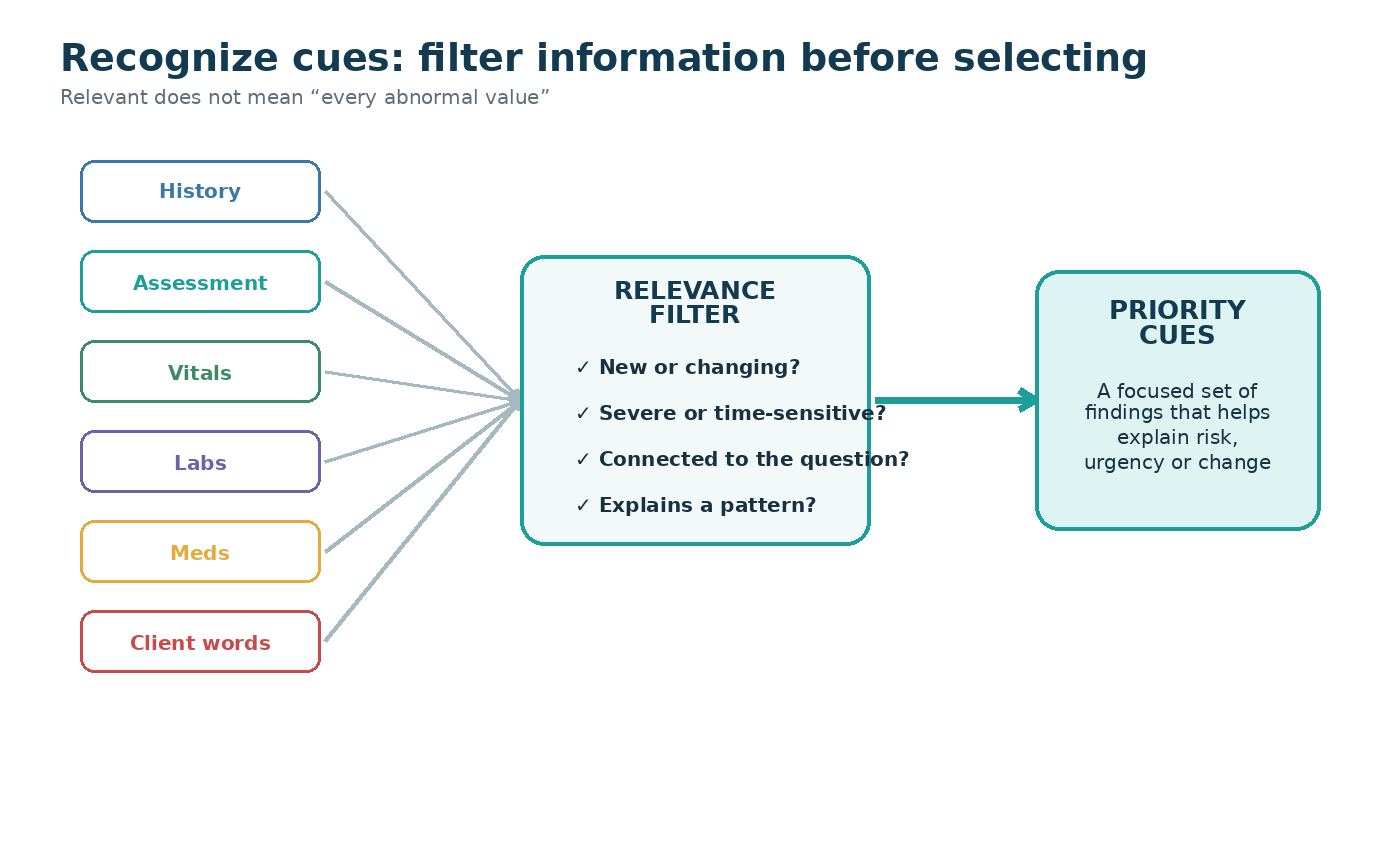
Recognizing cues means identifying relevant and important information from different sources. A cue can be a symptom, objective finding, trend, medication, risk factor, procedure, client preference or contextual detail. The key word is relevant. A fact can be abnormal without being the cue that explains the current problem.
Useful cues often have one or more of four characteristics: they are new, changing, severe or connected to the question. A chronic stable finding can still matter, especially when it increases risk, but it usually does not outrank an acute change unless the stem specifically asks about long-term management.
Candidates commonly miss cues by focusing only on numbers. The client's words may be the earliest sign of deterioration: "I suddenly cannot catch my breath," "this is the worst headache of my life," "I feel like something terrible is happening," or "I have a plan to kill myself." These statements may be more urgent than a mildly abnormal laboratory value.
Another error is selecting every abnormal finding. In a highlight or multiple-response item, excessive selection can show that the candidate has not distinguished the signal from the background. Read the stem carefully: it may ask for cues related to infection, cues requiring immediate follow-up, findings supporting one hypothesis or findings that are expected.
6.1 A cue-recognition checklist
- What is the client's baseline, and what changed from that baseline?
- Which findings are new, severe, worsening or unexpected?
- Which findings are linked by the same physiological or psychosocial process?
- Which risk factors make a dangerous explanation more likely?
- Which statement or finding indicates immediate risk to life or safety?
- Which information is normal, expected or unrelated to the question?
- Do I need to validate a surprising value before using it, or would validation create an unsafe delay?
6.2 Trends beat snapshots
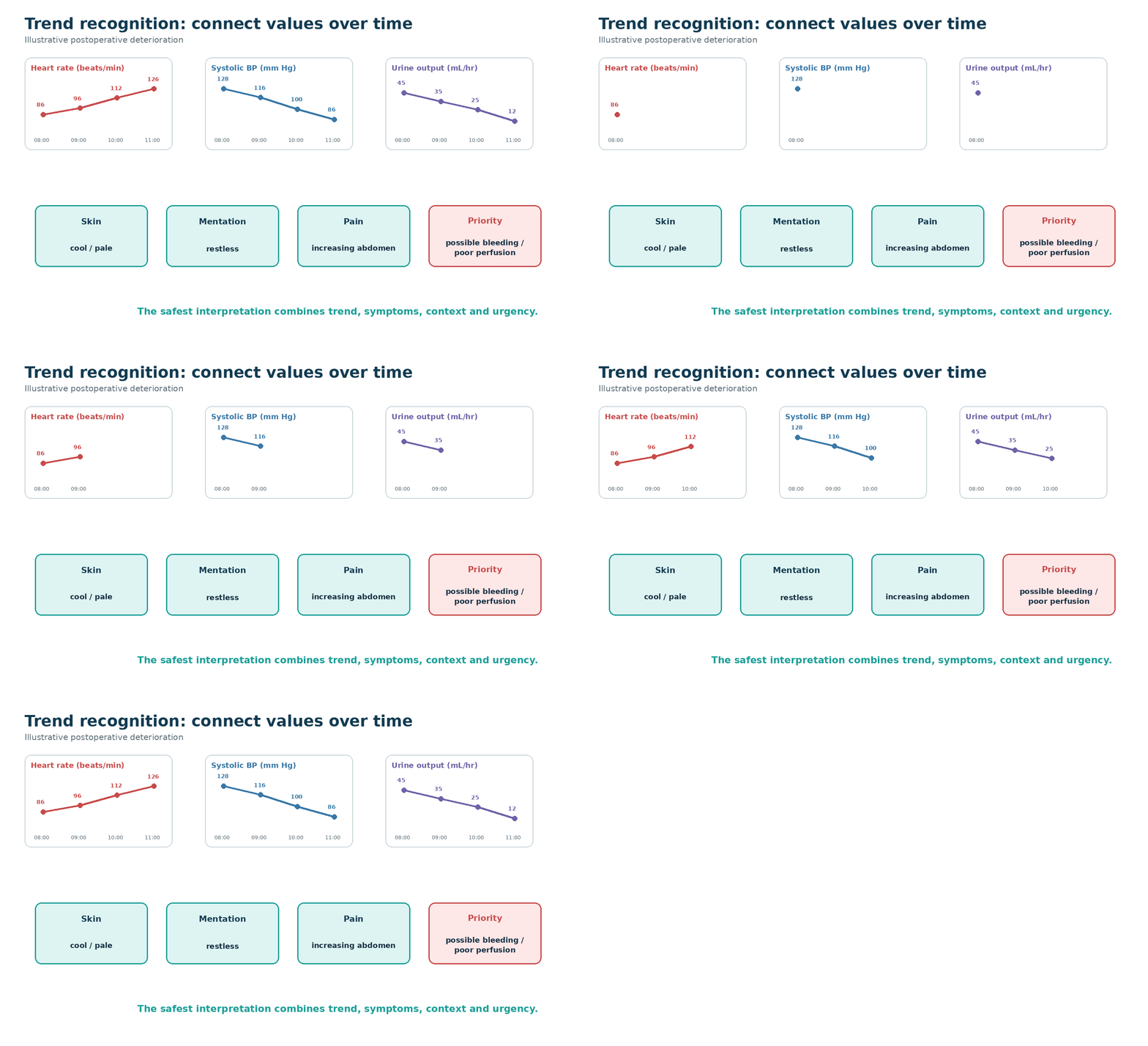
A heart rate of 104 beats/min may be mildly elevated. A trend from 78 to 92 to 104 to 122 after abdominal surgery is more concerning, especially when blood pressure falls, urine output declines and the client becomes restless. The trend shows direction and speed of change.
When viewing a case record, build a mental timeline. Compare current findings with earlier values, preprocedure findings, previous nursing notes and the response to interventions. Many case-study questions depend on this time relationship.
7. Step Two: Analyze Cues
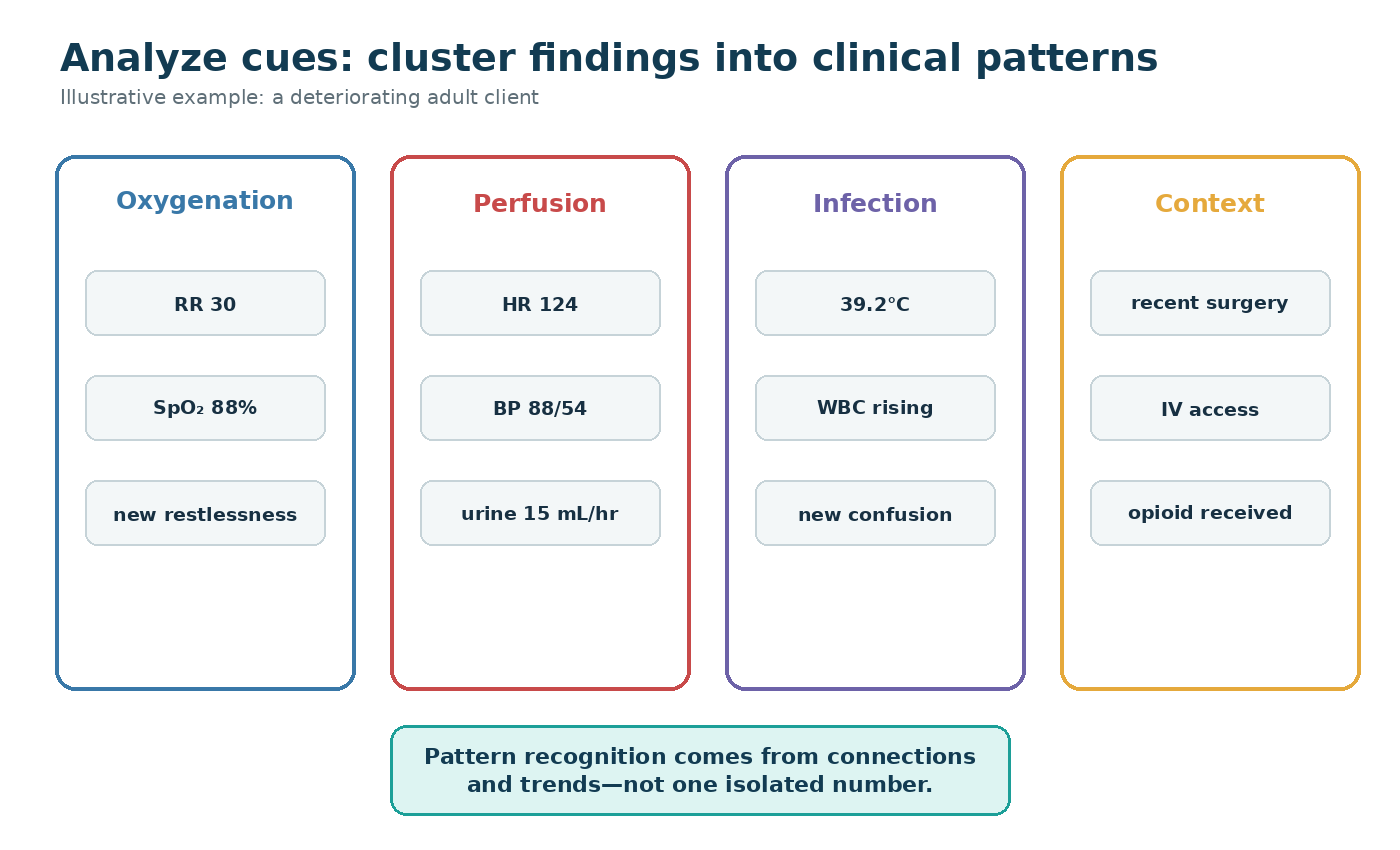
Analyzing cues means organizing and connecting the recognized information to the client's presentation. The nurse moves from a list of facts to a pattern. This requires pathophysiology, comparison with expected findings and attention to relationships among body systems, treatments and time.
A strong method is cue clustering. Place related findings into provisional groups such as oxygenation, perfusion, infection, neurological status, fluid balance, medication effect, bleeding, glucose regulation or psychosocial safety. Then ask which cluster best explains the change and which findings do not fit.
Analysis includes identifying contradictions. A client with severe respiratory distress may not have loud wheezing; very poor air movement can produce a quieter chest and indicate worsening obstruction. A potassium level can be elevated in untreated diabetic ketoacidosis even though total-body potassium is depleted. A client taking a beta blocker may not develop the expected degree of tachycardia. Context changes the meaning of the cue.
Candidates should avoid inventing missing information. If the record does not state that a client has a specific allergy, medication or diagnosis, do not assume it. Use the best explanation supported by the available evidence.
7.1 Questions that strengthen analysis
- Which findings occur together in this condition or complication?
- Does the trend fit the expected pathophysiology?
- Could a medication, procedure or specimen error explain the finding?
- Which finding is a cause, which is an effect and which is merely associated?
- What additional information would most reduce uncertainty?
- Is one severe cue enough to require action before the whole pattern is complete?
8. Step Three: Prioritize Hypotheses
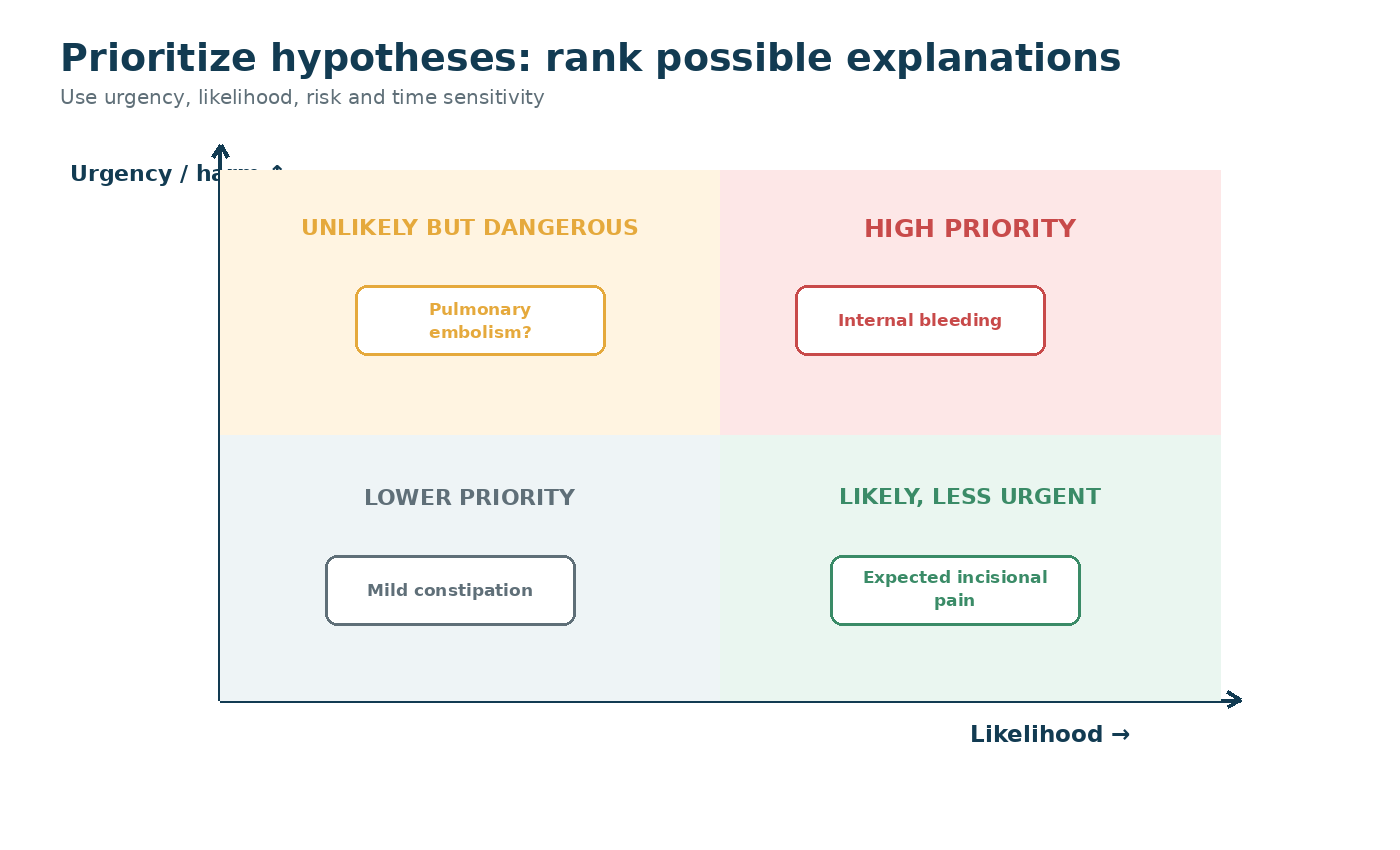
A hypothesis is a possible explanation for the client's cues. Prioritizing hypotheses means deciding which explanation or client concern should guide the next decision. The official test plan identifies factors such as urgency, likelihood, risk, difficulty and time constraints.
The most likely explanation is not always the highest priority. A rare but immediately lethal complication may need to be ruled out or addressed before a common low-risk explanation. Conversely, a dramatic diagnosis should not be selected when the record does not support it.
A practical ranking sequence is: first consider immediate threats; then compare how strongly each hypothesis explains the full pattern; then consider the harm of delay; finally ask whether the proposed hypothesis is within the level of specificity expected from the information. Often the examination wants a priority concern such as impaired perfusion, respiratory compromise, bleeding or infection rather than an unsupported specialist diagnosis.
Avoid premature closure. After finding one plausible explanation, briefly ask, "What else could produce these cues?" and "What cue would make the alternative more or less likely?" This short comparison reduces anchoring without causing endless overthinking.
8.1 Priority criteria
| Criterion | Question to ask | Common mistake |
|---|---|---|
| Urgency | Could the client deteriorate rapidly without action? | Choosing a chronic problem because it is familiar. |
| Likelihood | How well does the hypothesis explain the whole cue cluster? | Choosing a rare diagnosis from one nonspecific cue. |
| Risk of harm | What is the consequence if the hypothesis is missed? | Ignoring a dangerous alternative because it is less common. |
| Time sensitivity | Does treatment or escalation have a narrow window? | Delaying because the nurse wants complete certainty. |
| Scope and specificity | Is this conclusion supported at the entry-level RN perspective? | Selecting an overly specific diagnosis not established by the data. |
9. Step Four: Generate Solutions
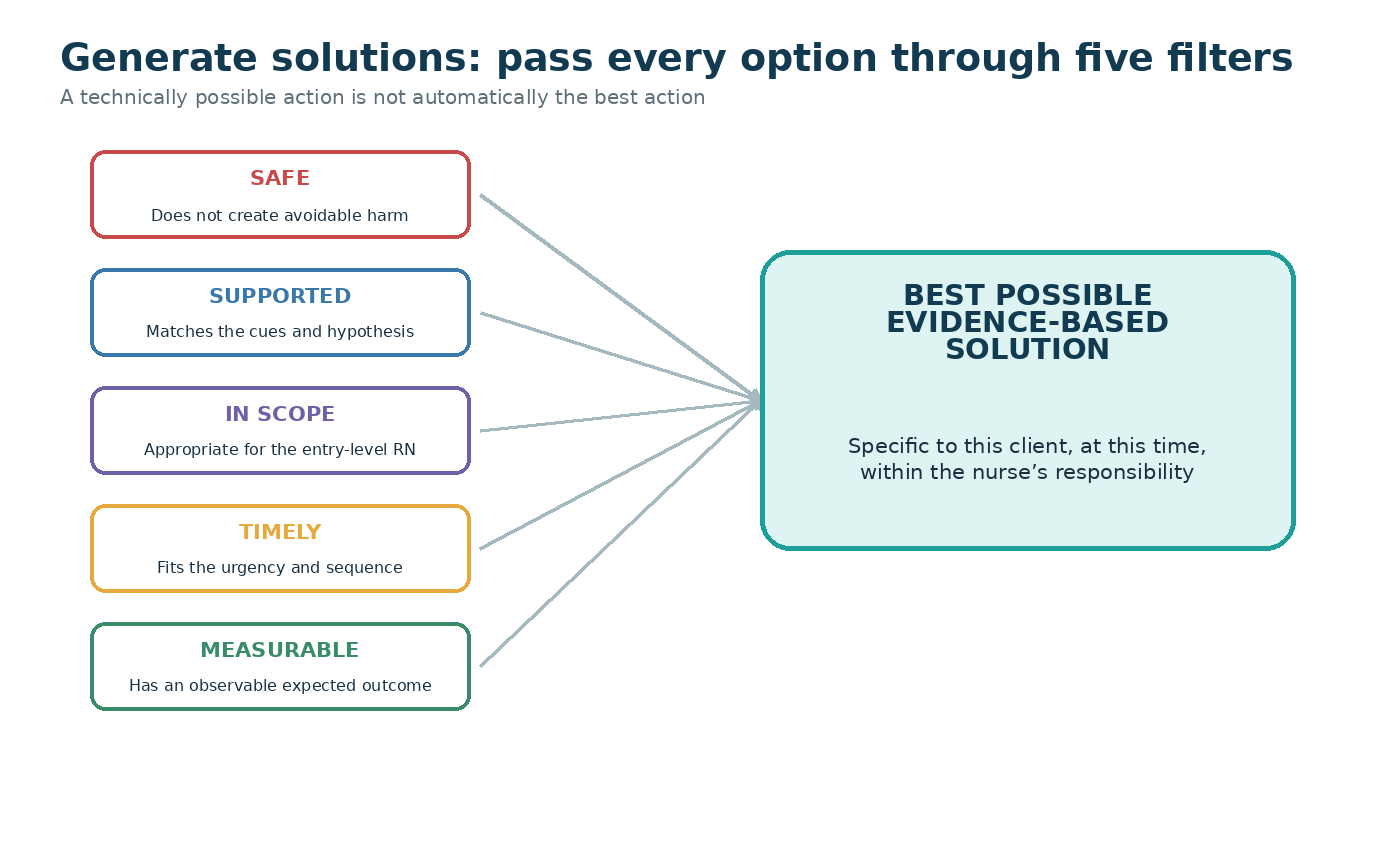
Generating solutions means identifying expected outcomes and a set of interventions that could address the prioritized hypothesis. The nurse is not yet simply choosing every helpful action. The goal is to create a safe, coherent plan that fits this client, this setting and this moment.
A solution should be supported by the cues, appropriate to the urgency, within nursing scope, consistent with evidence and capable of producing an observable outcome. Some actions are independently initiated nursing measures; others require a prescription, protocol or collaboration. In an item, wording such as "administer the prescribed medication" signals that authorization exists.
Expected outcomes should be specific enough to evaluate. "The client will improve" is weak. "Oxygen saturation will rise to the prescribed target, work of breathing will decrease and the client will speak in longer sentences" provides observable indicators. The expected outcome helps distinguish an intervention that addresses the priority problem from one that is merely routine.
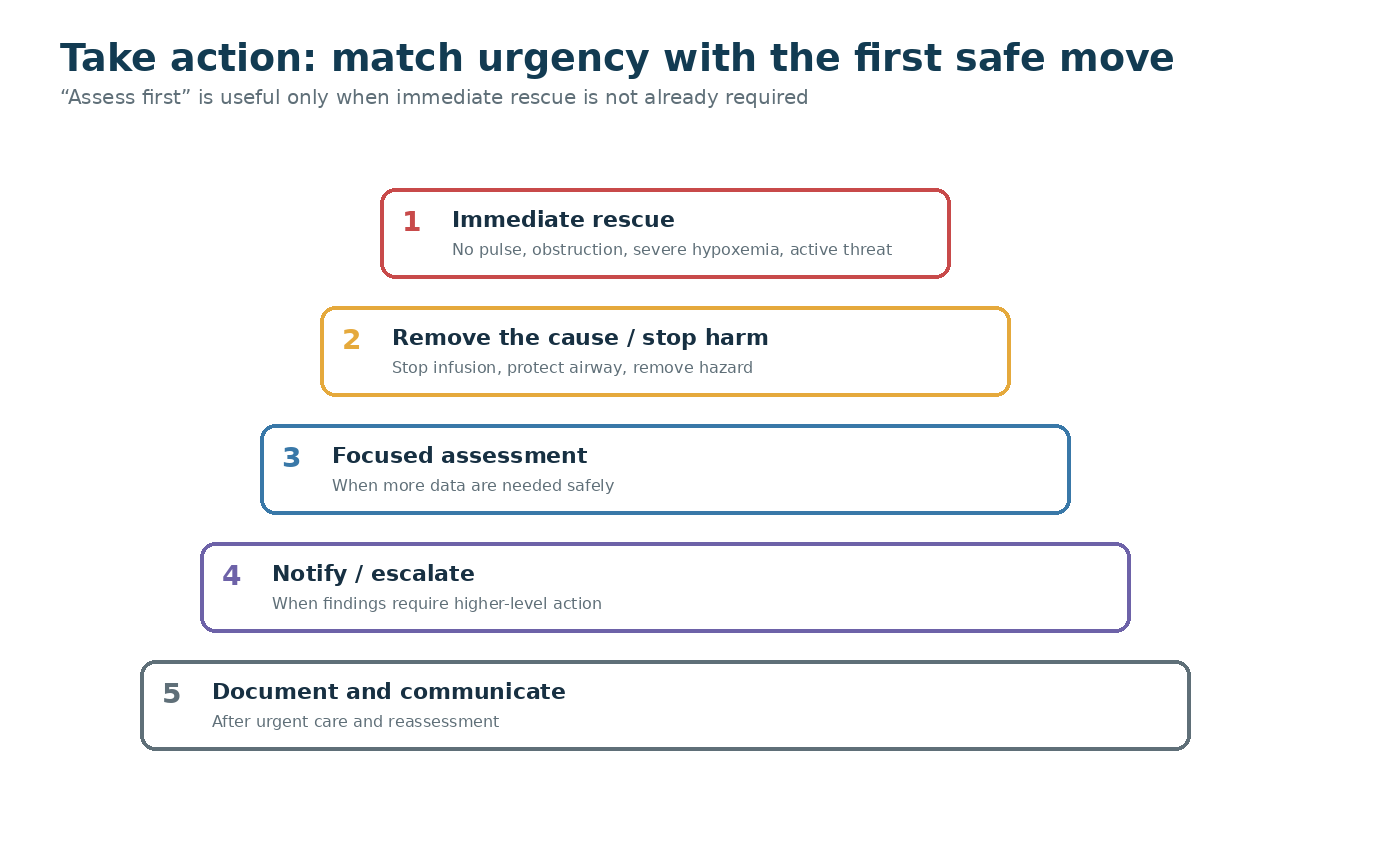
Candidates should also consider sequence. Several interventions may be appropriate, but only one may be the immediate priority. A provider notification may be necessary, but a client with an obstructed airway requires immediate rescue before a routine call.
9.1 Solution categories
- Immediate protective action: stop a harmful infusion, prevent a fall, maintain an airway or remove an environmental threat.
- Focused assessment: obtain information needed to select the next safe action when the client is not in immediate danger.
- Supportive nursing care: position, monitor, provide oxygen when indicated and authorized, reduce stimulation, maintain precautions or support comfort.
- Escalation and collaboration: activate emergency response, notify the appropriate clinician, use the chain of command or involve another discipline.
- Ordered or protocol-based treatment: administer medications, fluids, blood products or other therapies according to valid orders and local requirements.
- Education and prevention: teach the client, confirm understanding and reduce recurrence once the immediate problem is stable.
10. Step Five: Take Action
Taking action means implementing the solution or solutions that address the highest priority. On the examination, this step may appear as "What should the nurse do first?", "Which actions should the nurse take?", "Which prescription should be implemented immediately?" or "Which client should the nurse assess first?"
One of the most common preparation errors is turning "assess before intervening" into an absolute rule. Assessment is appropriate when uncertainty can be reduced safely. Immediate action is required when delay would increase harm and the necessary response is already clear: begin resuscitation for pulselessness, stop a suspected transfusion reaction, protect a client during a seizure, remove a dangerous exposure or address an immediate suicide threat.
The nurse should also distinguish action from activity. Documenting, making several phone calls or gathering extensive supplies may feel productive but can delay the intervention that changes the outcome. The best first action usually has the strongest direct relationship to the immediate threat.
When several actions are selected, they should form a coherent sequence. The candidate should avoid choosing mutually inconsistent actions, interventions outside the RN's authority or steps that assume information not provided.
10.1 A first-action test
- Name the immediate risk in five to ten words.
- Ask what will reduce that risk fastest without creating another danger.
- Confirm that the action is supported by the information and within scope.
- Decide whether assessment can occur safely before intervention.
- After the urgent action, identify the next assessment, escalation and documentation steps.
11. Step Six: Evaluate Outcomes
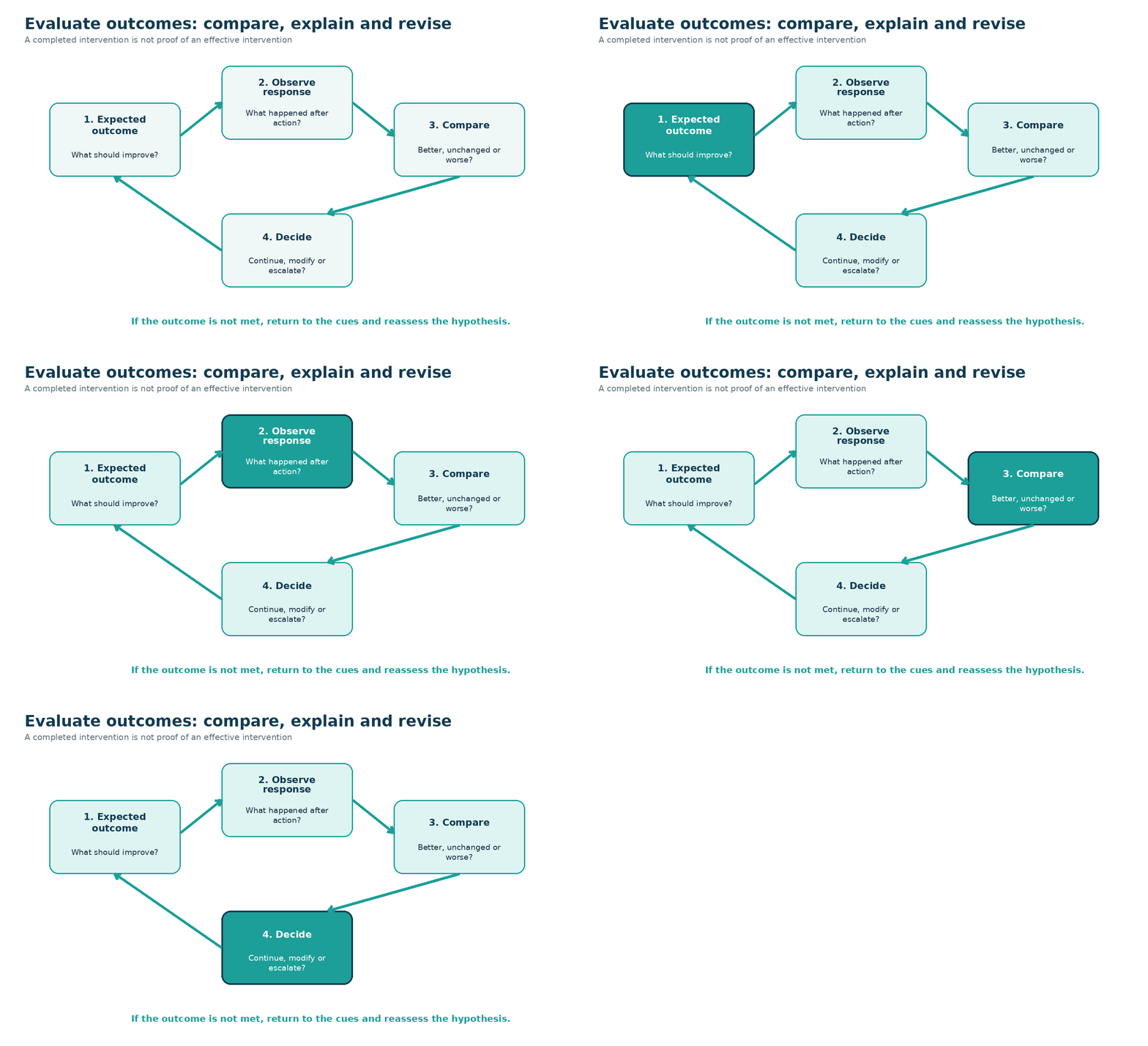
Evaluating outcomes means comparing the observed client response with the expected outcome. It answers three questions: Did the intervention work? Is the client stable enough to continue the plan? What should change next?
An intervention is not successful merely because it was completed. A bronchodilator is administered, but the client's air movement worsens. Fluids are started, but blood pressure continues to fall. Pain medication is given, but the client becomes increasingly difficult to arouse. These responses require new cue recognition and a revised plan.
Evaluation should use the most meaningful indicators. A client with impaired perfusion may be improving when mental status, skin temperature, blood pressure and urine output improve — not simply because one number moves slightly. A client with suicidal intent is not safe merely because the client appears calmer after receiving medication; direct reassessment of thoughts, plan, access and observation needs remains necessary.
Expected outcomes can be met, partially met, not met or complicated by a new problem. A strong candidate compares the response with the original hypothesis. If the expected response does not occur, consider whether the hypothesis was wrong, the intervention was insufficient, the action was delayed, adherence was limited or a new complication developed.
12. How Unfolding Case Studies Work
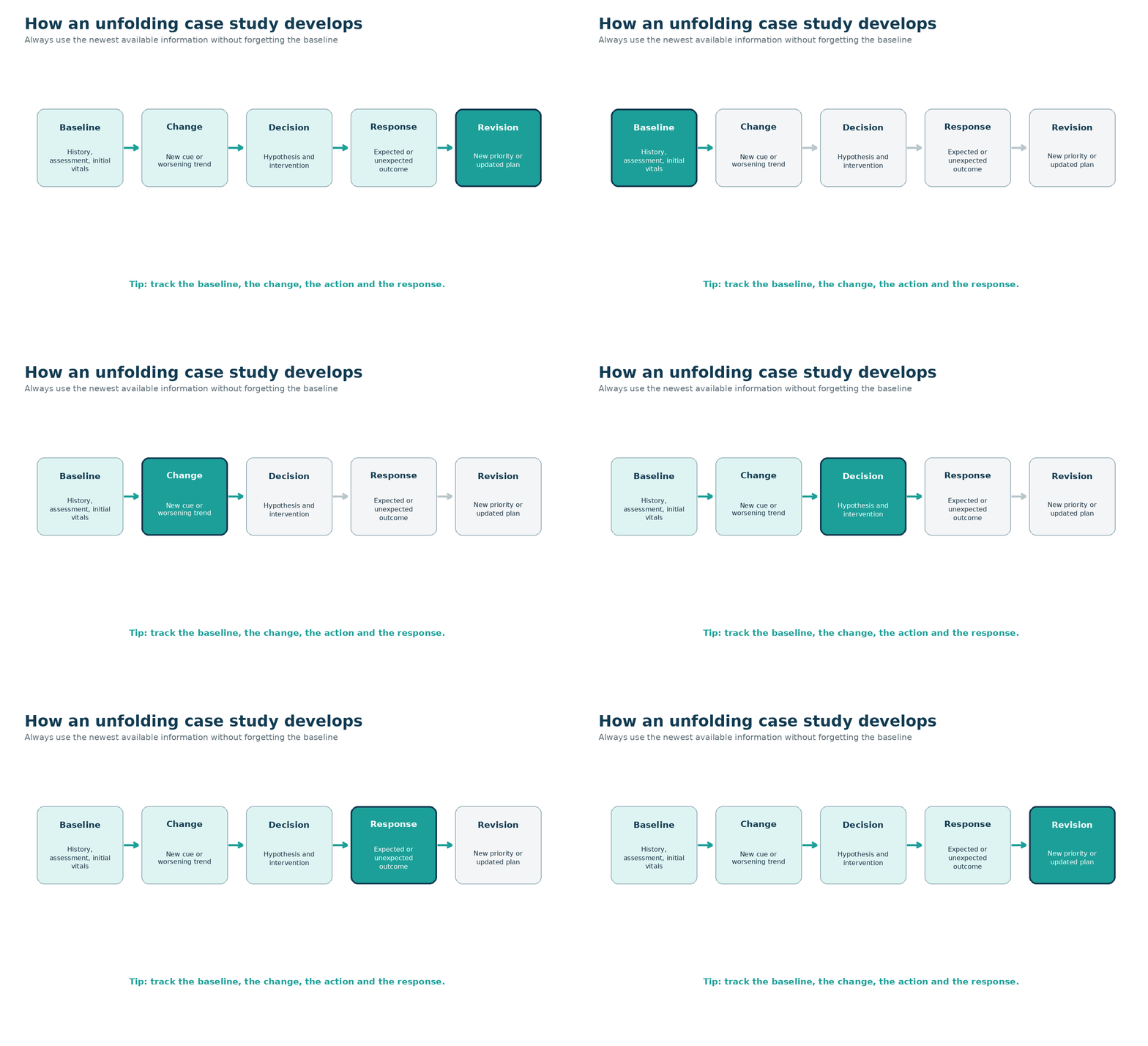
An unfolding case study contains six items associated with the same client presentation. Information is revealed over time through exhibits such as a history and physical, nursing notes, vital signs, laboratory results, diagnostic findings, medication records and provider prescriptions. The six items address the six clinical judgment steps.
The items are connected by the client story, but each item should be answered using the information available at that point. Do not force a later response to match an earlier answer. New information may change the priority, and an earlier answer may have been incorrect.
Build a timeline rather than memorizing isolated values. Start with the baseline, identify the change, note the intervention and then compare the response. When new data appear, ask whether they strengthen the current hypothesis, weaken it or introduce a different problem.
Review all relevant exhibit tabs. The testing interface may not warn a candidate that a tab was not opened. A medication time, laboratory trend or client statement in another tab may be essential. However, reading every line without a purpose can waste time. Use the stem to guide what evidence you are seeking.
12.1 A practical case-study reading sequence
- Read the stem and identify the clinical judgment step being tested.
- Confirm the time point: admission, after an intervention or current status.
- Scan the client record for new, changing, severe and relevant findings.
- Create a one-sentence problem representation: "This client with ___ now has ___ suggesting ___."
- Compare options against the exact stem, the available evidence, safety and scope.
- Before confirming, check whether each selected response belongs to the same clinical story.
Go deeper: For a complete walkthrough of the NGN case-study interface and item types, see the NGN case studies guide.
13. Stand-Alone Clinical Judgment Items
Clinical judgment is not limited to six-item case studies. The 2026 NCLEX-RN® Test Plan states that approximately 10% of stand-alone items explicitly measure clinical judgment depending on examination length. A stand-alone item may present a shorter scenario but still ask the candidate to recognize cues, analyze relationships, prioritize a concern, choose actions or evaluate a response.
Stand-alone items are useful practice because they require the candidate to identify the thinking step without relying on the predictable order of a six-item case. A bow-tie item may ask for a likely condition, two actions and two monitoring parameters. A matrix item may ask which findings are consistent with improvement. A highlight item may ask for cues requiring follow-up.
Do not assume that a stand-alone clinical judgment item is easier or harder than a case-study item. Item difficulty is determined psychometrically, not by screen format. Focus on the client information and task.
14. Item Formats and Partial-Credit Principles
Clinical judgment can be measured through different item formats. The format is only the container; the clinical task remains the same. Candidates should practise using the interface, but most study time should be spent on reasoning and content.
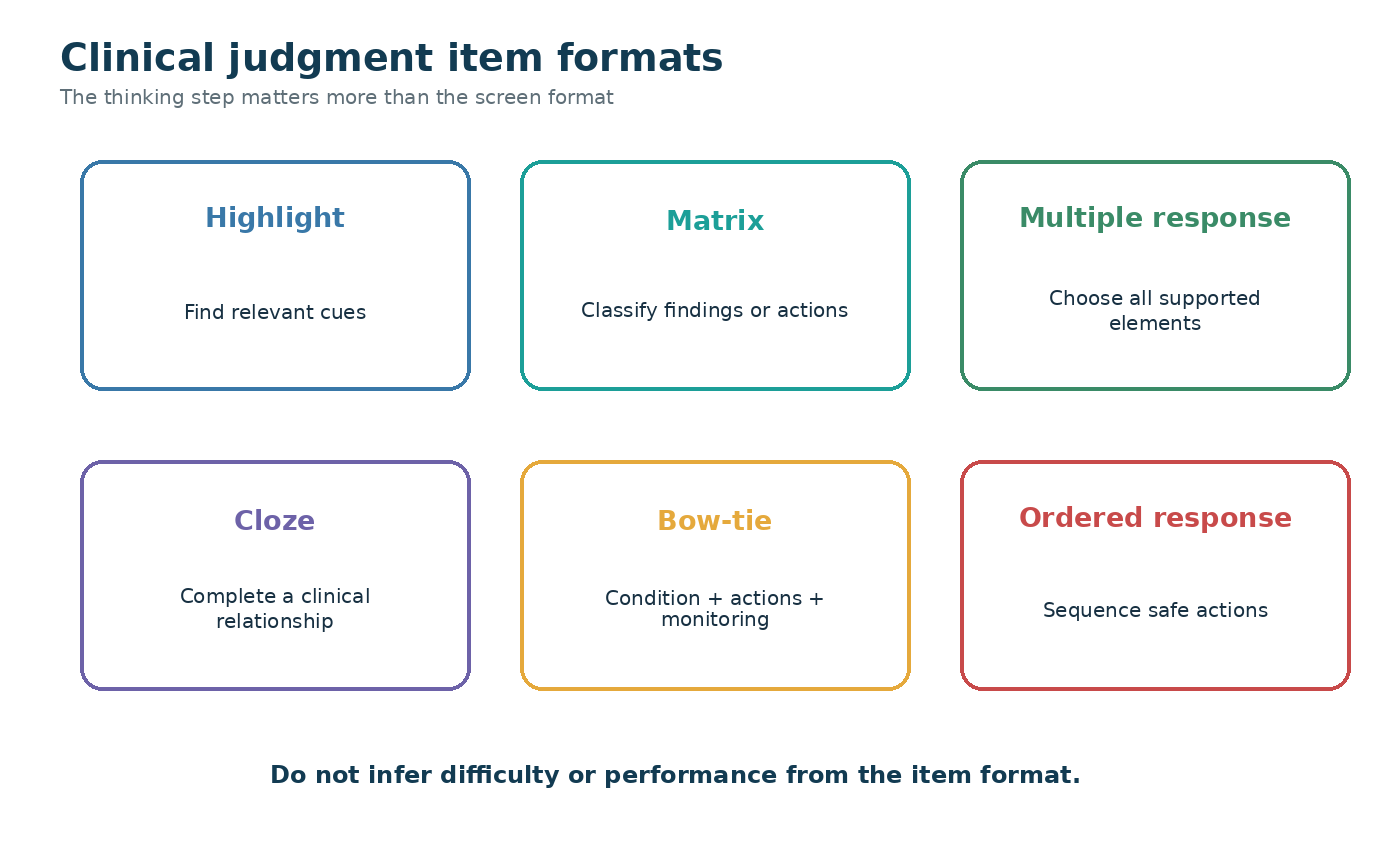
In multiple-response items, treat each option as an independent decision. Do not select an option because it is generally helpful in another situation. In matrix items, answer each row according to the exact column headings. In highlight items, select only the requested phrases. In bow-tie items, solve the central condition first, then choose actions and parameters that fit that condition.
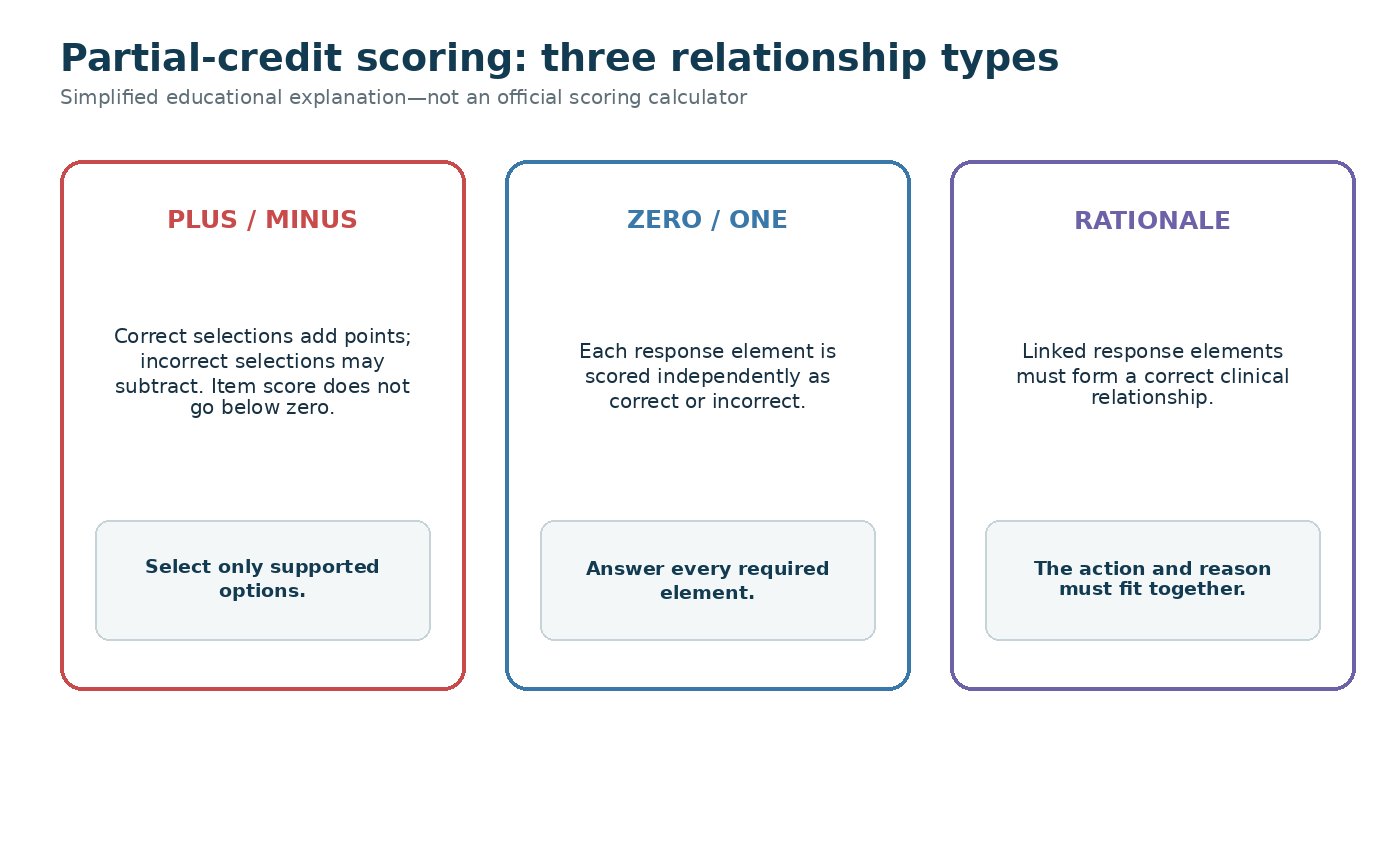
Eligible items can award partial credit using plus/minus, zero/one or rationale scoring principles. Plus/minus scoring can reduce points for unsupported selections, with the item score not falling below zero. Zero/one scoring treats response elements independently. Rationale scoring requires linked elements to form a correct relationship. Candidates do not need to calculate their own score during the examination; the practical lesson is to select deliberately and keep linked responses clinically consistent.
15. The RN Clarity CLARITY Method
The following study method is an original RN Clarity memory aid. It is not an official NCSBN® model and should not be presented as part of the CJMM. It helps candidates apply the six steps under time pressure.
| CLARITY step | What to do |
|---|---|
| C — Confirm the question | Identify the time point and the clinical judgment step. |
| L — Locate meaningful cues | Find new, changing, severe and relevant information. |
| A — Assemble the pattern | Cluster the cues and explain their relationship. |
| R — Rank the concerns | Compare urgency, likelihood, risk and harm of delay. |
| I — Identify safe solutions | Choose supported, timely, measurable interventions within scope. |
| T — Take the priority action | Act on the highest-priority risk without unnecessary delay. |
| Y — Yield to the response | Evaluate what happened and revise the plan. |
Use the method lightly. A memory aid should shorten thinking, not create another long checklist. With practice, the questions become an internal rhythm: What matters? What does it mean? What comes first? What can help? What should happen now? Did it work?
16. Common Reasoning Traps and Cognitive Biases
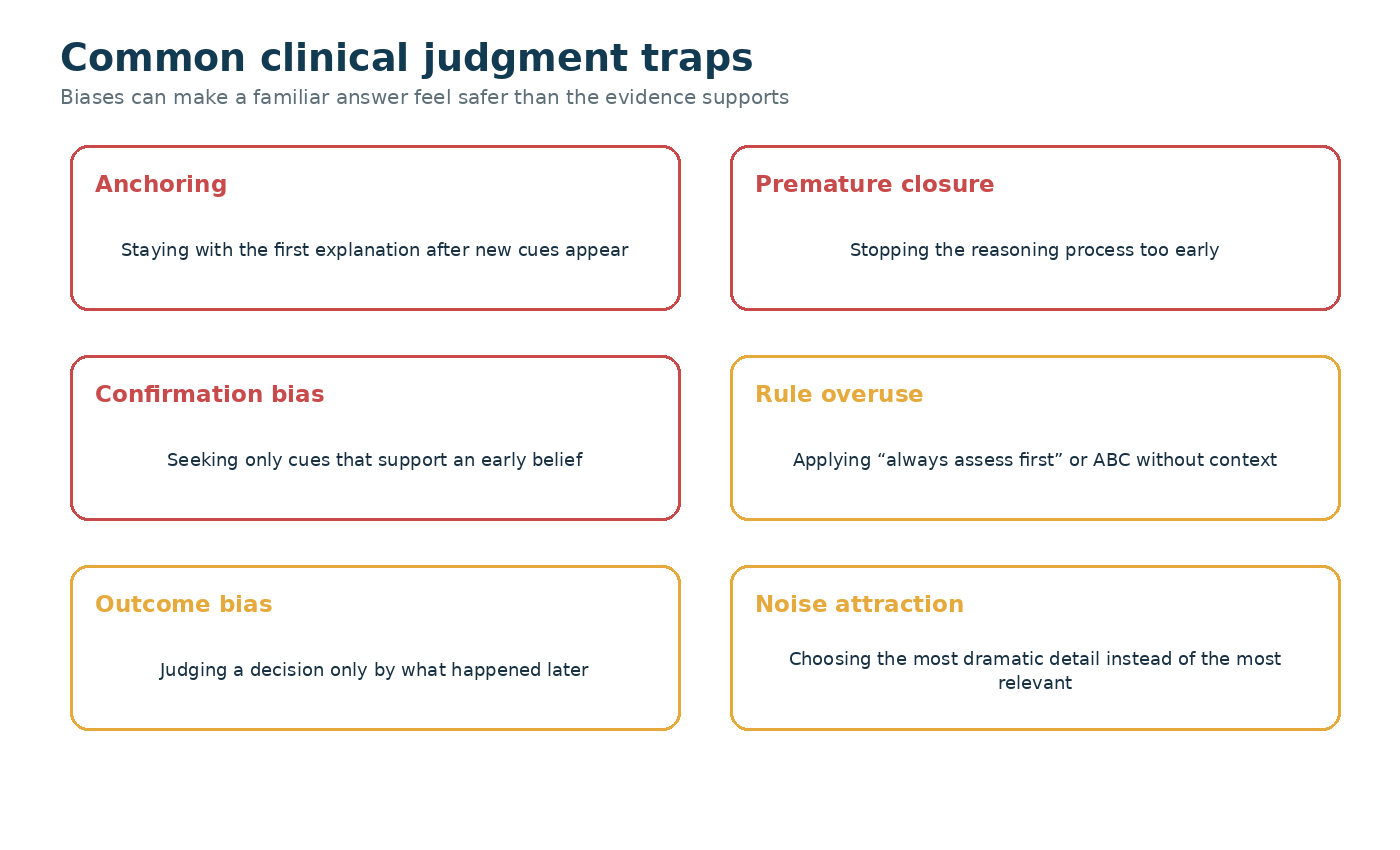
Clinical judgment errors are not always knowledge errors. A candidate may know the content but misuse it because of anchoring, overconfidence, premature closure or an overgeneralized test-taking rule. Naming the reasoning error makes remediation more useful than simply recording the topic.
Anchoring occurs when the candidate stays with the first explanation after new information appears. Premature closure means stopping the diagnostic or reasoning process after finding one plausible answer. Confirmation bias means noticing evidence that supports the early belief while minimizing contradictory cues. Noise attraction means choosing a dramatic detail that does not answer the stem.
Another trap is answer-option reasoning: reading options first and building a story around the most familiar one. A safer approach is to summarize the client problem before committing to an option. This reduces the chance that distractors control the reasoning process.
Overthinking is also a problem. The goal is not to imagine every rare complication. Use the information provided, compare the most plausible alternatives and choose the safest supported conclusion at the entry-level RN perspective.
17. Communication, Documentation, Culture and Teaching
Clinical judgment is integrated with the other processes in the 2026 test plan. A correct clinical conclusion can still lead to unsafe care if the nurse communicates it poorly, documents inaccurately, ignores a client's preferences or teaches without checking understanding.
Communication should state the change, relevant background, current assessment and needed response. In an urgent situation, lead with the immediate concern rather than a long history. Closed-loop communication is important when carrying out emergency directions: the receiver repeats the instruction, completes it and confirms completion.
Documentation should be timely, objective and connected to the client response. Record relevant assessment findings, actions, notifications, prescriptions received, interventions and outcomes. Do not use the record to assign blame or hide an error. Follow local requirements for corrections, incident reports and escalation.
Culture and spirituality require individualized assessment. Do not infer preferences from appearance, name, language or group membership. Ask respectful questions, provide qualified interpretation when required, consider the client's self-identified preferences and maintain the applicable standard of care.
Teaching is part of clinical judgment. Assess readiness, health literacy, language, cognition, pain and anxiety. Use teach-back or return demonstration to evaluate learning. Education is not complete merely because information was spoken or a handout was provided.
18. Clinical Judgment Across the Client Needs Categories
| Client Needs area | Examples of clinical judgment |
|---|---|
| Management of Care | Prioritize clients, delegate safely, coordinate care, escalate concerns and evaluate team performance. |
| Safety and Infection Prevention and Control | Recognize hazards, interrupt transmission, prevent injury and respond to unsafe practice. |
| Health Promotion and Maintenance | Identify developmental or preventive needs, tailor teaching and evaluate readiness or understanding. |
| Psychosocial Integrity | Assess suicide, violence, abuse, withdrawal, coping and therapeutic communication needs. |
| Basic Care and Comfort | Connect mobility, nutrition, elimination, pain, skin and comfort findings with complications and outcomes. |
| Pharmacological and Parenteral Therapies | Recognize contraindications, interactions, adverse effects, infusion problems and therapeutic response. |
| Reduction of Risk Potential | Interpret trends, diagnostic results, procedure complications and treatment-related risks. |
| Physiological Adaptation | Respond to acute deterioration, impaired oxygenation, shock, dysrhythmias, organ failure and emergency conditions. |
A case study can span several areas at once. For example, a septic client may require cue interpretation, infection precautions, medication safety, perfusion assessment, escalation, team communication and evaluation of treatment response. This is why integrated practice is more useful than memorizing isolated category definitions.
Go deeper: For how clinical judgment applies to the Management of Care and delegation questions, see the clinical judgment hub page.
19. Case Study 1: Postoperative Hemorrhage
Original educational case — not an official NCLEX® item. Setting: adult surgical unit. A client is four hours after abdominal surgery.
| Source / time | Client data |
|---|---|
| 08:00 | Awake, pain 4/10, HR 86, BP 128/76, RR 18, urine output 45 mL in the previous hour. Dressing dry. |
| 09:00 | Pain 6/10, HR 98, BP 116/70, urine output 35 mL. Client reports increasing pressure in the abdomen. |
| 10:00 | Restless, pale and cool. HR 118, BP 96/60, RR 24, urine output 20 mL. Abdomen appears more distended. |
| 10:15 | Hemoglobin is lower than the preoperative value. The client says, "I feel like I might pass out." |
Recognize cues
Which findings are most important to the client's current change?
Best response: Rising heart rate, falling blood pressure, decreasing urine output, pallor and cool skin, increasing abdominal distention, lower hemoglobin and near-syncope.
Rationale: The findings are new, progressive and linked to reduced circulating volume and tissue perfusion. Incisional pain alone does not explain the full pattern.
Analyze cues
How should the nurse connect the findings?
Best response: The pattern suggests worsening hypovolemia and impaired perfusion, with internal postoperative bleeding as a major concern.
Rationale: The trend involves cardiovascular, renal, skin and neurological indicators. The procedure and abdominal distention provide context for bleeding.
Prioritize hypotheses
Which concern should guide immediate care?
Best response: Possible postoperative hemorrhage causing hemodynamic instability.
Rationale: Pain, anxiety and mild dehydration may cause tachycardia, but they do not explain the combined hypotension, oliguria, pallor, distention and falling hemoglobin as well as bleeding does.
Generate solutions
Which outcomes and interventions are appropriate?
Best response: Immediate escalation, frequent hemodynamic assessment, maintenance of IV access, supportive oxygenation as indicated, preparation for ordered fluids or blood products, and readiness for urgent surgical evaluation.
Rationale: The goal is to restore and monitor perfusion while the cause is addressed. Routine ambulation or oral fluids would be unsafe.
Take action
What should the nurse do first?
Best response: Remain with the client, call for urgent assistance or activate the appropriate rapid-response process, and begin immediate supportive monitoring and interventions according to protocol.
Rationale: The client shows active deterioration. A lengthy routine assessment or documentation before escalation would delay care.
Evaluate outcomes
Which findings would indicate improvement?
Best response: Improved mental status, warmer skin, rising blood pressure, lower heart rate, increased urine output and stabilization of laboratory trends.
Rationale: Evaluation should use a cluster of perfusion indicators. One isolated improved number is not enough if the client remains symptomatic.
20. Case Study 2: Pneumonia Progressing to Sepsis
Original educational case — not an official NCLEX® item. Setting: medical unit. An older adult admitted with pneumonia develops acute confusion and signs of impaired perfusion.
| Source / time | Client data |
|---|---|
| Admission | Cough, right lower-lobe infiltrate, temperature 38.1°C, HR 98, BP 126/72, RR 22, SpO₂ 93% on prescribed oxygen. |
| Six hours later | Temperature 39.2°C, HR 124, BP 92/58, RR 28, SpO₂ 91%, urine output 20 mL/hr, new confusion. |
| Laboratory update | Lactate 3.8 mmol/L; creatinine increased from baseline. Blood cultures and antimicrobial therapy are prescribed. |
| Nursing note | Skin is warm, client is restless, and capillary refill is delayed. |
Recognize cues
Which findings require urgent follow-up?
Best response: New confusion, hypotension, tachycardia, tachypnea, low urine output, elevated lactate, delayed capillary refill and rising creatinine.
Rationale: These findings suggest organ dysfunction and impaired perfusion in the setting of infection.
Analyze cues
What pattern do the cues form?
Best response: Systemic infection with worsening perfusion and possible sepsis.
Rationale: The respiratory infection provides a likely source, while mental-status, renal and circulatory changes indicate that the problem is no longer limited to the lungs.
Prioritize hypotheses
Which concern is highest priority?
Best response: Sepsis with evolving shock or significant hypoperfusion.
Rationale: The immediate risk is deterioration from infection-related organ dysfunction, not simply fever or discomfort.
Generate solutions
Which interventions fit the priority concern?
Best response: Use the facility sepsis pathway; obtain prescribed cultures without causing avoidable delay; administer prescribed antimicrobials and fluids; monitor oxygenation, perfusion, urine output, mental status and response; escalate promptly.
Rationale: Sepsis care is time-sensitive and requires coordinated assessment, treatment and reassessment. Exact protocols and orders vary.
Take action
Which action should not be delayed?
Best response: Urgent escalation and initiation of the ordered sepsis response while continuing close monitoring.
Rationale: Waiting for every result before acting can allow further deterioration. The nurse should follow current orders and local protocols.
Evaluate outcomes
Which findings suggest a favourable response?
Best response: Improved blood pressure and mentation, lower heart rate and respiratory rate, better urine output, improved capillary refill and a favourable lactate trend.
Rationale: The response should be evaluated across perfusion and organ-function indicators, not by temperature alone.
21. Case Study 3: Acute Heart Failure and Pulmonary Edema
Original educational case — not an official NCLEX® item. Setting: telemetry unit. A client with chronic heart failure develops sudden severe respiratory distress.
| Source / time | Client data |
|---|---|
| Baseline | Mild bilateral ankle edema, HR 88, BP 142/84, RR 20, SpO₂ 94% on room air. |
| Acute change | Sudden dyspnea, orthopnea, anxiety, RR 32, SpO₂ 84%, HR 118. Diffuse crackles and pink frothy sputum are present. |
| Position | Client is unable to lie flat and is using accessory muscles. |
| Orders available | Emergency oxygen, cardiac monitoring and prescribed acute heart-failure therapies are available according to protocol. |
Recognize cues
Which findings are most urgent?
Best response: Severe hypoxemia, sudden dyspnea, accessory-muscle use, diffuse crackles, inability to lie flat and pink frothy sputum.
Rationale: These findings indicate acute respiratory compromise and pulmonary fluid accumulation.
Analyze cues
How do the findings connect?
Best response: The pattern is consistent with acute pulmonary edema in a client with heart failure.
Rationale: The abrupt oxygenation problem and fluid-related lung findings are more important than the stable chronic ankle edema.
Prioritize hypotheses
What is the priority concern?
Best response: Impaired oxygenation and ventilation caused by acute pulmonary edema.
Rationale: The immediate threat is respiratory failure. Long-term fluid education is not the first priority.
Generate solutions
Which interventions are appropriate?
Best response: Position upright, provide prescribed oxygen, activate urgent assistance, monitor cardiac and respiratory status, maintain IV access and prepare to administer ordered therapies while reassessing frequently.
Rationale: These actions address oxygenation, reduce risk and support rapid collaborative treatment.
Take action
What should the nurse do first?
Best response: Sit the client upright, begin immediate oxygen support as prescribed or protocolized and call for urgent assistance.
Rationale: The client has a clear oxygenation emergency. Routine history-taking should not delay support.
Evaluate outcomes
Which changes show improvement?
Best response: Higher oxygen saturation within the prescribed target, reduced work of breathing, improved ability to speak, decreasing crackles or distress and stable hemodynamics.
Rationale: Evaluation should focus on respiratory effort, oxygenation and overall stability.
22. Case Study 4: Diabetic Ketoacidosis
Original educational case — not an official NCLEX® item. Setting: emergency department. A young adult with type 1 diabetes presents with vomiting, dehydration and deep rapid breathing.
| Source / time | Client data |
|---|---|
| Presentation | Polyuria, vomiting, abdominal discomfort, dry mucous membranes, HR 116, BP 98/60, RR 30 with deep respirations. |
| Laboratory data | Glucose 486 mg/dL, pH 7.18, bicarbonate 12 mEq/L, positive ketones, increased anion gap, potassium 5.6 mEq/L. |
| History | Missed insulin during an intercurrent illness. |
| Mental status | Awake but fatigued and slow to respond. |
Recognize cues
Which findings support a metabolic emergency?
Best response: Marked hyperglycemia, ketones, low pH and bicarbonate, increased anion gap, dehydration, deep rapid respirations and altered energy or responsiveness.
Rationale: The cluster is characteristic of ketoacidosis and volume depletion.
Analyze cues
How should the potassium result be interpreted?
Best response: Serum potassium is elevated now, but total-body potassium may be depleted and can fall during treatment.
Rationale: Acidosis and insulin deficiency shift potassium out of cells. Treatment reverses the shift, so frequent monitoring is essential.
Prioritize hypotheses
Which concern should guide care?
Best response: Diabetic ketoacidosis with dehydration, acidosis and risk of electrolyte-related complications.
Rationale: The immediate problem is not simply high glucose; it is a systemic metabolic crisis.
Generate solutions
Which interventions are expected?
Best response: Prescribed isotonic fluid resuscitation, insulin therapy according to protocol, frequent glucose and electrolyte monitoring, cardiac monitoring when indicated, and treatment of the precipitating cause.
Rationale: Safe DKA care requires coordinated correction of volume, glucose, ketosis and electrolytes. Exact rates and thresholds follow current orders and protocols.
Take action
Which priority should occur early?
Best response: Begin prescribed fluid replacement and close monitoring while preparing and verifying protocol-based insulin and potassium management.
Rationale: Severe dehydration and perfusion deficits require prompt attention. Potassium must be monitored because it can fall rapidly with treatment.
Evaluate outcomes
Which findings indicate improvement?
Best response: Closing anion gap, improving bicarbonate and pH, stable potassium, improved hydration and mentation, and resolution of ketone-related symptoms.
Rationale: Glucose may improve before ketoacidosis has resolved; evaluation must include the metabolic pattern.
23. Case Study 5: Preeclampsia With Severe Features
Original educational case — not an official NCLEX® item. Setting: labour and delivery. A pregnant client at 35 weeks develops severe hypertension and neurological symptoms.
| Source / time | Client data |
|---|---|
| Assessment | BP 168/112 mm Hg, persistent severe headache, visual spots, right upper-quadrant pain, brisk reflexes. |
| Fetal status | Fetal monitoring is initiated; fetal heart-rate pattern requires ongoing evaluation. |
| Laboratory data | Platelets are decreased from baseline and liver enzymes are elevated. |
| Environment | Client reports increasing anxiety and sensitivity to light and noise. |
Recognize cues
Which findings are priority cues?
Best response: Severe-range blood pressure, persistent headache, visual symptoms, right upper-quadrant pain, hyperreflexia, platelet decline and elevated liver enzymes.
Rationale: These findings indicate severe disease and risk of maternal and fetal complications.
Analyze cues
What pattern do the findings suggest?
Best response: Preeclampsia with severe features and risk of seizure, stroke, hepatic involvement and other complications.
Rationale: The neurological, blood-pressure and laboratory findings belong to one high-risk hypertensive pattern.
Prioritize hypotheses
What is the priority concern?
Best response: Maternal neurological and cardiovascular instability with risk of eclampsia and end-organ injury.
Rationale: Anxiety may be present but does not explain the severe objective findings.
Generate solutions
Which interventions are appropriate?
Best response: Urgent obstetric escalation, seizure precautions, reduced environmental stimulation, close maternal and fetal monitoring, IV access, and preparation to administer prescribed magnesium sulfate and antihypertensive therapy.
Rationale: Management is time-sensitive and collaborative. Medication administration requires current prescriptions and monitoring.
Take action
What should the nurse do first?
Best response: Stay with the client, initiate safety and seizure precautions, and urgently notify or activate the obstetric response while monitoring maternal and fetal status.
Rationale: The client has severe findings with potential rapid deterioration.
Evaluate outcomes
Which findings require continued escalation despite treatment?
Best response: Persistent severe blood pressure, worsening headache or vision, new seizure, declining consciousness, worsening laboratory values or nonreassuring fetal findings.
Rationale: Evaluation must include both maternal and fetal response and signs of treatment complications.
24. Case Study 6: Pediatric Asthma Exacerbation
Original educational case — not an official NCLEX® item. Setting: pediatric emergency setting. An eight-year-old with asthma has increasing work of breathing after an upper-respiratory illness.
| Source / time | Client data |
|---|---|
| Triage | RR 36, HR 132, SpO₂ 89% on room air, suprasternal and intercostal retractions. |
| Speech | Child can speak only two or three words at a time. |
| Auscultation | Wheezing is present, but air movement becomes diminished in several areas. |
| History | Rescue inhaler provided little relief at home. |
Recognize cues
Which findings indicate a severe exacerbation?
Best response: Low oxygen saturation, marked work of breathing, limited speech, tachypnea, tachycardia and diminishing air movement.
Rationale: A quieter chest can indicate worsening airflow obstruction rather than improvement.
Analyze cues
How should the nurse interpret the change in breath sounds?
Best response: Decreasing air movement with persistent distress suggests severe obstruction and possible fatigue.
Rationale: Wheezing requires airflow. Reduced wheezing with worsening effort is not reassuring.
Prioritize hypotheses
What is the priority concern?
Best response: Severe asthma exacerbation with impaired ventilation and oxygenation and risk of respiratory failure.
Rationale: The immediate risk is respiratory compromise, not the underlying viral symptoms.
Generate solutions
Which interventions are appropriate?
Best response: Urgent respiratory support, prescribed oxygen, prompt bronchodilator therapy, close reassessment, escalation to the pediatric emergency team and preparation for additional ordered therapy.
Rationale: Treatment and reassessment must be rapid because children can tire and deteriorate.
Take action
What should the nurse do first?
Best response: Begin immediate oxygen and prescribed rapid bronchodilator support while calling for urgent assistance.
Rationale: The child has a clear breathing emergency; extensive routine assessment should not delay treatment.
Evaluate outcomes
Which findings indicate improvement?
Best response: Improved air movement, longer speech, lower work of breathing, improving oxygen saturation and age-appropriate respiratory rate and behaviour.
Rationale: Wheezing alone is not a reliable outcome. The full respiratory pattern matters.
25. Focused Drills and Study Plan
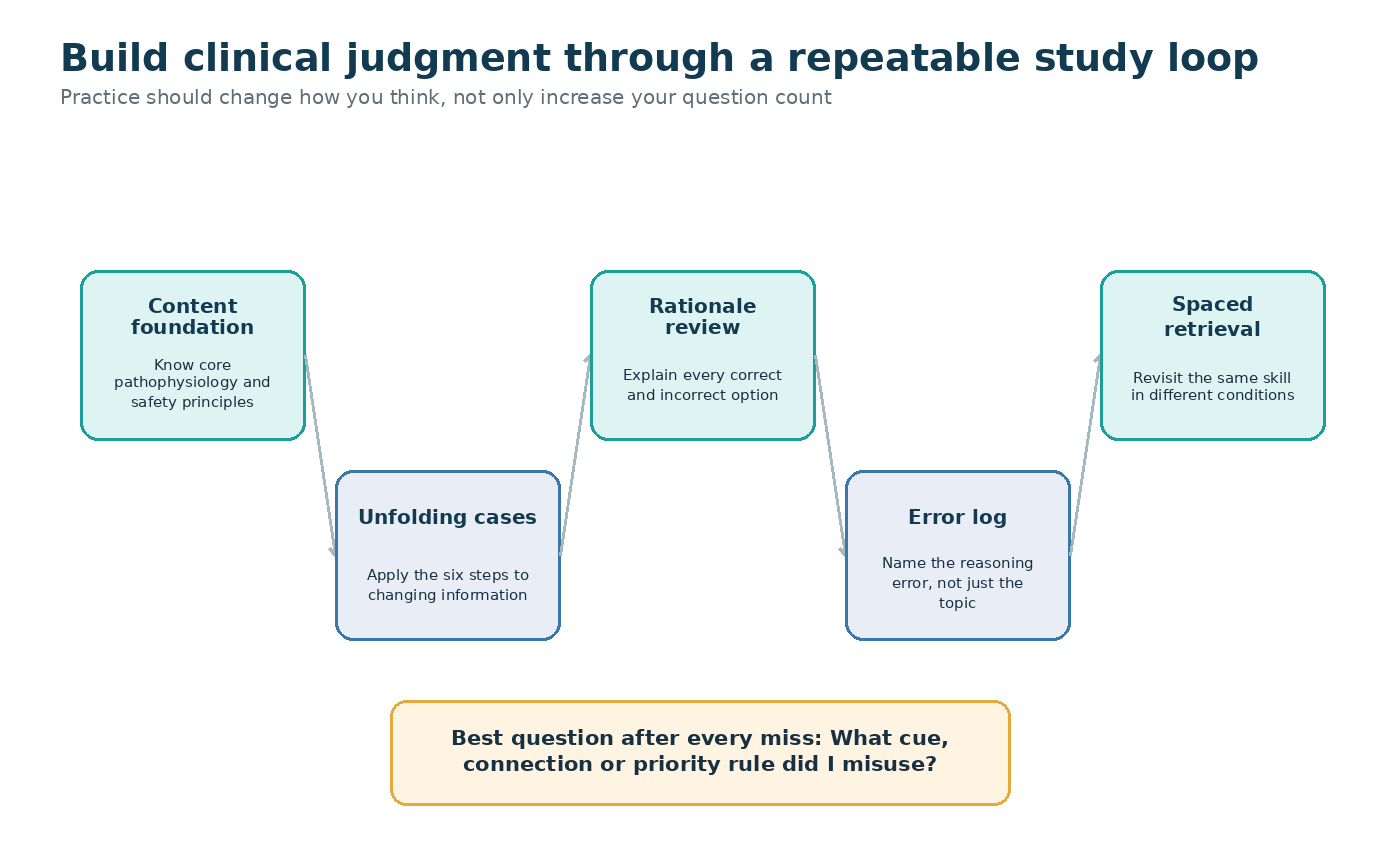
Clinical judgment improves when practice is deliberate. Completing large numbers of questions without analyzing the reasoning can reinforce weak habits. After every item, identify the tested step, the decisive cue, the relationship that mattered, the priority rule and the reason each distractor was unsafe or unsupported.
Use short drills to isolate one skill. In a cue drill, read a client record and select only the five most relevant findings. In a clustering drill, sort findings into physiological patterns. In a hypothesis drill, rank three explanations and state what evidence supports or weakens each. In an evaluation drill, predict the findings that should change after an intervention.
Go deeper: For a complete adaptive NCLEX-RN® study plan that incorporates clinical judgment practice, see the study plan guide.
25.1 Four-week focused plan
| Week | Primary focus | Daily practice |
|---|---|---|
| 1 | Recognize and analyze cues | One content review, two cue-clustering drills and 20 mixed questions with rationale review. |
| 2 | Prioritize hypotheses | Rank concerns in 10 short scenarios; explain urgency, likelihood and harm of delay. |
| 3 | Generate solutions and take action | Practise first-action, select-all and bow-tie items; compare assessment with immediate intervention. |
| 4 | Evaluate outcomes and full cases | Complete one unfolding case daily, track errors and repeat weak skills after 48–72 hours. |
25.2 A useful error log
| Date / topic | Clinical judgment step | What I missed | Correct reasoning | Review date |
|---|---|---|---|---|
| Example: postoperative client | Recognize cues | Focused on pain and missed falling urine output. | The trend across perfusion findings supported bleeding risk. | Two days later |
| Example: asthma | Analyze cues | Assumed quieter lungs meant improvement. | Diminished air movement with distress can mean worsening obstruction. | Next day |
26. Frequently Asked Questions
What are the six CJMM steps?
Recognize cues, analyze cues, prioritize hypotheses, generate solutions, take action and evaluate outcomes.
How many clinical judgment case studies are on the April 2026 NCLEX-RN®?
Every candidate receives three six-item case studies, for a total of 18 case-study items.
Are clinical judgment items only in case studies?
No. Approximately 10% of stand-alone items explicitly measure clinical judgment depending on examination length.
Does the CJMM replace the nursing process?
No. The CJMM is a measurement framework. It overlaps with the nursing process but does not replace professional nursing frameworks or clinical instruction.
Should the six steps always occur in a strict order?
No. They provide a useful sequence, but real clinical judgment is iterative. New cues can require the nurse to revisit earlier steps.
Is the first case-study question always recognize cues?
The official six-item case-study structure measures all six steps, but candidates should read the stem rather than rely only on expected order.
What is the most common cue-recognition error?
Selecting every abnormal finding instead of the findings relevant to the current question and client change.
How do I prioritize hypotheses?
Compare urgency, likelihood, harm of delay, time sensitivity and how well each hypothesis explains the complete cue pattern.
Should I always assess before acting?
No. Assess first when it can safely reduce uncertainty. Act immediately when a clear life or safety threat requires an established response.
How does partial credit change my strategy?
Select deliberately. Unsupported selections can reduce credit in eligible plus/minus items, and linked rationale responses must form a correct relationship.
Does the item format tell me how well I am doing?
No. A bow-tie, matrix or multiple-response format does not reveal item difficulty or examination performance.
How should I review a missed question?
Name the clinical judgment step, decisive cue, reasoning error and safer rule. Do not record only the medical topic.
Can I use ABC for every priority question?
ABC is important for immediate threats, but it is not a universal answer key. Context, severity, stability, time sensitivity and safety all matter.
How can I improve case-study speed?
Use the stem to guide exhibit review, build a mental timeline and summarize the priority in one sentence before selecting options.
Are the cases in this guide official NCLEX® questions?
No. They are original RN Clarity educational scenarios and are not copied from or endorsed by NCSBN®.
27. Official References
- National Council of State Boards of Nursing. 2026 NCLEX-RN® Test Plan. ncsbn.org
- NCSBN®. Clinical Judgment Measurement Model. ncsbn.org
- NCSBN®. Next Generation NCLEX®. ncsbn.org
- NCSBN®. 2026 NCLEX® Examination Candidate Bulletin. ncsbn.org
- NCSBN®. Test Plans. ncsbn.org
- Society of Critical Care Medicine. Surviving Sepsis Campaign. sccm.org
- American Diabetes Association. Standards of Care in Diabetes — 2026. diabetesjournals.org
Clinical case examples in this guide are original educational scenarios. They simplify complex care for learning and do not reproduce official examination questions, proprietary interfaces or copyrighted NCSBN® diagrams.
28. Educational and Trademark Disclaimer
This guide is provided by RN Clarity for general educational and informational purposes only. It does not replace the official 2026 NCLEX-RN® Test Plan, the current Candidate Bulletin, nursing-school instruction, local policies and protocols, orders from authorized clinicians, guidance from a nursing regulatory body, professional clinical judgment or individualized medical care. Clinical thresholds, permitted actions, escalation pathways and scope requirements can vary by client, jurisdiction and organization. Candidates and practising nurses must verify current requirements and follow applicable standards. Use of this guide does not guarantee examination success or a particular clinical outcome.
Non-affiliation statement: RN Clarity is an independent educational resource. RN Clarity is not affiliated with, endorsed by, sponsored by, approved by or officially connected with the National Council of State Boards of Nursing, Inc.
Trademark notice: NCLEX®, NCLEX-RN®, NCLEX®-PN® and NCSBN® are registered trademarks of the National Council of State Boards of Nursing, Inc. All trademarks belong to their respective owner. Their use in this guide is solely for identification, commentary and educational reference.