Prioritization, Delegation & Assignment Guide: NCLEX-RN® Management of Care
Master nursing prioritization, delegation, assignment, supervision, handoff and clinical judgment with plain-English frameworks, worked examples and 30 original practice questions — aligned to the April 2026 NCLEX-RN® Test Plan.
1. Why This Guide Matters
Prioritization, delegation and assignment are not separate leadership topics that begin only after graduation. They are daily patient-safety skills. Every shift requires nurses to decide which client needs attention first, what can safely wait, which team member is the right person for each responsibility, what information must be communicated and how the nurse will confirm that care was completed safely.
These skills are also central to the April 2026 NCLEX-RN® Test Plan. Management of Care represents 15–21% of scored content. The official activity statements include prioritizing care based on acuity, delegating and supervising care provided by others, providing and receiving handoff, organizing workload, collaborating with the team, escalating unsafe practice and providing care within legal scope. Clinical judgment is tested across the entire examination, including required case studies and stand-alone items.
The challenge is that simple slogans are useful only until two slogans point in different directions. A student may remember "ABCs first," "unstable before stable," "acute before chronic," "assess before you act," "actual before potential" and "Maslow." In a real scenario, several of these can apply at once. The nurse must compare the complete client presentations and decide which action prevents the greatest harm at that moment.
This guide therefore teaches a reasoning system rather than a list of tricks. It also separates exam strategy from real-world law. On the examination, the candidate applies broad entry-level nursing principles to the facts provided. In clinical practice, the nurse must additionally follow the law and standards of the specific jurisdiction, the employer's policy, validated competence, the client's condition and available supervision. A task that is appropriate in one jurisdiction or organization may not be appropriate in another.
Go deeper: For how Management of Care and clinical judgment are weighted and tested on the 2026 exam, see the NCLEX-RN® test plan guide.
2. The Essential Definitions
Clear definitions prevent many mistakes.
Prioritization is the process of deciding the order in which nursing needs, clients or actions should be addressed. It is based on urgency, risk, acuity, expected benefit, time sensitivity and the consequences of delay. Priority can change within minutes when new cues appear.
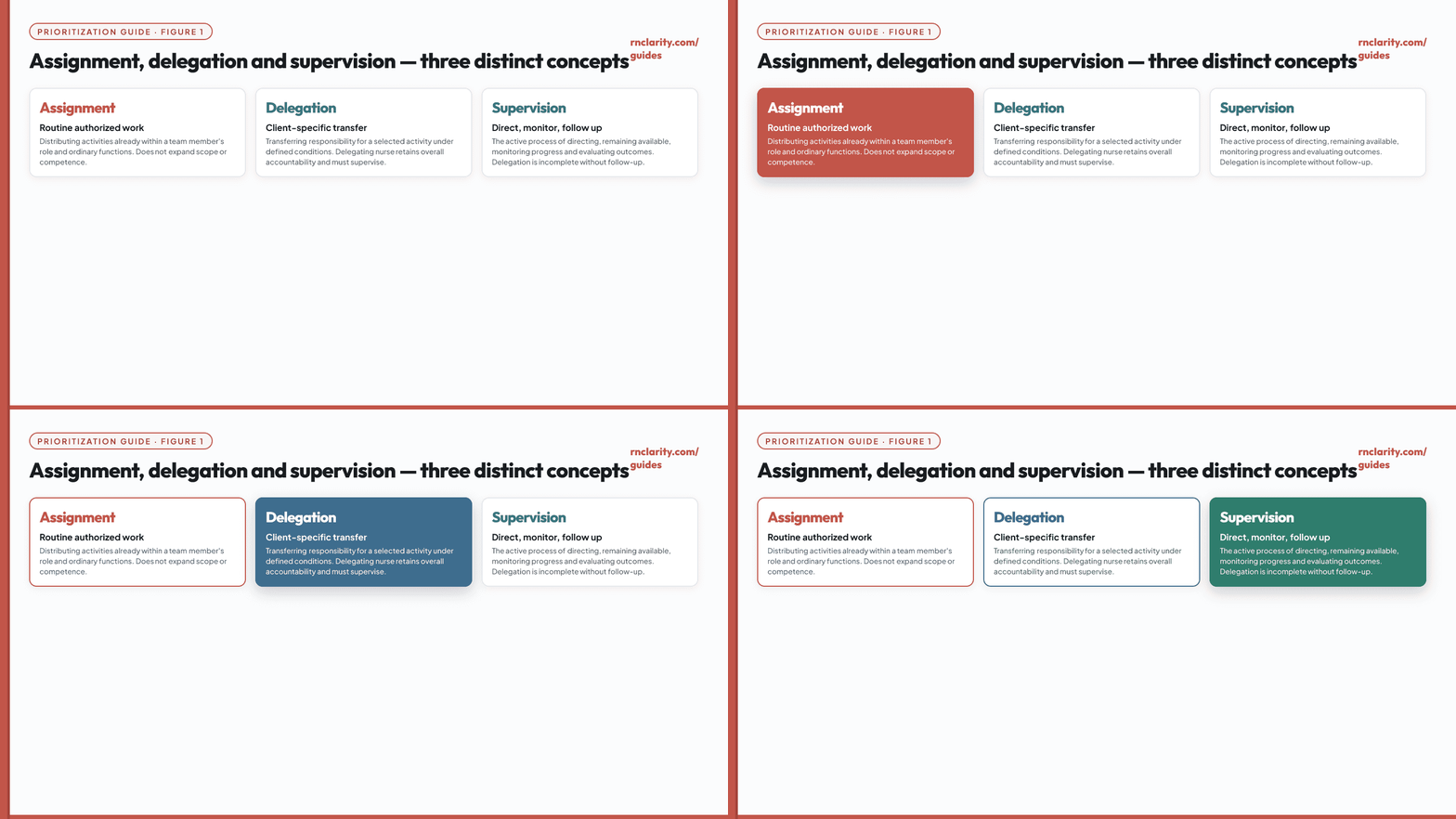
Assignment is the distribution of routine care, activities and procedures that are already within the authorized role and ordinary functions of the person receiving the work. NCSBN® guidelines describe assignment as routine care within the authorized scope of an RN or LPN/VN or within the routine functions of assistive personnel. Assignment is not a way to expand someone's scope or competence.
Delegation is a client-specific decision to transfer responsibility for a selected nursing activity, skill or procedure under defined conditions. The delegatee must be competent, accept the responsibility and communicate findings. The delegating licensed nurse retains overall accountability for the client and must provide direction, supervision, follow-up and evaluation. The delegatee remains responsible and accountable for performing the accepted activity correctly. Nursing judgment, clinical reasoning and critical decision making cannot be delegated.
Supervision is the active process of directing, monitoring, remaining available, following up and evaluating. Delegation without supervision is incomplete. The amount and closeness of supervision depend on the client's stability, the complexity of the responsibility, the experience and competence of the delegatee, and how quickly a problem could develop.
Responsibility means the obligation to perform an accepted activity correctly. Accountability means being answerable for decisions and actions. Authority means having legal and organizational permission to perform or direct the activity. The delegating nurse is accountable for the decision to delegate and for appropriate supervision. The delegatee is responsible and accountable for carrying out the accepted responsibility correctly and reporting as directed.
Handoff is different from delegation. A handoff transfers information along with authority and responsibility during a transition in care. It may occur from one RN to another at change of shift, from the emergency department to an inpatient unit or from one setting to another. Unclear transfer of responsibility and decision-making authority can contribute to error.
| Concept | Plain-English meaning | Key safety point |
|---|---|---|
| Prioritization | Deciding what or whom needs attention first | Priorities change when new cues appear. |
| Assignment | Distributing routine authorized work | Assignment does not expand scope or competence. |
| Delegation | Transferring a selected responsibility under defined conditions | The licensed nurse retains overall accountability and must supervise. |
| Supervision | Directing, monitoring, following up and evaluating | Delegation is incomplete without follow-up. |
| Handoff | Transferring information, authority and responsibility during transition | The receiving person must understand and accept responsibility. |
3. April 2026 NCLEX-RN® Alignment
The 2026 NCLEX-RN® Test Plan is effective April 2026. It places prioritization, delegation and assignment mainly within Management of Care, but the reasoning appears across every Client Needs area. A nurse may need to prioritize a client with a new neurologic deficit, assign infection-control responsibilities, delegate basic care for a stable client, supervise a measurement, escalate an unsafe medication order or coordinate discharge.
Management of Care includes providing and receiving handoff, delegating and supervising care, prioritizing by acuity, collaborating with multidisciplinary team members, receiving and verifying orders, organizing workload, documenting with approved terminology, practicing within legal scope and escalating unsafe practice.
The integrated processes also matter. Clinical judgment requires the candidate to recognize cues, analyze cues, prioritize hypotheses, generate solutions, take action and evaluate outcomes. Communication and documentation shape the quality of handoffs and delegation. The nursing process determines what must be assessed, planned and evaluated by the RN. Teaching and learning influence whether a responsibility involves new education that should remain with the RN.
The examination tests safe entry-level nursing practice, not local trivia. When an item does not provide a special policy, use general principles: unstable and unpredictable clients need RN assessment and judgment; routine, predictable care is more suitable for assignment or delegation to appropriately trained team members; the RN must communicate limits and follow up; and any unexpected finding must be reported and reassessed.
Important: This general exam framework should never be used as a universal legal task list. NCSBN® emphasizes that laws and rules differ among jurisdictions and that nurses are responsible for knowing what is permitted where they practice. Employer policy may be more restrictive than the law.
Go deeper: For the six CJMM steps and how clinical judgment is tested across every item type, see the clinical judgment guide.
4. A Complete Priority Decision Model
A reliable priority decision combines six questions.
First, is there an immediate threat to life or safety? Look for airway obstruction, severe breathing difficulty, poor perfusion, uncontrolled bleeding, rapidly changing mental status, active seizure, anaphylaxis, suicidal action, violence, fire or another hazard. An obvious emergency action should not be delayed by routine data collection.
Second, which client is unstable or becoming unstable? Instability is shown by change and poor physiologic reserve, not simply by a dramatic diagnosis. New restlessness, falling blood pressure, increasing oxygen requirement, decreasing urine output, weak pulses, cyanosis, new confusion or an unexpected response to treatment may be more important than a chronic abnormality that is at baseline.
Third, which problem is acute or unexpected? Acute and unexpected findings often require faster assessment because the cause and trajectory are uncertain. A chronic condition can still be the highest priority when it suddenly worsens. "Chronic" never means "safe."
Fourth, is the care time-sensitive? A stable-looking client may still need action before a deadline. Examples include a scheduled medication linked to food, a blood glucose before a meal, a specimen before antibiotics, a fetal assessment after a concerning report or preparation for a procedure. Time sensitivity is not the same as immediate physiologic instability, but it affects workload planning.
Fifth, which delay could cause the greatest harm? Compare the likely consequence of waiting. A discharge question can usually wait a few minutes; stridor cannot. A routine dressing can often wait; suspected internal bleeding cannot.
Sixth, where can nursing action change the outcome now? Priority is not just identifying the sickest person. It is choosing the next nursing action that can prevent deterioration, protect safety or move care forward. Sometimes that means calling for help, stopping a harmful process or obtaining a focused assessment before choosing treatment.
| Priority signal | Questions to ask | Examples |
|---|---|---|
| Immediate threat | Could the client die or suffer serious harm within minutes? | Airway obstruction, pulselessness, severe bleeding, active violence |
| Instability | Is there a new or rapidly worsening change? | New confusion, falling pressure, rising oxygen need |
| Time sensitivity | Is there a deadline or treatment window? | Premeal glucose, specimen before antibiotics, stroke response |
| Consequence of delay | What is likely to happen if care waits? | Deterioration, missed therapy, preventable injury |
| Nursing leverage | What can nursing action change now? | Stop exposure, support airway, escalate, reassess |
Use all six questions together. Do not select a client because one diagnosis sounds severe. Do not select a vital sign without checking baseline, trend and symptoms. Do not let a memorized framework replace the scenario.
Go deeper: For how these priority frameworks appear on NCLEX-RN® practice items, see the practice questions guide.
5. ABCDE: A Rapid Safety Structure
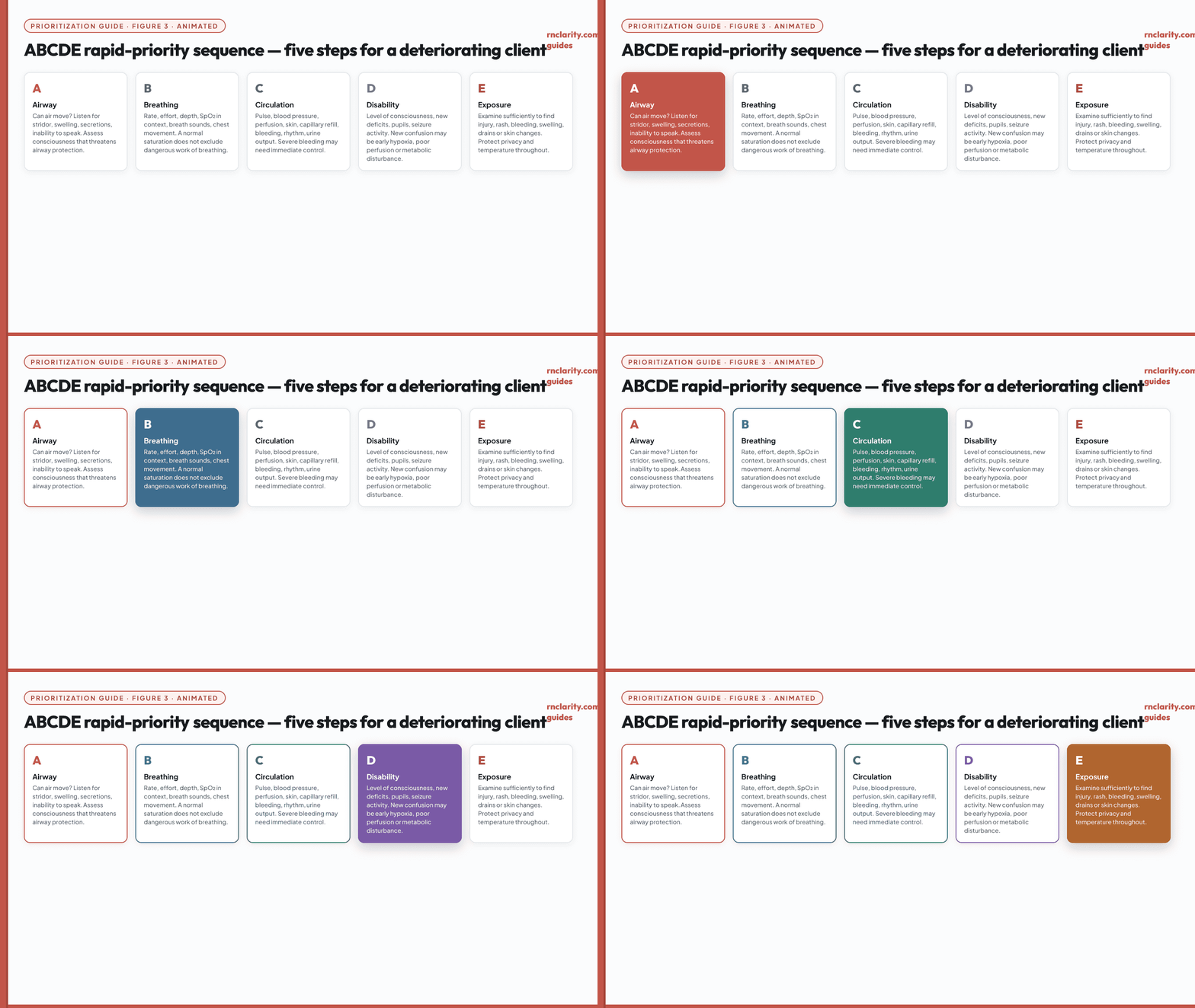
ABCDE is a rapid primary-survey sequence used when a client may be deteriorating.
A — Airway. Ask whether air can move. Look and listen for obstruction, stridor, swelling, secretions, inability to speak, facial trauma or reduced consciousness that threatens airway protection.
B — Breathing. Assess rate, effort, depth, oxygen saturation in context, chest movement, breath sounds, color and signs of fatigue. Breathing includes both oxygenation and ventilation. A normal saturation does not exclude dangerous work of breathing or carbon dioxide retention.
C — Circulation. Assess pulse, blood pressure, perfusion, skin, capillary refill, bleeding, rhythm and urine output. Severe bleeding may require immediate control while help is activated.
D — Disability or neurologic status. Assess level of consciousness, new deficits, pupils, seizure activity and glucose when appropriate. New confusion may be an early sign of hypoxia, poor perfusion, infection, medication effect or metabolic disturbance.
E — Exposure and environment. Examine the client sufficiently to find injury, rash, bleeding, swelling, drains or skin changes while protecting privacy and temperature.
ABCDE does not mean the nurse ignores an obvious active hazard. In a fire, the nurse first protects people from immediate danger according to the emergency plan. When a client is pulseless, the trained responder begins the appropriate emergency response rather than completing a routine head-to-toe assessment. When a transfusion reaction is suspected, the transfusion is stopped immediately while the nurse assesses and follows the protocol.
The value of ABCDE is speed and order. It prevents the nurse from focusing on a detailed lower-priority problem while a life-threatening problem remains unnoticed. After each intervention, reassess. An airway that was open can become obstructed. A client who initially responded can deteriorate again.
Go deeper: For how the CJMM "Recognize Cues" and "Prioritize Hypotheses" steps apply to rapid deterioration scenarios, see the clinical judgment guide.
6. Stable Versus Unstable
The phrase "unstable before stable" is useful when stability is judged correctly.
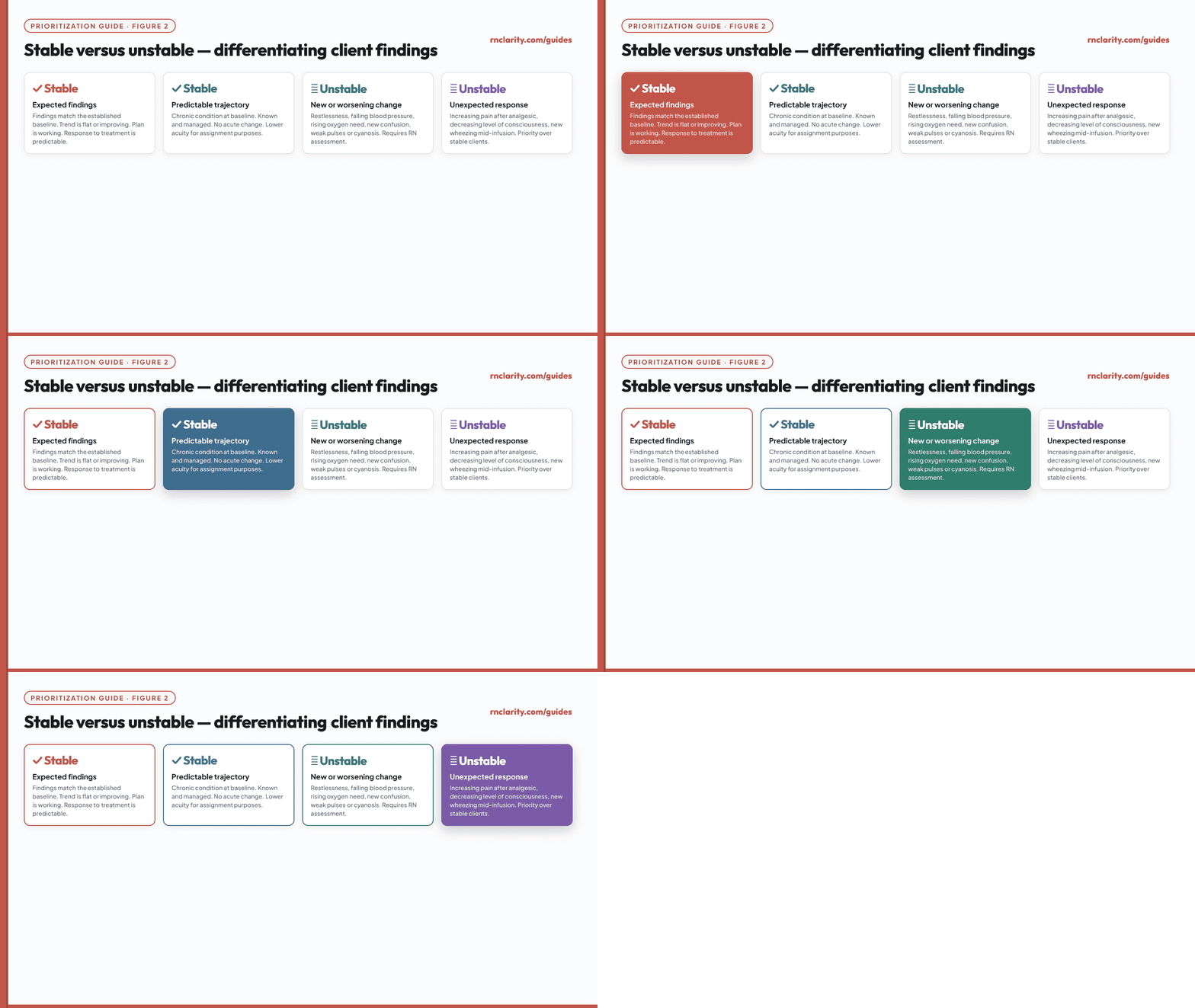
A more stable client has expected findings, predictable responses, no acute change and a plan that is working. A more unstable client has new or worsening findings, an unpredictable response, rapid trend change or compromise in airway, breathing, perfusion or mental status.
Stability is not determined only by location. A client in intensive care may be stable under close monitoring. A client on a general unit may be rapidly deteriorating. Stability is not determined only by diagnosis. A client with chronic heart failure at baseline may be more stable than a postoperative client with subtle new bleeding.
Trend matters. Blood pressure of 100/64 mm Hg may be normal for one person and alarming for another whose usual pressure is 160/90 mm Hg and who is now pale and confused. Heart rate of 108 may reflect pain, fever, dehydration, bleeding or anxiety. The number requires context.
Unexpected response to treatment is a strong instability cue. Examples include increasing pain after an intervention that should relieve it, decreasing level of consciousness after an opioid, new wheezing during medication administration, worsening hypotension during an infusion or reduced urine output despite resuscitation.
When two clients are both unstable, compare which threat is more immediate, which is changing faster, which can deteriorate irreversibly sooner and what action is available. Call for help early. Prioritization does not mean the RN must manage every emergency alone.
7. Acute, Chronic, Expected and Unexpected
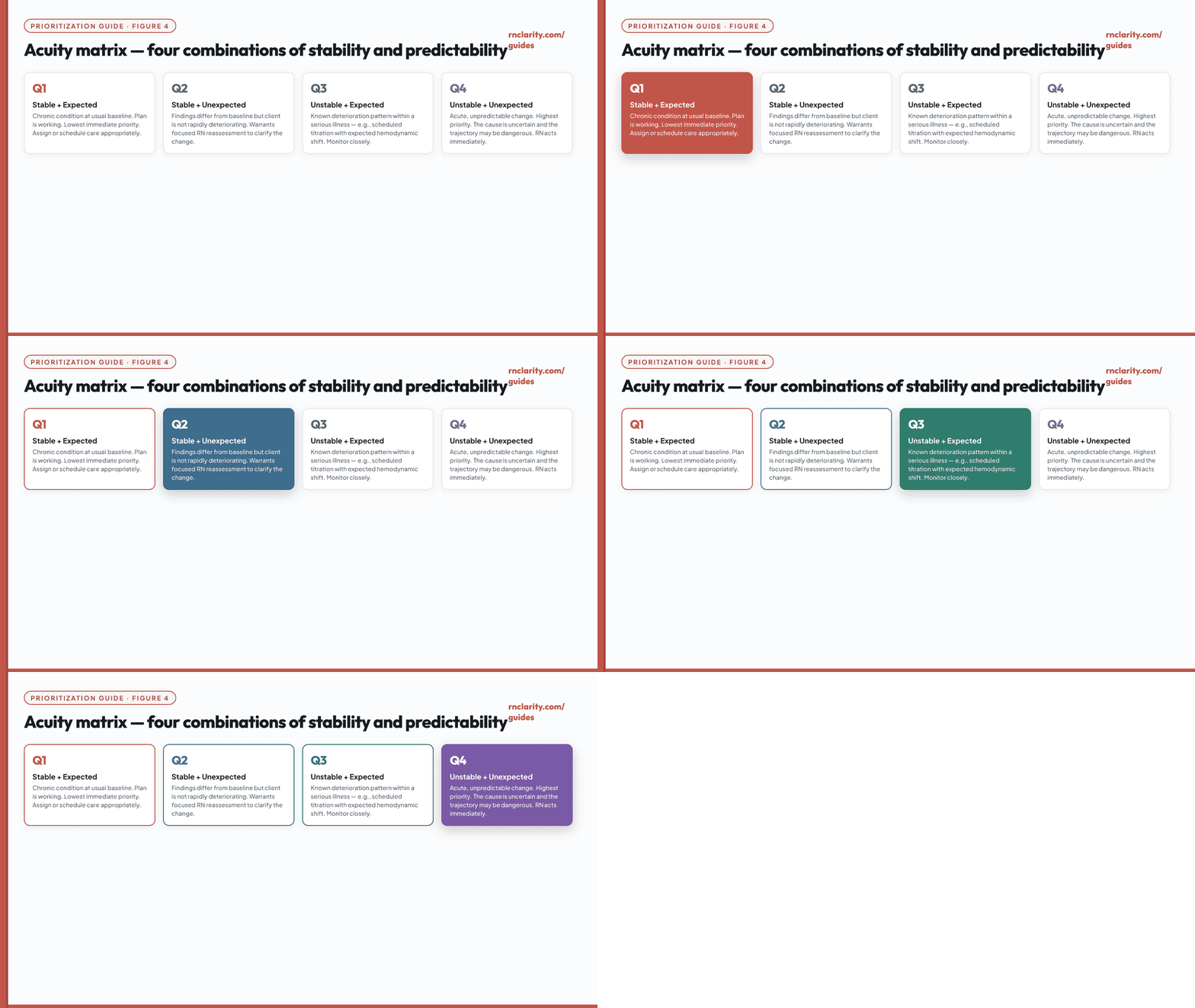
"Acute before chronic" is incomplete. The more useful comparison is acute or chronic combined with expected or unexpected.
A chronic expected finding is often lower priority. A client with long-standing controlled neuropathic pain at the usual level may safely wait while the nurse assesses a new change in another client.
An acute expected finding may need timely care but is not automatically the first emergency. Moderate incisional pain after surgery with stable vital signs is important and should be treated, yet it may wait briefly while the nurse responds to new stridor.
A chronic unexpected finding can be a high priority. A client with COPD who becomes newly confused and needs increasing oxygen has an acute change within a chronic condition. The chronic label does not lower the urgency.
An acute unexpected finding is often the highest priority because the client may be deteriorating and the cause may be dangerous. Sudden unilateral weakness, new chest pressure, abrupt severe dyspnea or rapidly falling blood pressure requires prompt action.
Expected does not mean "ignore." Expected findings still require planned care, monitoring and evaluation. The distinction helps order care, not remove care.
8. Actual Versus Potential Problems
"Actual before potential" is another useful but limited rule.
A serious current problem usually outranks a distant risk. A client who is actively hypoglycemic needs treatment before a stable client receives routine teaching about future hypoglycemia prevention.
A potential problem can become the first priority when the risk is immediate and catastrophic. A client with rapidly increasing facial swelling after an allergen exposure may not yet have complete airway obstruction, but the risk is imminent. A confused client attempting to climb over a bedrail has a potential fall injury that requires immediate prevention. A client expressing intent, plan and access for suicide has an immediate safety emergency even if physical injury has not yet occurred.
The key is the probability, severity and timing of harm. Ask how likely the harm is, how serious it would be and how soon it could occur. A low-probability distant risk usually waits. A high-probability severe risk that can occur within minutes does not.
9. Assess First or Act First
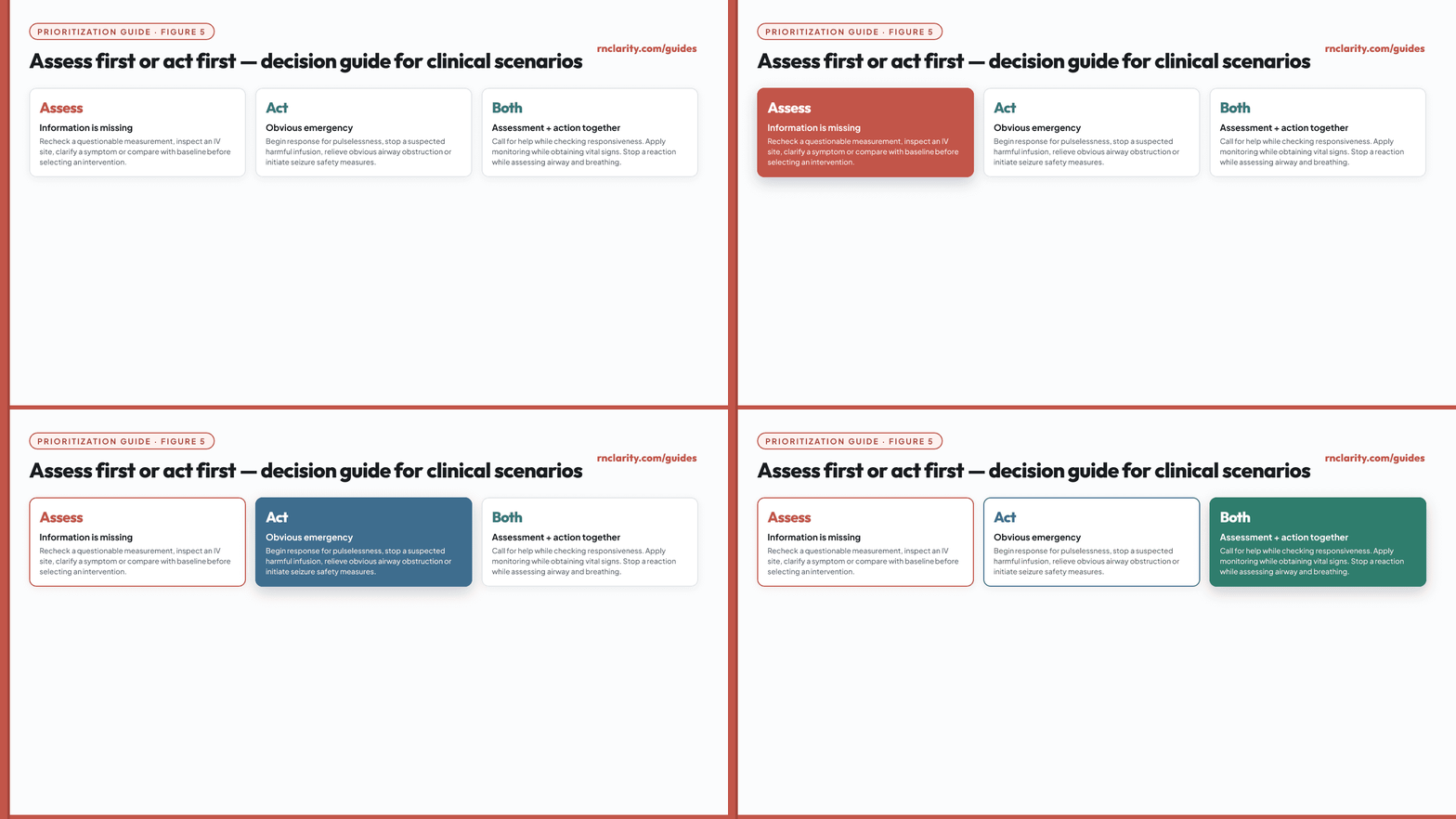
Assessment is the foundation of nursing action, but "always assess first" is unsafe when the correct emergency action is already clear.
Assess first when information is missing and the client is not in an obvious emergency. Recheck a questionable measurement, inspect an IV site, clarify a symptom, compare a value with baseline or perform a focused assessment before selecting among possible interventions.
Act first when an immediate threat requires a known response. Examples include beginning emergency response for pulselessness, stopping a suspected harmful infusion, protecting a client from active danger, relieving an obvious airway obstruction according to training or initiating seizure safety measures.
Often assessment and action occur together. The nurse may call for help while checking responsiveness, apply monitoring while obtaining vital signs or stop a suspected reaction while assessing airway and breathing.
The safest exam question is not "Does assessment usually come first?" It is "What information is still needed, and would waiting for it create harm?"
10. Using Maslow, Least Restrictive Care and Other Frameworks
Maslow's hierarchy can help compare broad needs: physiologic needs, safety, belonging, esteem and self-actualization. A severe physiologic threat often outranks a lower-level psychosocial need. However, Maslow should not be used mechanically. Suicide risk is a safety emergency. Acute panic with dangerous hyperventilation may have physiologic consequences. Refusal of care requires assessment of decision-making capacity, informed choice and immediate risk.
"Least restrictive" is especially relevant to restraints, behavior management and protection of rights. The nurse should use the least restrictive effective intervention consistent with safety, law and policy. This does not mean choosing an ineffective intervention while harm is occurring.
"Least invasive" may help when two interventions are equally safe and effective, but urgency and effectiveness come first. A noninvasive measure is not preferred if it delays required treatment.
"Safety before comfort" is helpful, yet severe pain can be a sign of deterioration and must be assessed. Comfort is not unimportant; it is simply compared with the consequences of delay.
Frameworks are lenses. Clinical judgment integrates them.
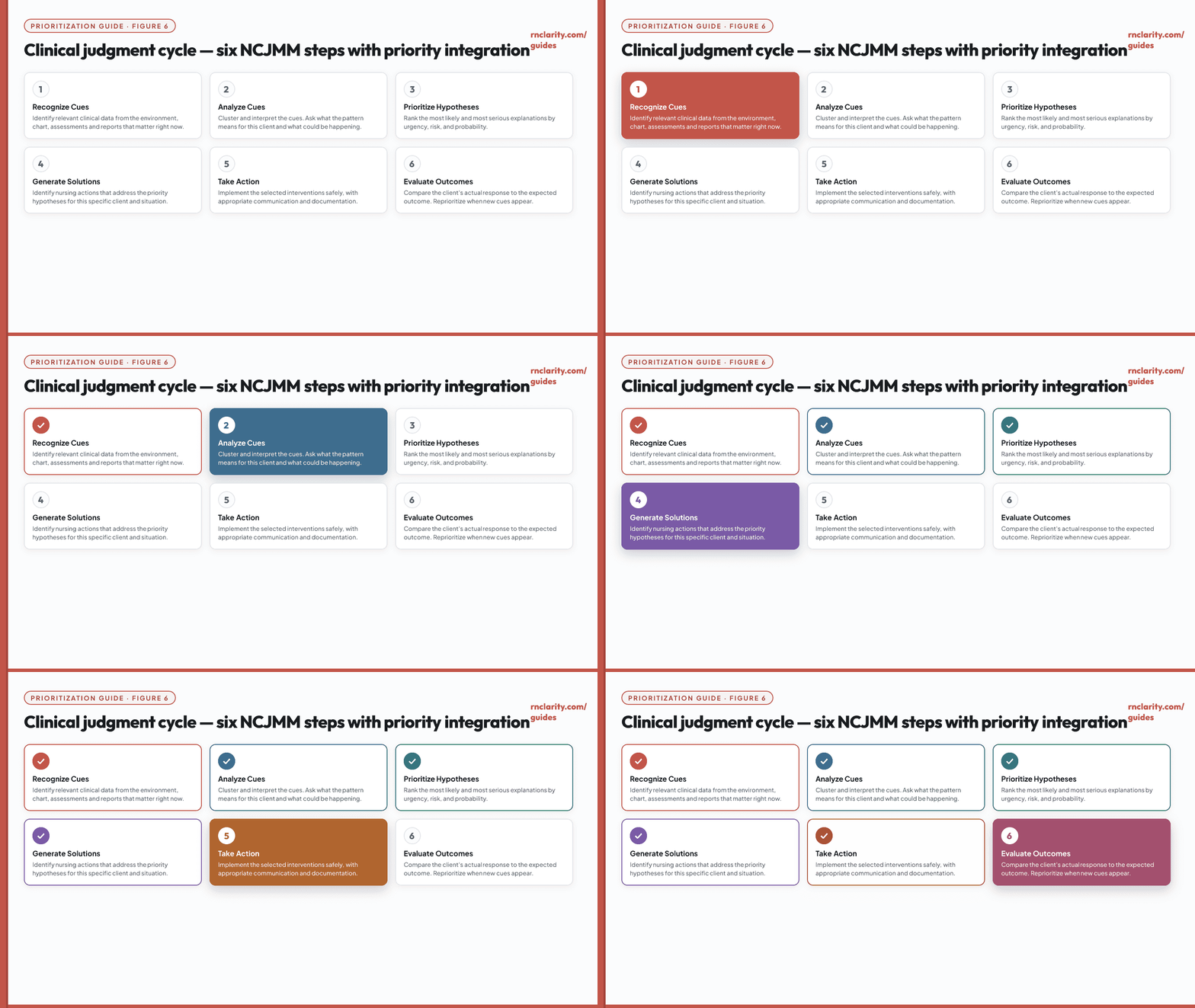
Go deeper: For the six CJMM steps with clinical examples and how they are tested on NGN items, see the clinical judgment guide.
11. Prioritizing Multiple Clients
When a question asks which client to see first, create a quick mental board.
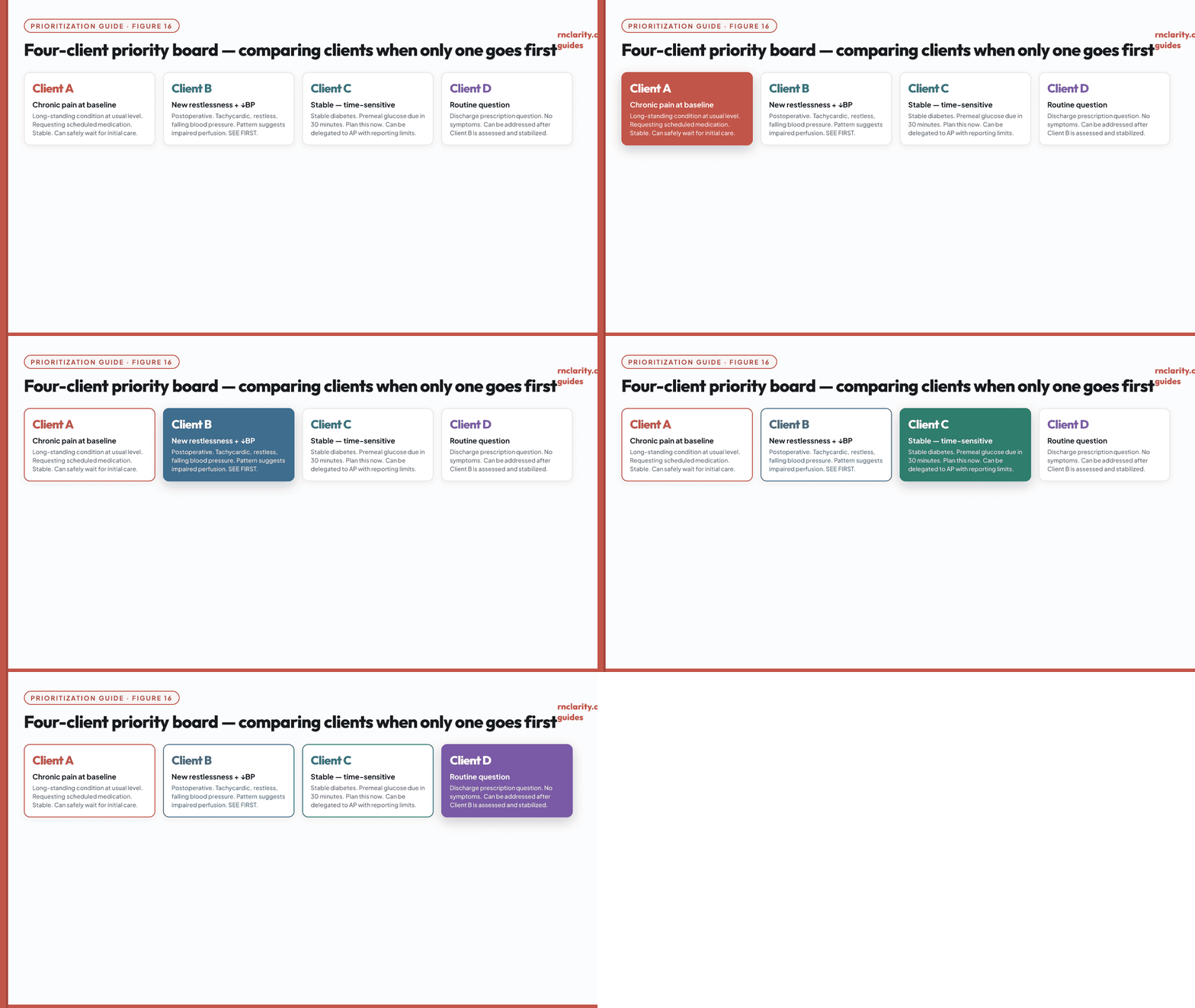
For each client, identify the newest change, the most threatening finding, the trend, the time-sensitive need and what could happen if care is delayed. Ignore nonessential detail until you understand the priority problem.
A useful sequence is:
- Eliminate clients with clearly routine, expected and safely deferrable needs.
- Identify any immediate life or safety threat.
- Compare unstable or changing clients.
- Consider time-critical interventions and treatment windows.
- Decide which nursing action has the greatest immediate benefit.
Example: Client A has chronic heart failure with baseline edema and needs diet teaching. Client B is postoperative with new restlessness, tachycardia and falling blood pressure. Client C has stable diabetes and needs a scheduled premeal glucose in 30 minutes. Client D has a discharge-prescription question and no symptoms. Client B is first because the pattern suggests possible bleeding and impaired perfusion. The nurse then plans Client C's time-sensitive glucose, while teaching and discharge questions can follow or be appropriately shared.
Do not confuse "first client to assess" with "first task to complete." Another team member may safely obtain a routine measurement while the RN assesses the unstable client, provided the assignment or delegation is appropriate and the RN follows up.
12. Prioritizing Needs Within One Client
A single client may have many problems. Identify which one threatens function or safety now.
Start with the presenting change. Then use ABCDE, perfusion, neurologic status, bleeding, infection, glucose, pain and safety as appropriate. Cluster related cues rather than treating each finding independently.
For a postoperative client with pain, tachycardia, hypotension, cool skin and low urine output, pain is not automatically the priority merely because it is reported first. The pattern suggests impaired perfusion and possible bleeding. The nurse should respond to the circulation problem while addressing pain safely.
For a client with pneumonia, anxiety and low oxygen saturation with increased work of breathing, the priority is oxygenation and ventilation. Therapeutic communication can occur while respiratory support and assessment are performed.
For a client with diabetes who is sweaty, shaky and confused, hypoglycemia is the priority. Long-term teaching about diet should wait until the immediate problem is treated and the client can learn.
Evaluation is part of priority care. After acting, ask whether the expected outcome occurred. If not, the priority may change.
Go deeper: For how clustering cues and analyzing patterns connects to the CJMM's "Analyze Cues" step, see the NGN case studies guide.
13. Assignment Principles
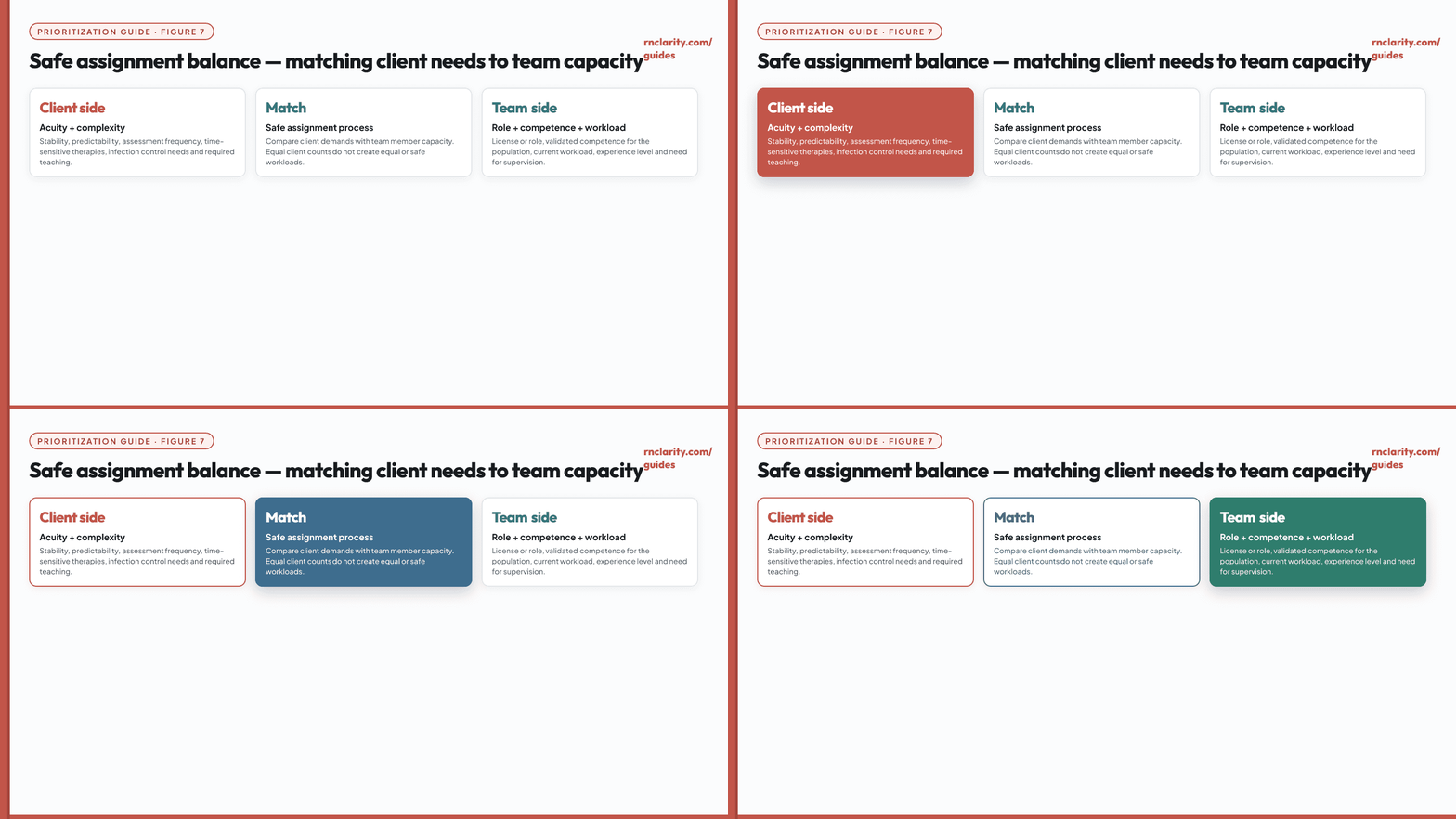
A safe assignment matches client needs with the authorized role, competence and workload of the team member. Equal client counts do not necessarily create fair or safe assignments.
Consider client acuity, predictability, required assessments, time-sensitive therapies, complexity, infection-control needs, continuity, geography of the unit and the availability of support. Consider the team member's license or role, orientation, verified competence, experience with the population, current workload and need for supervision.
| Care characteristic | More likely RN | May fit LPN/VN if authorized | May fit assistive personnel if trained |
|---|---|---|---|
| Client condition | Unstable, unpredictable, rapidly changing | Stable or predictable under established plan | Stable with routine support needs |
| Reasoning required | Comprehensive assessment, judgment, planning, evaluation | Focused care and established interventions within scope | Routine task and observation with clear reporting |
| Teaching | New, complex, individualized teaching and evaluation | Reinforcement of established teaching if within scope | No independent nursing teaching |
| Examples | Triage, initial assessment, rescue, major plan revision | Routine medications or procedures depending on jurisdiction | Hygiene, repositioning, routine measurements, ambulation when appropriate |
These examples are not universal law. The legal scope of LPN/VNs and assistive personnel varies. Medication administration, sterile procedures, catheterization, specimen collection and other activities may be allowed, restricted or treated as delegated responsibilities depending on the jurisdiction, setting and validated competence.
The assigning nurse should avoid "dumping" tasks. An assignment must be clear, reasonable and safe. The receiving team member should disclose concerns about competence or workload. Safety concerns should be addressed through the charge nurse or leadership process rather than silently accepted.
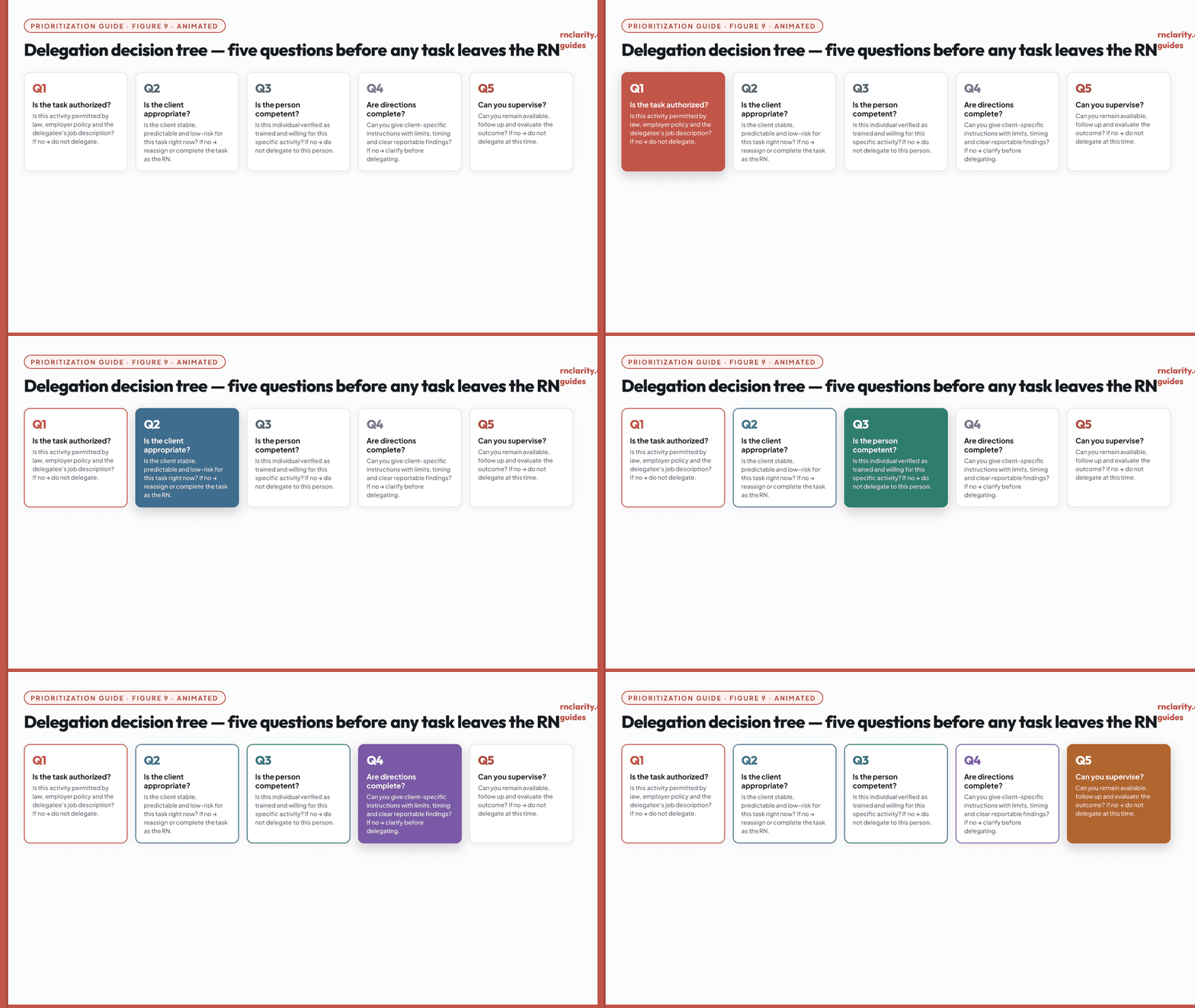
14. Delegation and the Five Rights
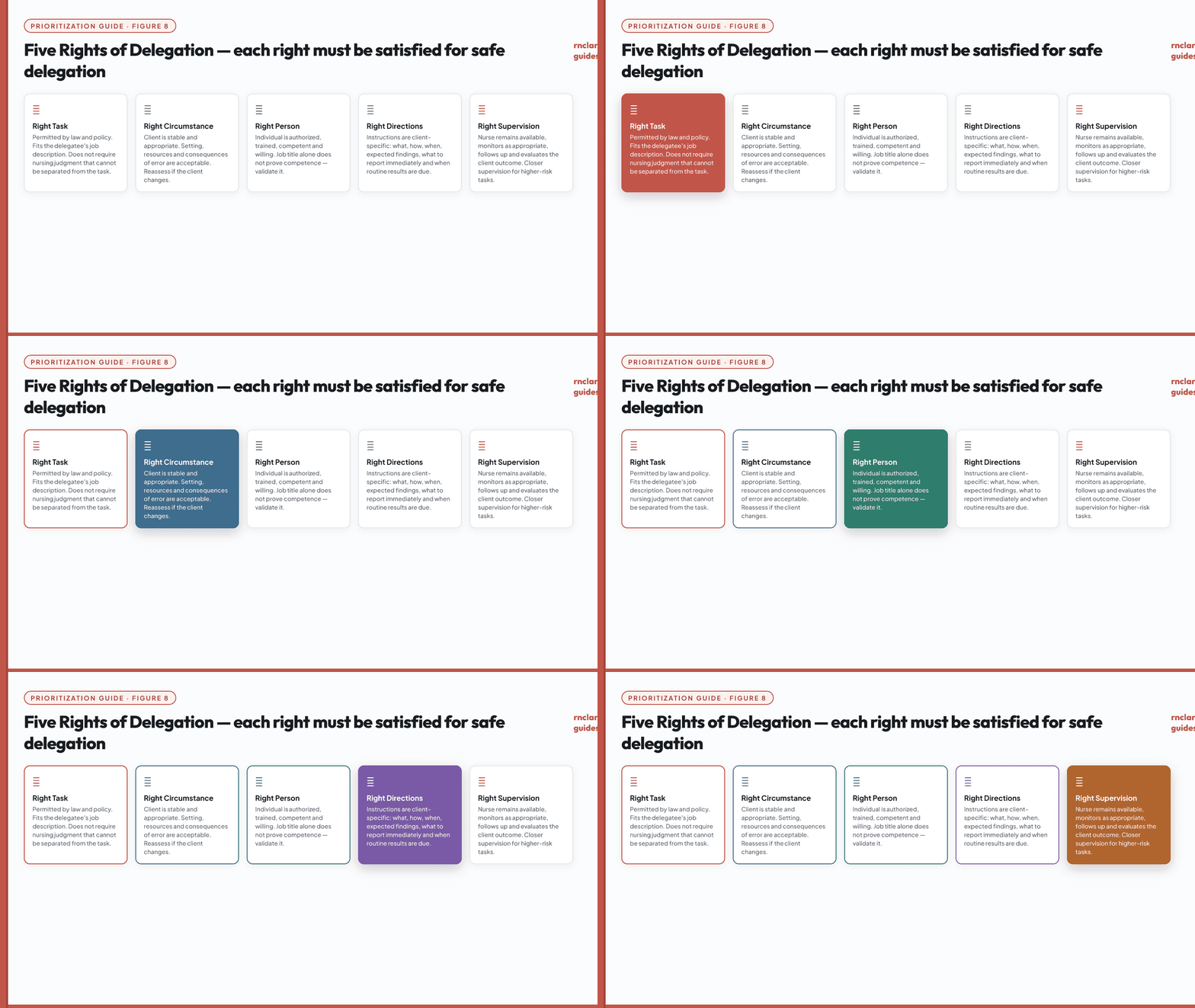
The Five Rights of Delegation are the right task, right circumstance, right person, right directions and communication, and right supervision and evaluation. NCSBN® and ANA guidelines emphasize all five.
Right task means the activity is permitted by law and policy and fits the delegatee's job description or an established delegation process. It must not require nursing judgment that cannot be separated from the task.
Right circumstance means the client is appropriate for the responsibility. Stability, predictability, setting, available resources and the consequences of error matter. If the client's condition changes, the nurse reassesses whether the delegation remains appropriate.
Right person means the individual is authorized, trained, competent and willing to accept. Job title alone does not prove competence. The nurse should know whether competency has been validated for the specific activity.
Right directions and communication means instructions are client-specific. State what to do, how, when, expected findings, what must be reported immediately, when routine results are due and what the delegatee must not change independently. Communication is two-way; questions and confirmation are expected.
Right supervision and evaluation means the nurse remains available, monitors as appropriate, follows up, evaluates the client outcome and ensures documentation. The closer the risk or the less experienced the delegatee, the closer supervision should be.
Failure of one right can make an otherwise ordinary task unsafe.
| Right | Questions for the nurse |
|---|---|
| Right task | Is it allowed by law and policy? Does it avoid nondelegable judgment? |
| Right circumstance | Is the client stable? Is the outcome predictable? Are resources available? |
| Right person | Is the person authorized, competent and willing? |
| Right directions and communication | Are the exact task, limits, timing and reportable findings clear? |
| Right supervision and evaluation | Can the nurse remain available, follow up and evaluate the outcome? |
Go deeper: For how delegation and assignment questions appear in the practice question bank with full rationales, see the practice questions guide.
15. What Generally Should Remain with the RN
General entry-level examination principles keep nursing judgment with the RN. This often includes the initial comprehensive assessment, interpretation of assessment findings, nursing diagnosis or clinical judgment, development of the nursing plan, triage, decisions for unstable clients, evaluation of outcomes, new or complex teaching and decisions about delegation.
The RN may obtain help with data collection, but the RN interprets the data. Assistive personnel may measure vital signs on an appropriate stable client, but they do not decide whether the values represent shock. A licensed nurse may reinforce established teaching within scope, but initial individualized teaching that requires assessment and evaluation is generally retained by the RN.
"Assessment" can cause confusion. Some jurisdictions allow LPN/VNs to perform focused data collection or assessments within scope. On an NCLEX-RN® item, distinguish routine collection from the RN's responsibility for initial comprehensive assessment, analysis, planning and evaluation. In real practice, use the exact language of the jurisdiction and employer.
A task should return to the RN when the client becomes unstable, findings are unexpected, the activity requires modification based on judgment, the delegatee reports a concern or adequate supervision is not available.
16. Matching Work to RN, LPN/VN and Assistive Personnel
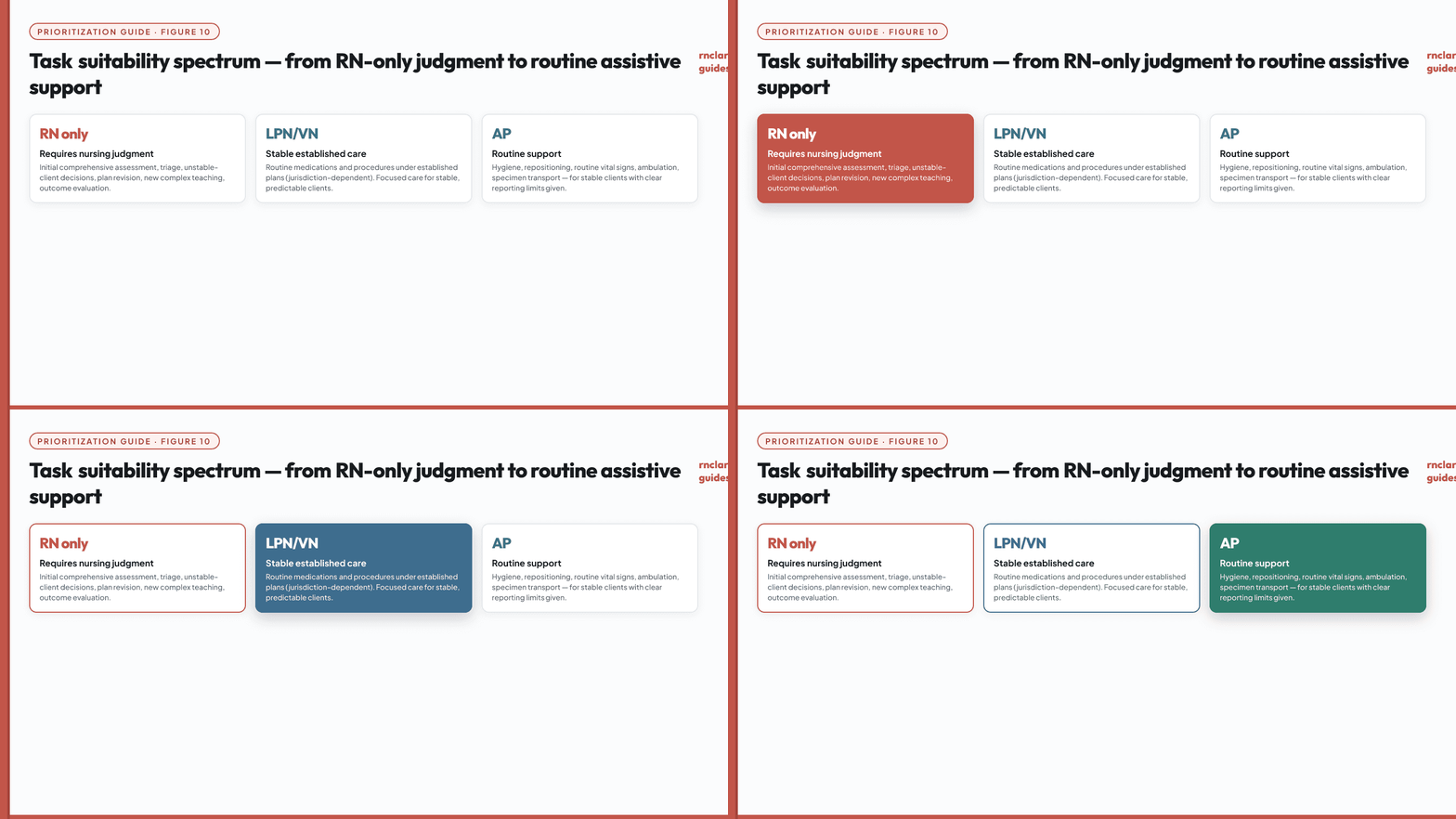
Use a spectrum rather than a rigid memorized list.
Work that is routine, predictable, noninvasive and low in nursing judgment is more suitable for trained assistive personnel. Examples may include hygiene, repositioning, ambulation of a stable client, feeding a client without swallowing risk, routine intake and output, bed making and routine measurements. The RN must specify what abnormal or unexpected findings to report.
Work involving established plans for stable clients may be appropriate for an LPN/VN when allowed by the jurisdiction and employer. Examples may include routine procedures, medication administration, focused data collection, dressing care and reinforcement of established teaching. The exact scope varies substantially.
Work involving comprehensive assessment, unstable or unpredictable clients, creation or major revision of the plan, triage, new teaching, evaluation, complex clinical judgment or rescue remains at the RN level.
The setting changes the decision. A responsibility that is routine in long-term care may be unusual in an outpatient office. A person may be technically trained but unfamiliar with a specific population. A client who was stable an hour ago may no longer be stable.
The safest question is not "Can this role always do this task?" It is "Is this responsibility authorized and safe for this person, this client, this setting and this moment, with appropriate communication and supervision?"
17. Directions That Make Delegation Safe
Vague directions create hidden risk. "Get vital signs" may be insufficient.
A useful direction includes the client, exact activity, timing, precautions, expected result, reportable limits and follow-up. For example: "Please obtain blood pressure, heart rate, respiratory rate, oxygen saturation and temperature for Ms. Lee by 0900. She returned from surgery two hours ago. Keep her on prescribed oxygen. Tell me immediately if systolic pressure is below the ordered parameter, oxygen saturation is below the ordered goal, respiratory rate is unusually low or high, she is difficult to awaken, or you notice new bleeding. Report all results to me even if they are within range."
The nurse should avoid giving a delegatee authority to make an unapproved clinical decision. Instead of "Adjust the oxygen if the saturation is low," provide instructions consistent with policy and role, such as "Notify me immediately if it is below the ordered goal; do not change the flow unless this is within your authorized role and the established protocol."
The delegatee should repeat back key instructions, clarify uncertainty and explicitly accept the responsibility. If the delegatee says the task is outside competence or workload, the nurse must reassess the plan rather than pressure the person to perform unsafe care.
18. Supervision, Follow-up and Rescue
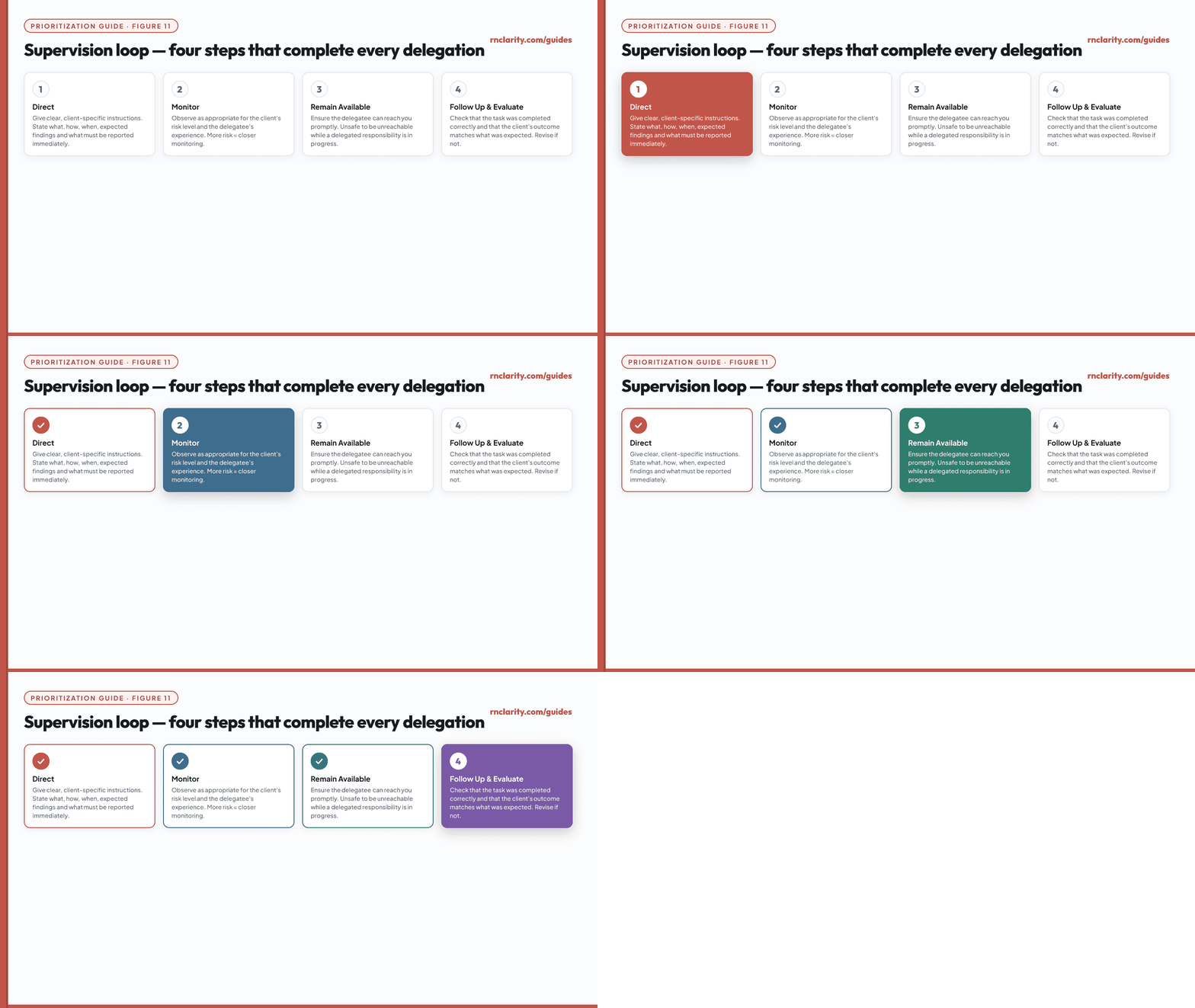
The delegating nurse must remain available and decide how closely to supervise.
Direct supervision may be needed when a skill is new, the risk is higher or the client could change quickly. Indirect supervision may be adequate for a well-established routine activity in a stable client. Supervision is not surveillance for punishment. It is a safety system that supports the delegatee and client.
Follow-up questions include: Was the activity completed? What were the findings? Were they expected? Was anything delayed? Did the client tolerate the activity? Was documentation completed? Does the care plan need to change?
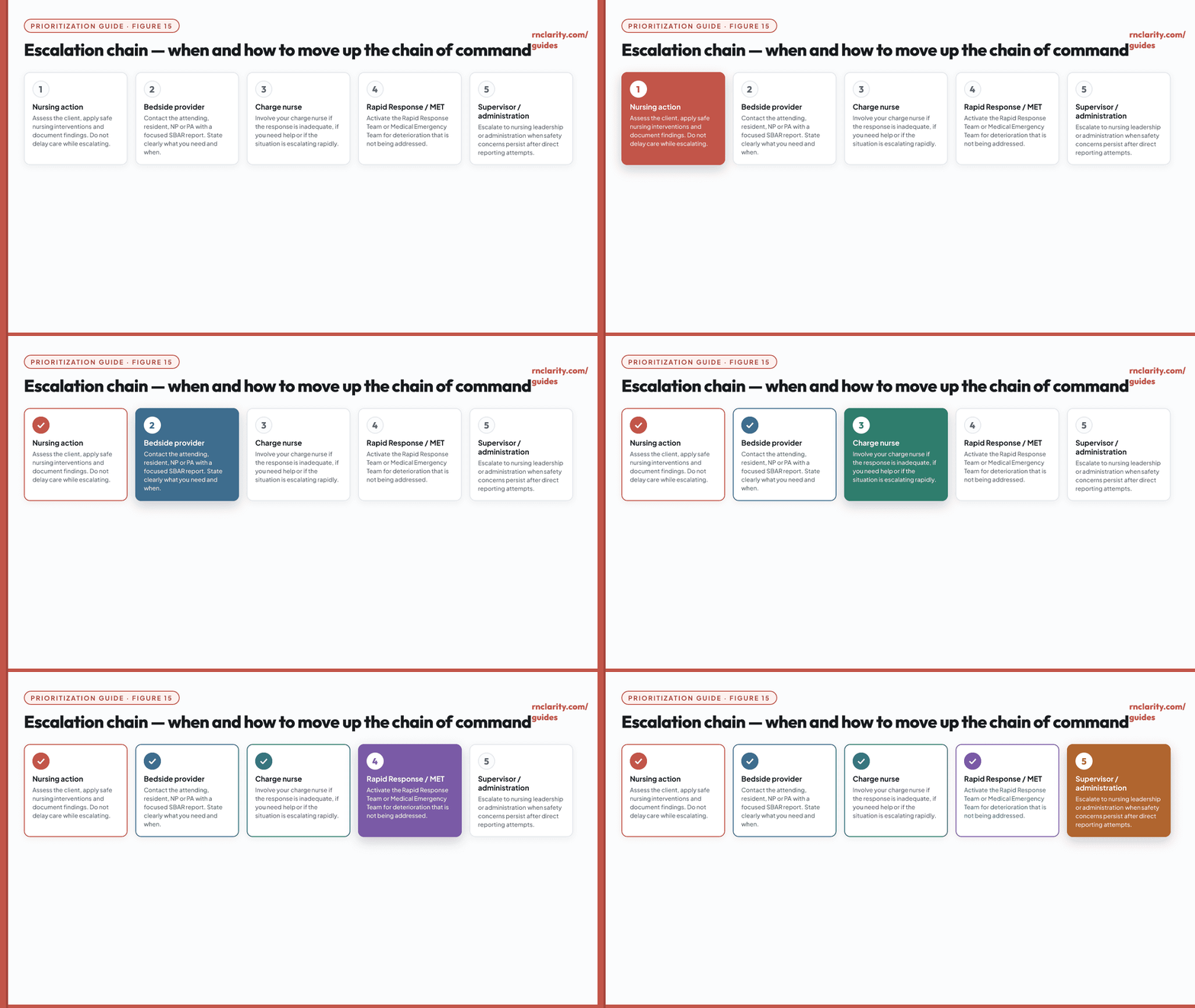
If the delegatee reports an unexpected finding, the RN reassesses. The RN should not ask the delegatee to interpret a complex change or continue beyond the delegated limits. The nurse may need to perform the activity, withdraw the delegation, call for additional help or escalate the client's care.
The delegatee also has duties: accept only responsibilities for which the person is competent, communicate questions and concerns, report unexpected findings, perform the activity correctly, document as required and inform the licensed nurse if completion is not possible.
19. Handoff and Closed-Loop Communication
Priorities fail when important information is lost during transitions.
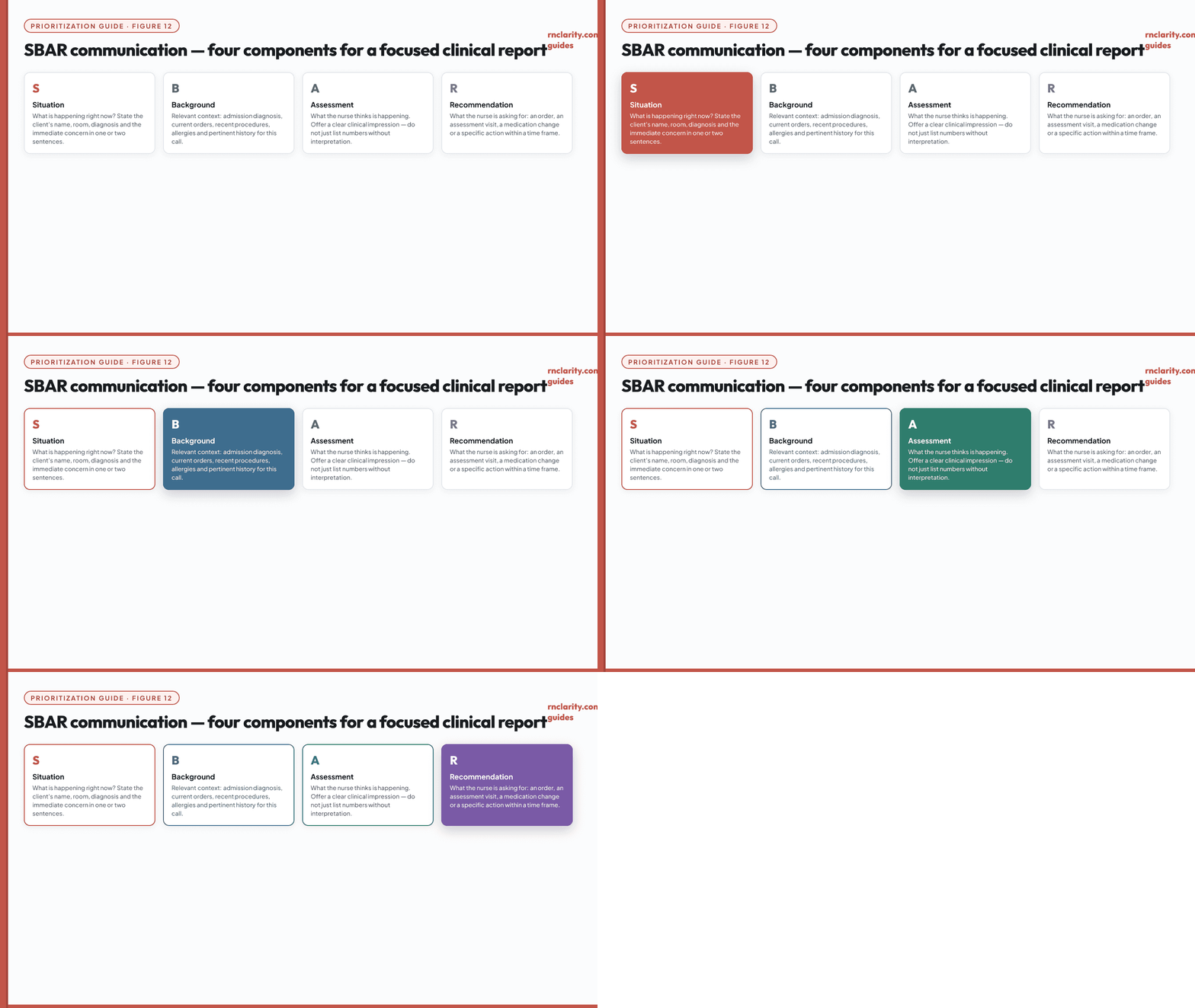
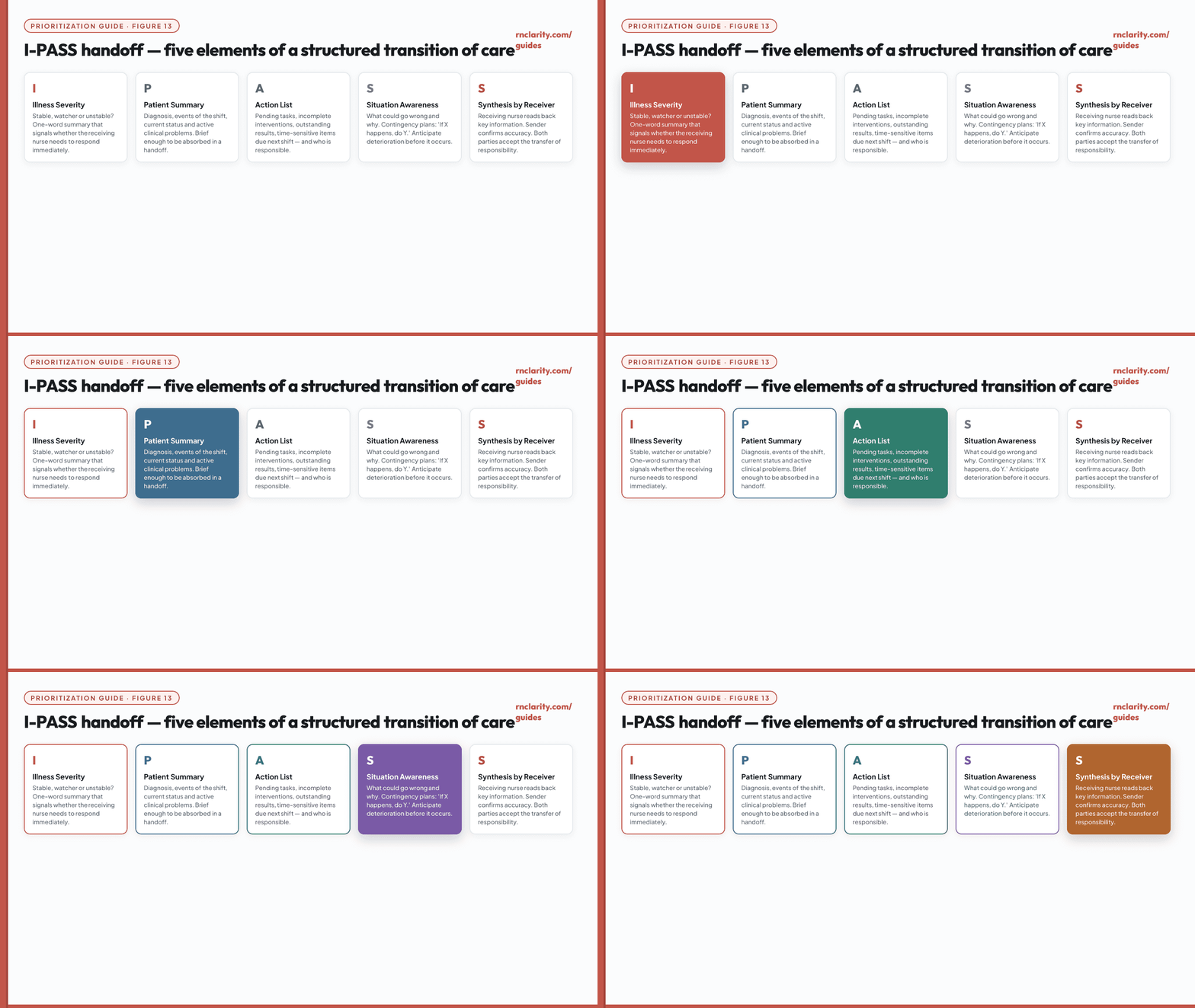
SBAR organizes a focused report into Situation, Background, Assessment and Recommendation or Request. It is useful for escalation, provider communication and concise team reports. A handoff should include uncertainty, response to treatment, recent changes, the plan and contingency plans.
Closed-loop communication means the sender gives a clear message, the receiver confirms it and the sender verifies that the message was understood correctly. This is especially useful for urgent tasks, medication information, critical results and emergency teamwork.
A handoff should clearly state who is responsible after the transfer and when that responsibility begins. "I told someone" is not enough if the receiving person did not accept or understand the plan.
Go deeper: For how communication, handoff and closed-loop techniques are tested across NCLEX-RN® item types, see the practice questions guide.
20. Workload, Time Management and Reprioritization
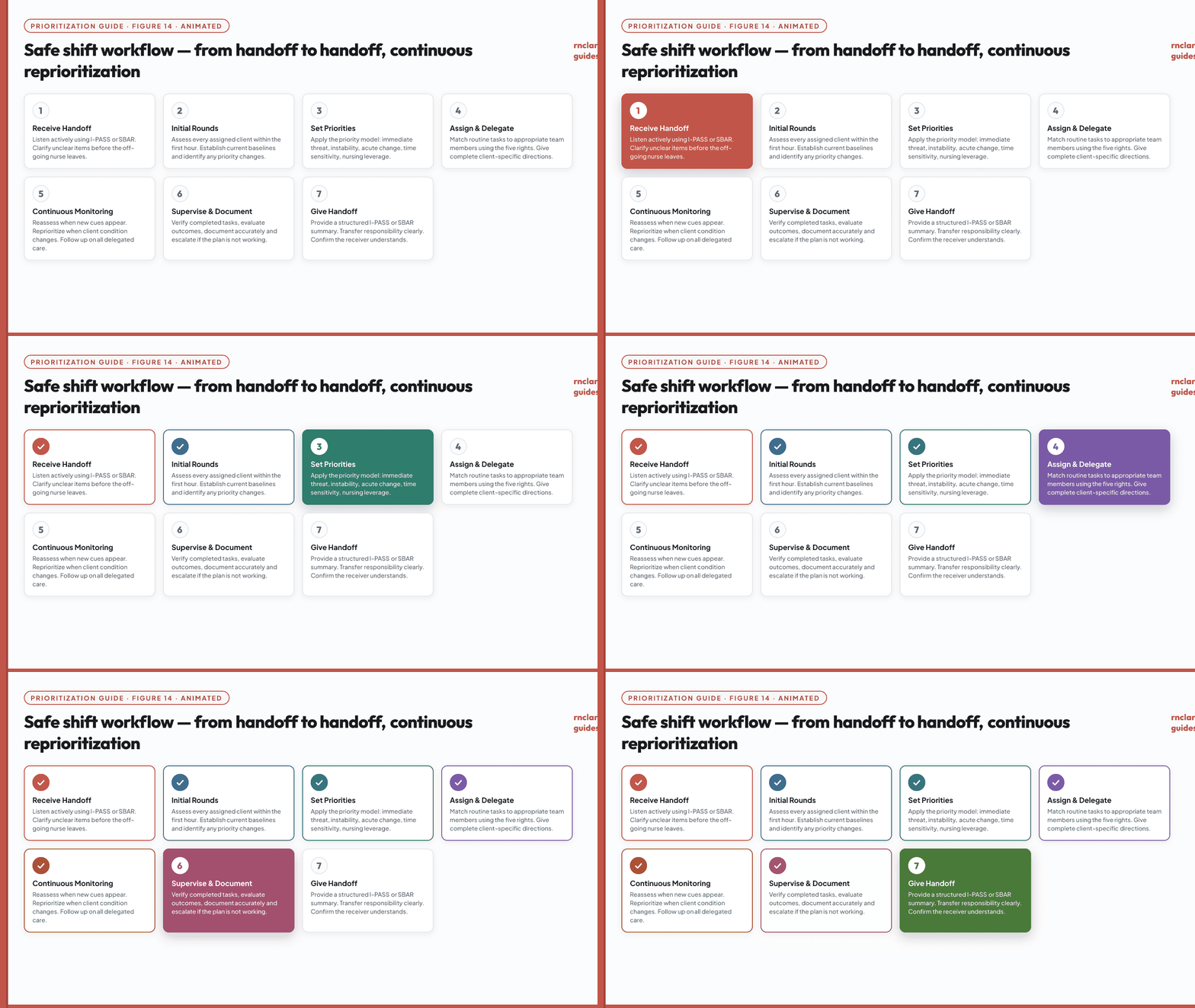
A safe plan at 0700 may be unsafe at 0730. Reprioritization is continuous.
Begin with handoff and a rapid safety scan. Identify unstable clients, new admissions, recent procedures, critical infusions, time-sensitive medications, diagnostic deadlines, isolation needs and uncertain information. Create a flexible plan rather than a rigid checklist.
Group care when safe, but do not postpone assessment of a changing client for efficiency. Delegate early enough that the delegatee has time to perform the activity. Avoid assigning several tasks without indicating which is most urgent.
Use time anchors: before meals, medication times, procedure departures, specimen deadlines, reassessment intervals and discharge coordination. Place high-risk reassessments on the plan, not only initial interventions.
When interrupted, ask whether the new issue is more urgent than the current one. If not, acknowledge it, set a safe expectation and return. If yes, pause, secure the current task and respond.
Missed care can occur when workload exceeds capacity. The nurse should communicate unsafe conditions, seek help, redistribute work and use the chain of command. Silent workarounds can hide system risk.
Go deeper: For how to build and adapt an effective study and practice plan around shift-style thinking, see the study plan guide.
21. Special Population and Setting Considerations
Prioritization principles stay consistent, but cues differ by population and setting.
In maternity care, consider both pregnant or postpartum client and fetus or newborn, time-sensitive obstetric emergencies, hemorrhage, hypertensive disorders and fetal status. Assignment depends on acuity, stage of labor, treatment and staff competence.
In pediatrics, subtle changes can precede rapid deterioration. Work of breathing, hydration, behavior, caregiver report and age-specific norms matter. Medication and equipment calculations increase risk. Feeding or ambulation tasks require age, development and safety considerations.
In mental health, suicide risk, violence, severe withdrawal, acute psychosis with unsafe behavior and medical causes of altered behavior can become first priorities. Therapeutic milieu affects room and staff assignment. A quiet request for support may be urgent when the client has a plan and means for self-harm.
In long-term care, many conditions are chronic, so change from baseline is especially important. Delegation and assignment are common, but the nurse must recognize subtle decline, ensure competence and remain available.
In home and community care, the environment, caregiver ability, travel time, access to emergency help and limited immediate resources influence priority and delegation. A task that is safe in a staffed facility may not be safe without rapid support.
In emergency or disaster situations, triage systems and resource scarcity may change usual priorities. Follow the applicable emergency plan and trained triage method rather than applying ordinary one-client-at-a-time rules.
22. How to Answer NCLEX-RN® Priority Questions
Read the final sentence first to identify the task: assess first, see first, act first, report, delegate, assign or follow up.
Then identify the key cue in each option. Ignore long diagnostic labels until you find the current change. Mark words such as new, sudden, increasing, decreasing, after, difficult to arouse, unrelieved, unexpected or unable.
Use the priority compass: immediate threat, instability, time sensitivity, actual or imminent harm, safety and nursing leverage.
Eliminate answers that delay care, act outside scope, require unsupported assumptions or address a less urgent problem. Compare the remaining choices using the consequences of delay.
Do not decide that a client is stable because one vital sign is normal. Do not decide that a client is unstable because one chronic value is abnormal. Use the pattern.
When the question asks which action to perform first for one client, determine whether a focused assessment is needed or whether an emergency action is already clear. When the question asks which client to see first, compare the complete clients.
After selecting, explain the answer in one sentence: "This client is first because…" If the explanation depends on an invented fact, reconsider.
Go deeper: For a full walkthrough of the six-step reading strategy for any NCLEX-RN® item type, see the practice questions guide.
23. How to Answer Delegation and Assignment Questions
First determine whether the question is about assignment, delegation or supervision.
Second classify the client as stable or unstable and the outcome as predictable or unpredictable.
Third identify whether the activity requires nursing judgment, assessment, teaching, planning or evaluation. Those features move the responsibility toward the RN.
Fourth compare the role and competence described. Do not assume a title automatically proves competence. On the examination, use broad entry-level role principles unless the question gives a specific policy.
Fifth check communication and follow-up. An otherwise appropriate task may become unsafe if the instructions are vague, the nurse is unavailable or the findings are not reviewed.
Common correct UAP assignments involve routine care for stable clients. Common LPN/VN assignments involve stable clients with established plans within scope. Common RN responsibilities involve unstable clients, initial assessment, clinical judgment, new teaching and evaluation.
Beware of absolutes. "Always" and "never" may be wrong unless they reflect a true safety principle, such as not delegating nursing judgment.
Go deeper: For active-learning strategies that help you practice delegation reasoning until it becomes automatic, see the active learning guide.
24. Clinical Case Studies
The following cases show how priorities evolve.
Case 1: Postoperative change. A client two hours after abdominal surgery becomes restless. Heart rate increases from 86 to 118, blood pressure falls from 132/78 to 94/58 and urine output is 15 mL in the last hour. The priority concern is impaired perfusion and possible bleeding, not routine postoperative pain. The RN should assess and escalate promptly while assigning another team member to cover routine stable-client care.
Case 2: Stable client with a time-critical need. A stable client with diabetes is scheduled for rapid-acting insulin with breakfast. Food has arrived. The RN is responding to another client's acute dyspnea. An appropriately trained and authorized team member may obtain the glucose if allowed, but the RN must ensure the result is reviewed and medication administration occurs safely. The acute dyspnea remains the immediate priority while the time-sensitive need is actively coordinated.
Case 3: Delegated ambulation. An assistive person is asked to ambulate a stable postoperative client. Directions include gait belt use, prescribed weight-bearing limit and immediate reporting of dizziness, chest pain, shortness of breath or weakness. During ambulation the client becomes pale and dizzy. The delegatee stops, supports the client and calls the RN. The RN reassesses and withdraws the routine delegation until the cause is evaluated.
Case 4: Mental-health safety. One client is crying about a relationship loss. Another calmly states there is no reason to live, has saved medication and plans to take it after discharge. The second client is the priority because intent, plan and access indicate immediate safety risk. The nurse initiates safety precautions and escalation while ensuring the first client receives support.
Case 5: Handoff uncertainty. During report, the off-going nurse says a provider was "probably going to order" a repeat potassium level after treatment. No order is visible. The receiving RN should not assume the plan. The nurse verifies the record, clarifies the plan and establishes who is responsible for follow-up.
25. Common Mistakes and How to Correct Them
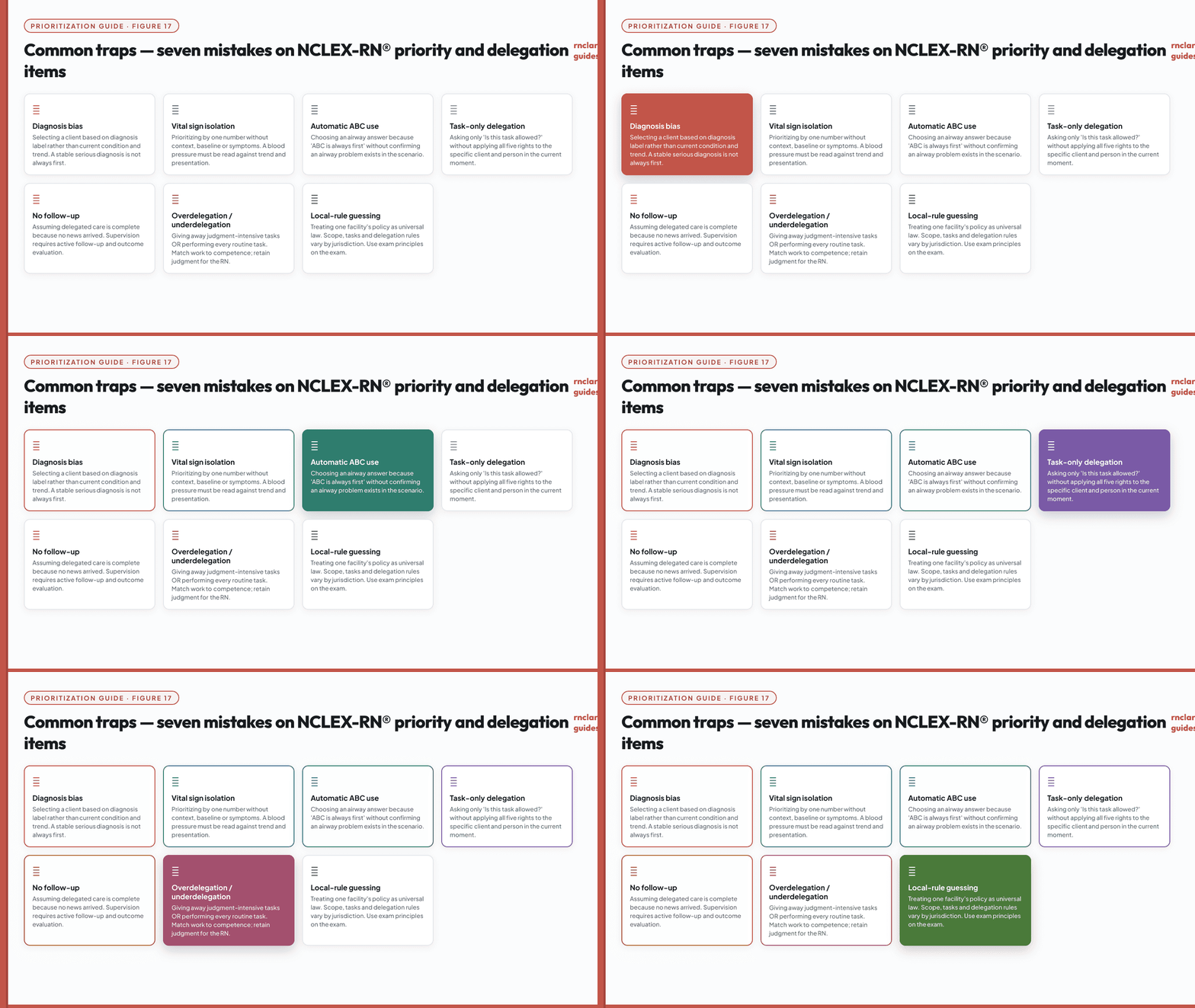
Diagnosis bias occurs when a student chooses the most serious-sounding disease instead of the most unstable current presentation. Correct it by comparing current cues and trends.
Vital-sign isolation occurs when one number is treated as the entire case. Correct it by checking baseline, trend, symptoms, measurement quality and treatment context.
Automatic ABC use occurs when the student says "airway" without evidence or overlooks an active safety emergency. Correct it by using ABCDE as a rapid assessment structure, not a magic word.
Task-only delegation thinking occurs when the student asks only whether a task is usually allowed. Correct it by applying all five rights to the specific client and person.
Failure to follow up occurs when delegated care is assumed complete. Correct it by planning a reporting time and evaluating the result.
Overdelegation occurs when the RN gives away activities that require judgment, teaching or evaluation. Underdelegation occurs when the RN performs every routine task and cannot respond to higher-acuity needs. The goal is safe matching, not maximum or minimum delegation.
Local-rule guessing occurs when a student treats one facility's practice as universal. Correct it by separating broad examination principles from jurisdiction-specific law and policy.
Go deeper: For a study system designed to catch and correct these patterns before exam day, see the active learning guide.
26. A Four-Week Mastery Plan
Week 1: Learn the priority model. Practise identifying immediate threats, instability, acute change, time sensitivity and consequences of delay. Complete ten multi-client questions daily and explain each choice aloud.
Week 2: Learn assignment and delegation. Review the definitions, five rights, general role spectrum and jurisdiction caveats. Convert vague directions into complete client-specific instructions.
Week 3: Practise mixed cases. Include medication safety, maternity, pediatrics, mental health, infection prevention, postoperative care and chronic disease. Track errors by reasoning type, not only content area.
Week 4: Simulate shift decisions. Use timed sets, unfolding cases and handoff scenarios. Practise reprioritization after new cues. Review only the error patterns that remain.
A useful error log records: the cue missed, the rule misused, the assumption added, the safer reasoning and the date for review. The purpose is not to memorize the correct option. It is to correct the decision process.
Go deeper: For a complete study plan framework with three phases and a structured error log, see the study plan guide.
27. Frequently Asked Questions
Is airway always first? No. Airway is a high-priority concern when evidence suggests compromise. An active safety hazard or required emergency action may need immediate response. Use the complete scenario.
Does acute always come before chronic? No. Acute or unexpected change is often higher priority, but a chronic condition with acute deterioration can be first. A stable acute finding may wait behind a life-threatening chronic exacerbation.
Can an RN delegate assessment? Nursing judgment and comprehensive assessment cannot be delegated. Data collection or focused activities may be performed by other team members when authorized, but the RN remains responsible for analysis and evaluation. Terminology and scope vary by jurisdiction.
Can an LPN/VN receive an unstable client? General examination principles assign unstable, unpredictable or judgment-intensive care to the RN. Actual legal scope and staffing decisions depend on jurisdiction, employer policy and competence.
Can assistive personnel take vital signs? Routine vital-sign measurement for an appropriate stable client is commonly assigned or delegated to trained assistive personnel. The RN must provide reporting limits and interpret the results. Local rules apply.
Who is accountable after delegation? The delegating licensed nurse remains accountable for the client and the decision, supervision and evaluation. The delegatee is responsible and accountable for performing the accepted activity correctly and reporting as directed.
What if the delegatee refuses? Explore the reason. The person should not accept a responsibility without competence or capacity. Reassess the assignment, protect the client and involve leadership as needed.
What if the client becomes unstable after delegation? The delegatee reports the change immediately, stops or modifies activity only within authorized limits and seeks help. The RN reassesses and may withdraw the delegation, intervene or escalate.
Is an equal number of clients a fair assignment? Not necessarily. Safe assignments balance acuity, complexity, timing, competence, continuity and support.
What is the best priority framework? No single framework is always best. Combine immediate threat, instability, acute change, time sensitivity, harm and nursing leverage, then reassess.
28. Practice Questions and Rationales
These original questions are educational practice items. They are not official or recalled NCLEX-RN® examination content. Answer each question before reading the rationale.
1. The nurse receives report on four clients. Which client should the nurse assess first?
A. A client with chronic back pain rated 6/10 who requests the usual medication
B. A client with pneumonia who is newly confused and needs more oxygen than one hour ago
C. A client with stable diabetes awaiting diet teaching
D. A client scheduled for routine dressing change
Correct answer: B. New confusion and increasing oxygen need suggest acute deterioration in oxygenation or perfusion. The client is unstable and requires prompt RN assessment.
2. Which activity is most appropriate to assign to trained assistive personnel for a stable client?
A. Initial teaching about a new colostomy
B. Evaluation of pain after IV opioid administration
C. Routine ambulation using an established plan
D. Interpretation of new orthostatic vital signs
Correct answer: C. Routine ambulation of a stable client using an established plan is predictable and does not require independent nursing judgment.
3. Which action by the RN best demonstrates the right directions and communication?
A. Ask the delegatee to "keep an eye on" the client
B. State the task, time, precautions, reportable findings and expected follow-up
C. Delegate the activity and review it at the end of the shift
D. Assume the experienced delegatee knows what to report
Correct answer: B. Safe directions are specific, client-centered and two-way. They include timing, precautions and reportable limits.
4. A client receiving a blood product develops chills and dyspnea. What should the nurse do first?
A. Document the findings
B. Stop the transfusion according to protocol and assess the client
C. Ask assistive personnel to obtain a temperature
D. Wait for the provider to examine the client
Correct answer: B. A suspected transfusion reaction requires immediate interruption of the exposure and prompt assessment and protocol-based response.
5. Which client is most appropriate for an LPN/VN assignment under general exam principles, assuming local scope permits?
A. A newly admitted client with undiagnosed chest pain
B. A stable client requiring routine care under an established plan
C. A client with rapidly falling blood pressure
D. A client requiring initial complex discharge teaching
Correct answer: B. Stable, predictable care under an established plan is more consistent with LPN/VN assignment. Local law and policy still govern.
6. The RN delegates routine vital signs. Which instruction is most important?
A. Record them before lunch
B. Report only values the delegatee thinks are abnormal
C. Report specified limits and any change in condition immediately
D. Repeat each measurement three times
Correct answer: C. The RN must define reportable findings and require prompt communication of unexpected changes.
7. Which finding makes a delegated ambulation responsibility inappropriate to continue?
A. The client asks to walk later
B. The client becomes pale and dizzy
C. The client walks slowly
D. The client uses the prescribed device
Correct answer: B. A new symptomatic change makes the circumstance unstable. The activity should stop and the RN should reassess.
8. Which client should the nurse see first?
A. A stable client awaiting discharge paperwork
B. A client with chronic COPD at baseline saturation
C. A postoperative client with new restlessness and falling blood pressure
D. A client requesting help to call family
Correct answer: C. The postoperative pattern suggests impaired perfusion and possible bleeding.
9. Which statement about delegation is correct?
A. The RN transfers all accountability to the delegatee
B. The delegatee may independently modify the plan
C. Nursing judgment cannot be delegated
D. Any routine task can be delegated to any available worker
Correct answer: C. Clinical reasoning, nursing judgment and critical decision making cannot be delegated.
10. The nurse has four tasks. Which can usually wait while the nurse responds to sudden stridor?
A. Activate emergency assistance
B. Prepare airway support
C. Assess breathing
D. Provide routine discharge teaching to a stable client
Correct answer: D. Routine teaching can wait while an immediate airway threat is addressed.
11. Which action is part of supervision after delegation?
A. Assuming no news means the task was completed
B. Following up and evaluating the client outcome
C. Allowing the delegatee to redelegate
D. Leaving the unit without identifying coverage
Correct answer: B. The delegating nurse monitors, follows up and evaluates.
12. Which client need is time-sensitive but not necessarily the first emergency?
A. A stable client needs a premeal glucose before food
B. A client has no pulse
C. A client has sudden unilateral weakness
D. A client has active uncontrolled bleeding
Correct answer: A. The premeal glucose must be planned promptly, but the other options represent immediate threats.
13. Which handoff statement is safest?
A. The provider knows about it
B. Everything is fine
C. Potassium replacement finished; repeat level is due at 1000 and the receiving RN will verify the result
D. Check the chart later
Correct answer: C. A safe handoff identifies the completed action, pending task, timing and responsibility.
14. A delegatee says the activity is outside current competence. What should the RN do?
A. Insist because the unit is busy
B. Reassess the plan and arrange safe care
C. Document insubordination before caring for the client
D. Ask the delegatee to learn during the task
Correct answer: B. A delegatee should accept only responsibilities for which competence is adequate. The RN must protect the client and revise the plan.
15. Which finding most strongly suggests instability?
A. A chronic abnormal value at baseline
B. A new change in mental status
C. A scheduled routine procedure
D. A long-standing diagnosis
Correct answer: B. New mental-status change may reflect deterioration and requires prompt assessment.
16. The nurse is choosing between assessment and action. Which situation requires action first?
A. A mildly elevated temperature without symptoms
B. A questionable blood pressure from an improperly sized cuff
C. A client is pulseless and unresponsive
D. A client reports chronic pain at baseline
Correct answer: C. Pulselessness requires immediate emergency response.
17. Which assignment is unsafe under general principles?
A. Stable hygiene care to trained assistive personnel
B. Routine care of a stable client to an appropriately scoped LPN/VN
C. Initial assessment of a newly unstable client to assistive personnel
D. Established ambulation plan to trained assistive personnel
Correct answer: C. Initial assessment and unstable care require RN judgment.
18. Which factor is least useful when setting priorities?
A. Current change
B. Consequences of delay
C. Time sensitivity
D. Which diagnosis sounds most serious
Correct answer: D. Diagnosis labels alone do not determine current priority.
19. Which response best uses closed-loop communication?
A. The sender gives an instruction and walks away
B. The receiver repeats the instruction and the sender confirms accuracy
C. The receiver writes a private note
D. The sender assumes experience is enough
Correct answer: B. Closed-loop communication includes message, confirmation and verification.
20. Which client is the highest safety priority?
A. A client who is sad after a breakup
B. A client who has a suicide plan, intent and access to medication
C. A client who requests a quiet room
D. A client who declines group therapy
Correct answer: B. Plan, intent and access indicate immediate risk.
21. Which statement best distinguishes assignment from delegation?
A. Assignment concerns routine authorized functions; delegation transfers a specific responsibility under defined conditions
B. Assignment applies only to RNs
C. Delegation transfers nursing judgment
D. There is no difference
Correct answer: A. Assignment is routine work within the role; delegation is a specific transfer with competence, communication and supervision.
22. Which information should the RN include when delegating intake and output measurement?
A. Only the room number
B. The time frame, what counts, where to record and what findings to report
C. A request to decide whether the output is adequate
D. Permission to change the fluid plan
Correct answer: B. Directions must define the activity, reporting and limits without transferring nursing judgment.
23. A stable client's routine dressing change is due while another client develops new chest pressure. What is the best action?
A. Finish the dressing before assessing the chest pressure
B. Assess the client with new chest pressure and coordinate the routine dressing
C. Ask the stable client to perform the dressing without assessment
D. Delay all care until the provider arrives
Correct answer: B. New chest pressure is an acute change. Routine care can be coordinated or delegated if appropriate.
24. Which factor can make a normally delegable task unsafe?
A. The task is familiar
B. The client becomes unstable
C. The delegatee has validated competence
D. The RN is available
Correct answer: B. A change in circumstance can invalidate the delegation.
25. Which action best completes evaluation after delegation?
A. Ask only whether the task was done
B. Compare the client's response with the expected outcome and revise care if needed
C. Allow the delegatee to decide the care plan
D. Wait for the next shift
Correct answer: B. Evaluation determines whether the client outcome was achieved and whether the plan must change.
26. Which priority statement is most accurate?
A. Actual problems always outrank potential problems
B. Airway is always the correct answer
C. The priority is the need with the greatest immediate risk and benefit from action, based on the full scenario
D. Chronic clients are never first
Correct answer: C. Priority decisions integrate urgency, instability, risk, timing and available nursing action.
27. Which client should be assigned to the most experienced RN?
A. A stable client awaiting routine transport
B. A client with rapidly changing neurologic findings
C. A stable client requiring hygiene
D. A client needing a routine specimen
Correct answer: B. Rapidly changing neurologic findings require high-level assessment, judgment and rescue readiness.
28. A provider has not responded to repeated urgent messages about deterioration. What should the RN do?
A. Wait until rounds
B. Use the established escalation or chain-of-command process while continuing immediate nursing care
C. Ask the family to call
D. Document only
Correct answer: B. The nurse continues protective care and escalates when response is inadequate.
29. Which approach best prevents underdelegation?
A. Delegate everything possible
B. Match routine predictable work to competent team members while retaining judgment-intensive care
C. Avoid supervision
D. Assign only by client count
Correct answer: B. Balanced delegation protects RN time for assessment and high-acuity needs without sacrificing safety.
30. Which statement about equal assignments is correct?
A. Equal client numbers always mean equal workload
B. Acuity, complexity, timing and competence matter more than count alone
C. The newest nurse should receive the most unstable clients
D. Geography and support never matter
Correct answer: B. Safe workload distribution considers demand and capacity, not only numbers.
30. Official Public References
-
National Council of State Boards of Nursing. 2026 NCLEX-RN® Test Plan. Effective April 2026. Open official source
-
National Council of State Boards of Nursing and American Nurses Association. National Guidelines for Nursing Delegation. Effective April 29, 2019. Open official source
-
NCSBN® Delegation resource page. Open official source
-
NCSBN® Scope of Practice Decision-Making Framework. Open official source
-
Agency for Healthcare Research and Quality. TeamSTEPPS: Handoff. Open official source
-
Agency for Healthcare Research and Quality. TeamSTEPPS: I-PASS. Open official source
-
Agency for Healthcare Research and Quality. TeamSTEPPS 3.0. Open official source
31. Educational, Clinical and Trademark Disclaimer
This guide is provided by RN Clarity for general educational and informational purposes only. It does not replace the official NCLEX-RN® Test Plan, nursing-school instruction, a nurse practice act, provincial or territorial standards, employer policy, validated competency requirements, professional clinical judgment or emergency procedures. Scope, assignment and delegation rules vary by jurisdiction and setting. Nurses and students must verify current requirements with the applicable regulator and organization. This guide does not guarantee examination success or a clinical outcome.
Non-affiliation and trademark notice: RN Clarity is an independent educational resource and is not affiliated with, endorsed by, sponsored by, approved by or officially connected with the National Council of State Boards of Nursing, Inc. NCLEX®, NCLEX-RN®, NCLEX®-PN® and NCSBN® are registered trademarks of the National Council of State Boards of Nursing, Inc. All trademarks belong to their respective owners. Their use here is for identification, commentary and educational reference only.