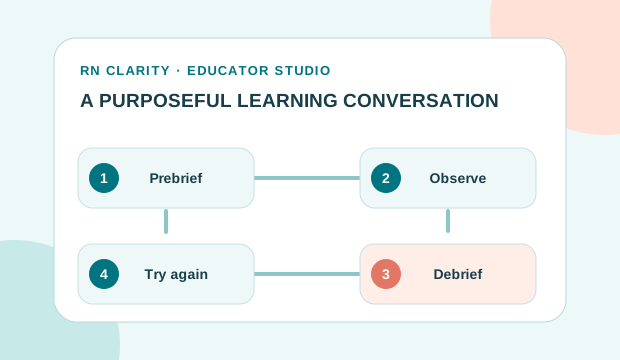
Simulation Prebrief & Debrief Kit · Learner handout
Prebrief · What learners need to know
This is a learning activity using a fictional patient, not an actual care assignment. The objective is to explain a cue-based decision, communicate a clear request and state reassessment evidence. Say what you can and cannot do with the equipment or scenario before it begins.
Roles: primary learner, assisting learner, observer and facilitator. Agree how to call a pause if an instruction is unclear, a participant needs support or a scenario safety issue arises. A pause in teaching does not substitute for the emergency process in real clinical care.
Observer card
| Observe | Record an example |
|---|---|
| Cue noticed | Which finding did the learner identify? ______ |
| Reasoning explained | How was the decision linked to evidence? ______ |
| Help requested | Who was called, what was requested and how was urgency stated? ______ |
| Message verified | Was the important message repeated and confirmed? ______ |
| Outcome checked | What was reassessed, and how was the result interpreted? ______ |
Private reflection before debrief
- What was I trying to achieve?
- Which cue changed my thinking?
- What went well, with one example?
- What was difficult or unclear?
- What would I change on the next attempt?
Debrief questions
- Describe what happened without adding facts that were not in the case.
- What evidence supported the initial priority?
- Which alternatives did you consider and why?
- When did the plan need to change?
- How did communication help or hinder the response?
- Which new observation would show whether the action helped?
- Choose one improvement and rehearse it now.
From classroom to practice
| Learning insight | Practice connection | Boundary / help needed |
|---|---|---|
| A trend matters more than an isolated label. | Compare current observations with baseline and report a change. | Use local escalation policy and supervision. |
| A request must be explicit. | State what response is needed and how urgent it is. | Use the communication process required in the setting. |
| A medicine list needs reconciliation. | Clarify ingredients and discrepancies at transitions. | Resolve the plan with the appropriate clinician/pharmacist. |
Next-attempt commitment
Complete: “In the next fictional case, when ____, I will ____ and check ____.” Keep the plan observable and within the learner’s role.