NCLEX for Foreign-Educated Nurses: US Licensure Guide
Plan US RN licensure as an internationally educated nurse: state-specific requirements, credential services, New York and Montana SSN questions, 2026 English updates and ATT.
1. Quick Answer and Essential Facts
An internationally educated nurse generally needs a state-specific licensure application, acceptable verification or evaluation of education and credentials, any required English evidence, approval to take the NCLEX, a Pearson VUE registration and an Authorization to Test before the examination. Passing the NCLEX is one part of US licensure. It is not a visa, work authorization or a licence issued by every state.
Start with the nursing board for the state where you intend to practise. Do not buy a credential service simply because someone else used it. Boards differ in accepted reports, documentation, education requirements, identification procedures and application rules. Requirements also differ between examination and endorsement applications.
| Step | Main decision maker or service |
|---|---|
| Education acceptable for licensure | State nursing regulator |
| Credential verification or evaluation | Board-approved service or direct verification route |
| Examination eligibility | Nursing regulator |
| Exam registration and scheduling | Pearson VUE, after the required eligibility process |
| Authorization to Test | Issued through the examination process after eligibility |
| RN licence | State nursing regulator |
| Healthcare-worker immigration screening | Applicable authorized certification process |
| Permission to enter and work in the US | Applicable immigration authorities and legal requirements |
Important 2026 update: TruMerit, formerly CGFNS, states that revised VisaScreen English requirements apply to tests taken on or after May 12, 2026. Do not use an old score chart without checking the test date and purpose. TruMerit update.
This is an educational planning guide aligned with the NCLEX-RN Test Plan effective April 2026. It cannot determine your individual eligibility or immigration outcome; use the current board and official service instructions for your application.
2. Separate Licensure, Examination and Immigration
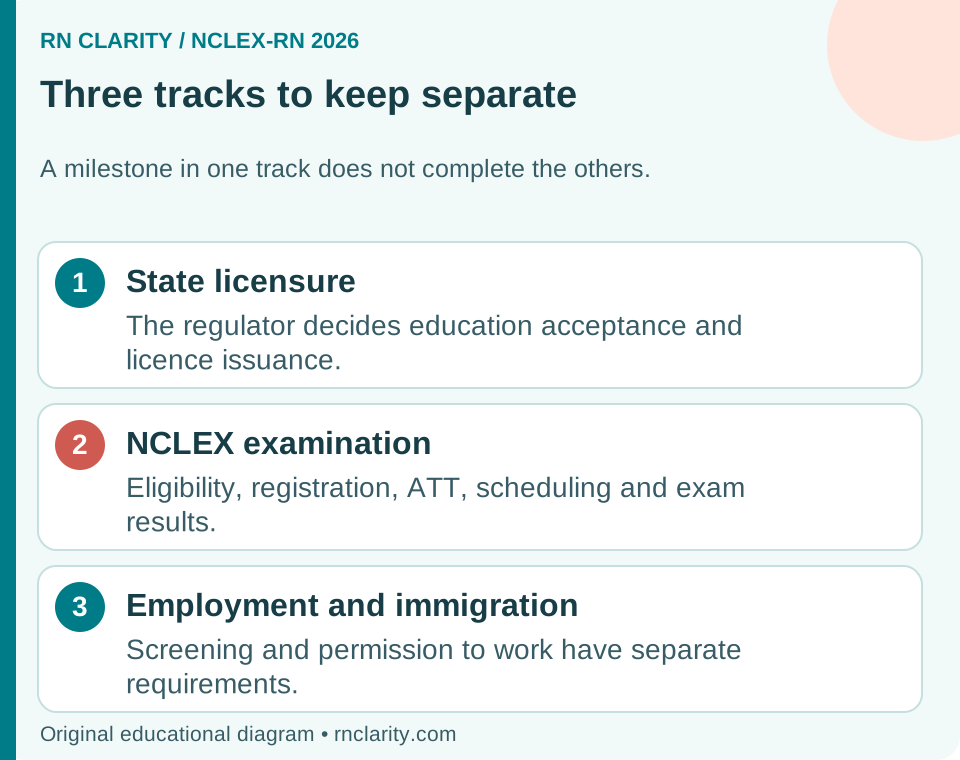
Many delays begin with the mistaken idea that one approval completes the entire process. A credential report evaluates or verifies specified records. An eligibility decision allows you to proceed toward an examination. A pass confirms an examination outcome. A state licence authorizes practice under that state’s requirements. Immigration permission concerns entry or work status. These steps are connected, but they are not interchangeable.
Imagine three folders. The first contains the state licensure application and regulatory documents. The second contains exam registration, ATT and appointment information. The third contains employment and immigration documents. Some records may be relevant to more than one folder, but a completed item in one does not automatically close the others.
This distinction matters when communicating with a recruiter or employer. “My CES report was issued” is different from “the board approved my education.” “I passed the NCLEX” is different from “my active licence has been verified.” “I have a healthcare-worker certificate” is different from “I am authorized to work.” State exactly which milestone is complete.
The distinction also helps you identify the right support contact. An evaluator cannot promise that a board will approve your education. Pearson VUE cannot decide whether you qualify for a state licence. A board cannot resolve every visa issue. Ask each organization about the part it controls.
Use a status tracker with separate columns for submission, receipt, review and decision. “Sent” is not the same as “accepted,” and “report available” is not the same as “licence issued.” Clear labels make a complex process easier to manage without inventing a universal timetable.
3. Choose a State for Your Intended Practice, Not a Rumour
Choose the state with your professional plans in mind. If you already have a likely employer or location, begin with that state’s board instructions. Applying elsewhere because it seems easier may add an endorsement application later, with another set of fees, documentation and requirements.
Compare official requirements rather than social-media rankings of the “best state.” A useful comparison includes education review, accepted credential service, English rules, identification or SSN procedure, background-check instructions, required coursework, fees and application expiration. Add the state where you eventually intend to work so that you can see whether an indirect route creates more work.
Do not assume that passing the NCLEX through one board means every other board must issue you a licence. Examination results may be transferable through the proper process, but another regulator can still examine education and other eligibility requirements. A strategy that ignores the eventual state’s requirements can become expensive.
Ask a specific question when instructions are unclear. Instead of “Can foreign nurses apply?” explain your education location, whether you are applying by examination or endorsement and the requirement you need clarified. Use secure official channels for private documents; a public comment thread is not an application review.
Record the page and date you checked. Regulations and administrative forms can change. A dated checklist makes it easier to identify which instruction needs rechecking before you pay, rather than treating a saved screenshot from several years ago as current policy.
4. SSN Questions: Application, Licence and Compact Privileges
An SSN question should be divided into stages. Does the board require an SSN to start the application? To issue a single-state licence? To obtain a multistate licence? What procedure applies to a person who has never been assigned an SSN? These questions can have different answers.
New York’s official nursing FAQ states that an SSN is not required to qualify for a nursing licence; if you have one, it must be disclosed. That is a verified New York-specific statement. It is not a blanket statement about all states or permission to enter invented numbers into a form.
Montana requires more careful wording. Its published nursing credentialing application PDF includes an affidavit for an applicant who has not been assigned an SSN. The document is a credentialing application and is older than this guide. It is evidence of a published procedure, not sufficient evidence to promise that every 2026 international examination applicant can use that same route unchanged. Confirm the current examination procedure directly with the Montana Board of Nursing.
Do not confuse single-state authorization with Nurse Licensure Compact eligibility. Multistate privileges involve additional uniform requirements and primary-residence considerations. A candidate living abroad should not assume that obtaining a licence from a compact state automatically creates multistate privileges. Use the official NLC requirements for that separate question.
Never use a fabricated SSN, someone else’s identifier or a placeholder without an explicit official instruction. If an online field blocks you, ask the board how a no-SSN applicant should proceed. The correct response is a verified administrative route, not an improvised entry that could misrepresent your identity.
5. New York: A Verified Example With Two Credential Routes
New York publishes a specific pathway for graduates of foreign nursing schools. Its RN Pathway 5 instructions describe required coursework or exemptions, the application and credential-verification options. Read the current page as a whole before choosing a service.
The page identifies two education-verification routes: TruMerit’s Credentials Verification Service for New York State, or direct school certification using the required NYSED documentation. It explicitly says the TruMerit service is not mandatory. Do not buy a generic CES report and assume it is interchangeable with the New York-specific service.
If you choose direct school verification, the school must follow NYSED’s submission instructions. Your own uploaded copy may be useful for personal organization but is not automatically a substitute for required primary-source submission. If foreign licence verification is required for your circumstances, arrange that through the appropriate licensing authority as instructed.
The route you choose should match your ability to obtain records, the current official requirements and the service’s scope. Direct verification may involve coordinating with schools and regulators yourself; a verification service has its own fees and document requirements. Neither route should be described as a guaranteed approval or universal fastest option.
New York also has requirements beyond the examination, including approved coursework or qualifying exemptions. Use the current pathway and course-provider instructions rather than an old informal checklist. Keep evidence of completion in your private tracker so that you can distinguish a missing document from a pending review.
6. Montana: What to Confirm Before Applying
Montana is often mentioned in no-SSN discussions, but a useful guide should not turn that reputation into a guarantee. The board’s international-applicant FAQ explains that education outside the US is treated as international education, including education in Canada. Begin with the board’s current rules for your route.
Ask about licensure by examination if you have not yet passed the NCLEX. Ask about endorsement or credentialing if you already hold an appropriate licence and are pursuing that pathway. A form for one route should not be silently substituted for another.
For the SSN question, identify the exact current process in writing. Ask whether a no-SSN affidavit is available for your application type, whether it affects only application processing or licence issuance and what later reporting obligations apply. The older published PDF discussed above is a starting point for a question, not a complete current eligibility decision.
Also confirm the accepted credential report, English requirements and any background or identification steps. If you intend to work in another state, compare that state’s endorsement requirements before selecting Montana merely as an examination route.
The result of this review may be that Montana fits your plan, or that another state is more appropriate. The important outcome is a route supported by current instructions for your circumstances. A strong application strategy is not the one with the most confident online claim; it is the one whose required documents and decisions you can actually identify.
7. CGFNS and TruMerit: Use the Correct Service Name
CGFNS is now known as TruMerit. Older forms, portals and discussions may still use CGFNS, so you may encounter both names while researching. The name change does not make all services equivalent. You still need to identify the exact report or certification your board or immigration process requires.
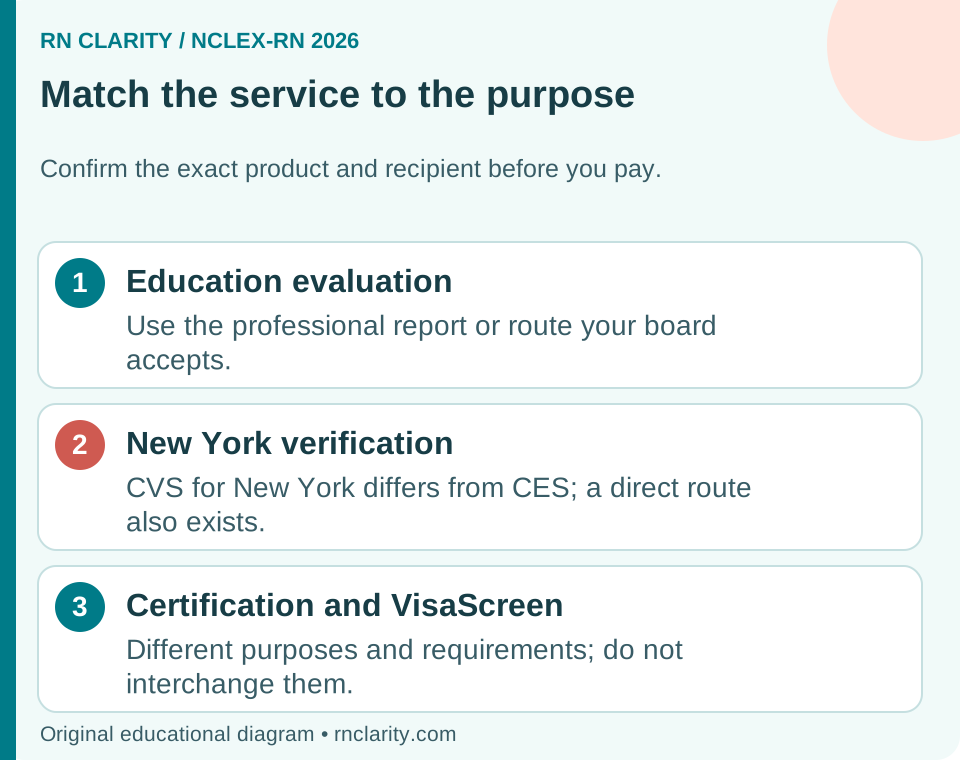
Commonly discussed services include the Credentials Evaluation Service Professional Report, Credentials Verification Service for New York State, Certification Program and VisaScreen. They have different purposes. An academic report for educational admission should not be assumed to satisfy a professional licensing requirement, and an immigration screening certificate should not be assumed to replace a board’s education review.
Use the provider’s service-selection guidance and the board’s own instructions together. If they appear inconsistent, ask for clarification before ordering. The service provider can explain its product; the regulator determines which product or verification route it accepts for licensure.
When filling out an order, select the correct recipient and profession. A report sent to the wrong destination may not satisfy the intended application, even if the underlying records are correct. Verify recipient details instead of relying on a friend’s saved order settings.
Keep receipts and order numbers organized, but do not confuse payment confirmation with a completed report. Services often need documents from multiple primary sources. Paying for an evaluation starts an administrative process; it does not establish that records have been received, validated or found acceptable by the board.
8. CES Professional Report Versus Other Products
The CES Professional Report analyzes international nursing credentials and comparability. It can be relevant where a board requires or accepts that product. Its issuance is a report milestone, not the board’s final licensure decision.
CVS for New York is a verification service directed at New York’s pathway. The Certification Program is a different certification process and may involve requirements that are not universal for every RN applicant. VisaScreen addresses healthcare-worker screening for immigration purposes. Read the exact service description rather than grouping them under “CGFNS evaluation.”
This distinction can save money. If a board allows a direct verification route, buying an unrelated report may add cost without meeting the requirement. If a board requires a specific report, collecting personal copies alone may not satisfy it. The least expensive route is not useful if it produces the wrong document.
Before ordering, answer five questions: What exact service is required? Who must receive it? Which documents must come directly from their source? Is English evidence required for this report or board? What validity or timing conditions apply? If any answer is unclear, resolve it first.
Use a private comparison sheet, with one row per service and its actual purpose. Avoid duplicate orders unless an official instruction makes them necessary. A recruiter’s preferred workflow may be helpful, but it does not replace checking the board and service provider’s requirements for your individual application.
9. Build a Document Inventory Before Paying
List every school attended for the nursing qualification being evaluated, every relevant nursing registration or licence and the identity documents requested by the route you choose. Note current and former names so that records can be matched accurately. Do not omit a school or licence simply because obtaining the record is inconvenient.
For each item, record the issuing organization, required format, destination, submission method and whether it must be sent directly. Add a contact person where appropriate. A document inventory turns a vague task such as “get my credentials” into specific requests that can be followed up.
Personal scans are useful for checking names and dates, but they do not automatically satisfy primary-source requirements. A school transcript you upload yourself may be treated differently from a transcript sent directly by the school. Follow the receiving organization’s rules rather than assuming that a clear-looking PDF is enough.
Keep sensitive documents secure. Share them through verified official channels and avoid sending identity information to an unverified agent who promises immediate eligibility. A legitimate administrative service should be able to explain its role, requirements and fees without asking you to conceal information or fabricate records.
Check completeness before submission. A missing page, unreadable stamp, unmatched name or wrong recipient can create avoidable follow-up. A careful review cannot guarantee a fast decision, but it can prevent errors within your control from becoming additional delays.
10. Requesting School and Licence Records
Contact the school’s records office with a clear request that identifies the receiving body and its instructions. Include your former student name, program, attendance dates and student identifier through an appropriate private channel. Attach the correct official form if one is required, and specify that the school should submit it as directed.
Ask the records office what information it needs from you and what fees or processing conditions apply. Do not promise the board that documents will arrive on a date the school has not confirmed. Keep the school’s response in your tracker so that a follow-up can refer to the actual request.
For licence verification, contact the issuing regulator. A personal licence card may show that you held a licence, but a verification request can require additional status information sent directly by the authority. Follow the receiving body’s current instructions about which registrations or licences must be verified.
If a school has closed, a regulator has changed its process or records are difficult to obtain, ask the receiving organization how to proceed. Do not alter documents or create substitute evidence yourself. An official alternative process, if available, should be identified by the organization making the decision.
Distinguish “the sender confirmed dispatch” from “the recipient confirmed receipt.” Both are useful, but they describe different stages. If delivery is delayed, the difference helps you decide whether to follow up with the sender, delivery service or receiving organization instead of repeatedly contacting everyone.
11. Names, Translations and Identity Consistency
Use a consistent legal identity across board, evaluator and exam records. If your name changed, retain the documents that explain the change and follow each organization’s instructions for linking former and current names. Do not improvise a spelling to make a form easier to complete.
NCLEX registration and acceptable identification must match according to the official requirements. Before scheduling, compare the relevant name fields with the ID you intend to present. Resolve discrepancies through the designated process rather than hoping the testing centre will overlook them.
Translations should follow the receiving body’s rules. Requirements may differ for an academic transcript, a licence verification and a personal supporting document. A translation acceptable to one organization is not automatically acceptable to another. Keep the original and the accepted translation linked in your inventory.
Avoid assuming that a translation changes the substance of a record. It should communicate the document accurately; it cannot create clinical hours, courses or credentials that were not completed. If the education record raises a comparability question, only the regulator or evaluator can determine what further evidence is needed.
Identity consistency is a practical project-management task. It is easier to correct a discrepancy before a report or ATT is issued than to discover it shortly before travel. Include a name check in your final review of every application and appointment confirmation.
12. English Evidence: Ask Which Process Needs It
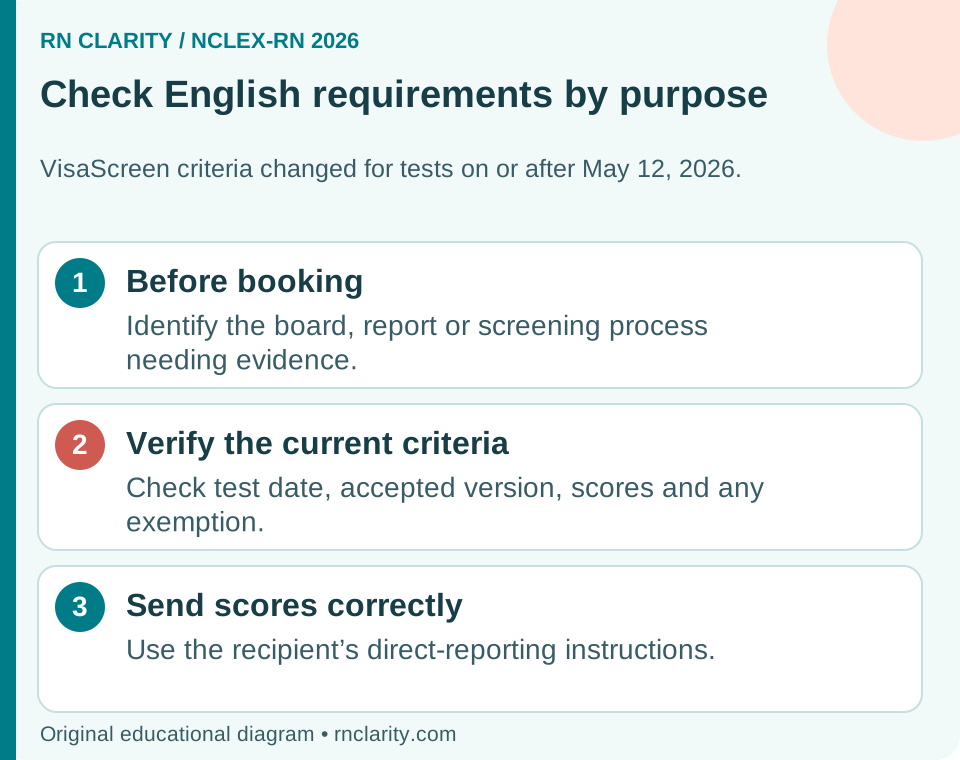
English proficiency can be relevant to a board application, a credential report, immigration screening or an employer’s requirements. These processes may use different accepted tests, scores, exemptions and reporting arrangements. Do not assume that passing one test for one purpose completes every English requirement.
TOEFL iBT and IELTS are common options to investigate, but choose the exact accepted version and test setting. The CES and VisaScreen pages state that TruMerit does not accept at-home versions of English proficiency exams. Check the current provider instructions and your board’s requirements before booking.
Ask whether scores must be sent directly by the testing agency and whether a recipient code or account identifier is required. A screenshot of your result can be useful for personal tracking but may not meet official reporting rules. A valid score sent to the wrong recipient can still leave your file incomplete.
Exemptions should be confirmed, not assumed. Education in English, nationality or employment history may be relevant, but the responsible organization defines the conditions. Do not treat “my classes were in English” as automatic exemption from every licensing or immigration requirement.
Plan the test date in relation to the process that will use it. Score validity and report requirements can matter, especially if school records take time to obtain. Use the current official rules to avoid paying for a test too early or selecting a version that the intended recipient will not accept.
13. The May 12, 2026 VisaScreen English Update
This update is particularly important for a guide published in 2026. TruMerit’s notice distinguishes tests taken before May 12 from tests taken on or after May 12. It also states that TOEIC is no longer accepted for VisaScreen for tests taken on or after that implementation date. That does not automatically establish every state board’s English policy; VisaScreen and state licensure are separate processes.
The current HRSA table lists RN-level standards including IELTS overall 6.5 with speaking 7, and TOEFL on the new scale at overall 4.5, speaking 4.5 and reading, listening and writing 3.5. Confirm the table, test date, accepted test version and TruMerit application instructions before booking or submitting scores. Do not mix the new TOEFL scale with an older 0–120 chart.
An old blog may still display earlier scores for OET, PTE, MET or other tests. Even when it was accurate when written, it may not apply to your 2026 test date. Use the dated official table and the service’s current instructions rather than combining the lowest score from several years of guidance.
If your examination occurred near the transition date or your record uses a different scoring format, ask TruMerit how it will assess that specific result. Do not self-convert scores or assume that a chart for another occupation applies to an RN.
This is a good example of why a step-by-step guide must keep citations close to date-sensitive requirements. A confident but outdated score recommendation can cause a candidate to pay for the wrong preparation or test. Checking the current authority before payment is more useful than memorizing a chart indefinitely.
14. Submit the Board Application Accurately
Read the application’s current instructions before entering information. Confirm that you selected RN licensure and the correct examination or endorsement pathway. Keep a record of the application identifier and contact details you used, because those may be needed to track the file later.
Answer disclosure questions truthfully. A guide cannot determine how a regulator will evaluate a particular background or disciplinary history. Do not omit information because a recruiter says it will slow the process. If you need legal interpretation of an individual issue, obtain qualified advice and use the board’s official clarification channel.
Review email accuracy carefully. Important notices may go to the address associated with the application or exam registration. Use an account you can access reliably, check filtering and update contact information through the official process when necessary. Do not rely on someone else to forward every notice.
Track payment and submission separately. A successful card payment does not necessarily mean all supporting documents have been accepted. Save confirmation, then monitor the file according to the board’s instructions. Avoid repeatedly submitting the same application unless the board directs you to do so.
If the board requests additional information, respond to the specific request. Send the named document through the required channel and retain proof of submission. A focused response is easier to process than an unrelated bundle of records accompanied by speculation about why the application has not moved.
15. Register With Pearson VUE at the Appropriate Stage
The board application and Pearson VUE registration are separate. The NCLEX registration page explains the process and how eligibility fits with registration. Coordinate your timing with the board’s instructions rather than paying far in advance without understanding the validity conditions.
Use the correct examination type and nursing regulator. Check legal name, contact details and the required program information. A foreign qualification does not mean you should select a domestic program casually or use a code copied from another candidate without verifying it.
Payment for registration does not itself make you eligible. The regulator must make the relevant decision. If your registration remains pending, identify whether the board still needs records or has not completed review. Pearson cannot replace the board’s education and licensure assessment.
Avoid duplicate registrations. A second order can create non-refundable fees without solving the first order’s eligibility problem. If you made an error, use the official correction process instead of starting over because a forum suggested it would be faster.
For candidates testing internationally, verify the current exam fee and any applicable international scheduling charge directly. Budget in the currency actually charged and consider your payment method’s conversion terms. This guide does not provide an invented all-inclusive cost that would apply to every candidate, state and testing location.
16. ATT Issuance: What It Means
An Authorization to Test follows the required eligibility and registration process. It is the authorization used to schedule the examination; it is not a nursing licence. The NCLEX FAQ explains that the ATT has validity dates determined through the regulator’s process and that those dates cannot be extended.
Read the actual dates in your ATT rather than assuming everyone receives ninety days. The official guidance describes an average, not a universal period for every board. Your own authorization governs when you must test.
When the ATT arrives, check your name, exam type, regulator and dates. If something is incorrect, ask through the designated process before scheduling or travelling. Keep the notice secure and avoid publishing candidate identifiers in public groups.
If the ATT has not arrived, first check whether the board has declared you eligible and whether the necessary records have been received. Also check the email address and filtering associated with registration. A missing ATT can reflect an unfinished upstream step; repeatedly refreshing the appointment page will not complete that step.
Do not book non-refundable travel solely because you expect eligibility soon. Arrange commitments around confirmed authorization and appointment information where possible. The administrative process can involve several organizations, and one organization’s estimated turnaround should not be presented as a guaranteed date for the entire chain.
17. Schedule the Examination and Prepare Identification
Once authorized, choose an available testing appointment within your ATT dates. Check the current scheduling and rescheduling instructions, location and identification requirements. An appointment in another country does not change the licensing requirements of the board to which you applied.
Confirm travel documents separately from exam documents. Permission to enter a country for testing, if required, is not the same as permission to work there. If travel is involved, use the appropriate official immigration or consular information for your circumstances rather than assuming that an ATT grants entry.
Compare the name on accepted ID with registration and ATT information. The NCLEX acceptable-ID page is the primary reference. Check validity and condition in advance. Do not wait until the day before the examination to resolve a mismatch.
Review centre location and arrival instructions. Plan a realistic journey with time for local transport and unexpected delay. Keep essential information accessible without carrying unnecessary private documents that the exam does not require.
Your final preparation should include familiarity with the examination interface and current candidate rules. Practice material can reduce interface anxiety, but actual test-day instructions take priority over a tutor’s memory of an older process. Use the official candidate bulletin linked by the exam provider for the current requirements.
18. Align Study With the 2026 RN Test Plan
International education and experience are valuable, but exam preparation should focus on the current entry-level US RN framework rather than assume that every familiar workflow maps directly to the test. Read the 2026 RN Test Plan and identify both content and judgment needs.
Study the rationale behind an action. A question about delegation may require understanding role boundaries; a prioritization question may depend on a new deterioration rather than a diagnosis label. A medication question may require a safety assessment, not just recalling a drug name.
Practise in English using the wording and task demands of the examination. Partial language support can help you understand an explanation, but do not assume it changes the examination’s language or provides a translated version of actual exam items. Build familiarity with clinical English while using support responsibly.
Alternate focused content work with mixed clinical cases. Explain why the correct response is supported and why each alternative is less appropriate. If you use a practice platform, treat its scores as learning information rather than a guaranteed NCLEX outcome.
Go deeper: Read the complete NCLEX-RN 2026 guide, clinical-judgment overview and who to see first guide.
19. Results, Licence Issuance and Endorsement
After testing, follow the legitimate results process. Quick Results, where available, is unofficial and does not authorize practice. The board’s examination and licensing processes determine the next steps. Do not use a payment experiment or a particular question count as proof of success.
Once you have a favourable examination outcome, confirm whether any licensing requirements remain. Verify the actual active licence record before taking on duties that require it. An employer may need to complete its own verification and onboarding steps.
If you later apply in another state, use that state’s endorsement instructions. Passing the NCLEX does not mean you can ignore education, identity, background or other requirements there. Compare the receiving state’s rules early if relocation is likely.
Do not assume compact privileges from the state’s name alone. Primary residence, licence type and uniform eligibility requirements matter. A licence record should be read for the authorization it actually grants, not expanded in your own description because the state participates in a compact.
If the result is unsuccessful, use the official performance report and board-approved retake process. Strengthen the specific learning gaps without treating foreign education as the explanation for every error. Reasoning patterns, content gaps, language familiarity and exam pacing can each need different forms of practice.
20. VisaScreen and Employment: A Separate Planning Track
VisaScreen is a healthcare-worker credential screening service used for applicable immigration purposes. Its official description explains the education, licence, English and examination components. It is not the same product as a CES report or state RN licence.
Keep its requirements in a separate checklist and coordinate them with qualified immigration or employment advice where needed. A guide cannot determine which visa route applies to you, whether a particular employer can sponsor you or when an immigration decision will occur.
Do not mistake a certificate for admission to the US or permission to work. The HRSA English requirements page explicitly distinguishes English certification from professional authorization and immigration eligibility. Completing a screening requirement is a milestone, not the entire decision.
Review recruiter and employer contracts carefully. Understand who pays each fee, what happens if an application is delayed and whether there are repayment obligations or other commitments. A promise of guaranteed licensure or a guaranteed visa should not override the organizations that actually make those decisions.
Maintain your own access to application accounts and copies of correspondence. An agent can help with logistics, but you should understand the status of your credentials and examination. Never agree to falsify experience, education or identification to make a process appear faster.
21. Build a Realistic Budget and Timeline
Create a budget from the actual routes you need. Include board fees, credential services, document requests, accepted translations, English testing, score reporting, exam registration, any international scheduling charge and travel where applicable. Add later endorsement or immigration-screening costs only when relevant to your plan.
Do not present another candidate’s total as yours. Different schools, countries, states, services and travel arrangements can create different expenses. Fees may also change. Check the current TruMerit fee schedule and the relevant board and exam pages before paying.
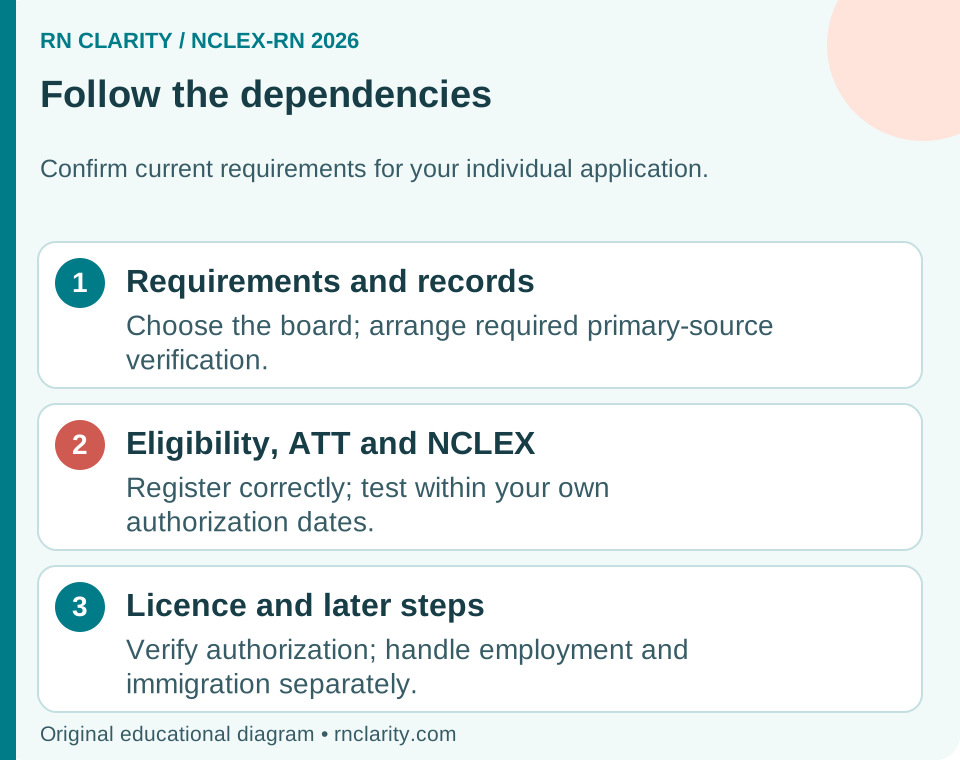
Build the timeline from dependencies. A report may depend on school records and licence verification. Eligibility may depend on the report and application review. Scheduling depends on ATT issuance and appointment availability. A service’s advertised processing time after complete records are validated is not the same as the total time from your first request to licensure.
Use ranges for your own planning rather than a promise of a universal completion date. Identify the next action you control and the decision you are waiting for. If a delay occurs, that distinction tells you whether to make a document request, follow up on receipt or wait for review.
Keep an emergency margin where possible. A repeated English test, a missing document or a travel change can add cost. Planning for uncertainty is not pessimism; it prevents a routine administrative problem from forcing you into a rushed purchase or an unverified shortcut.
22. Worked Roadmap: A New York Applicant Without an SSN
An internationally educated RN plans to pursue New York licensure and has never been assigned a US SSN. The candidate begins with New York’s official foreign-graduate pathway and nursing FAQ rather than a generic “no-SSN states” list.
The candidate records the verified no-SSN statement and asks NYSED for the appropriate application procedure if a form field is unclear. They do not enter a fabricated identifier. They then choose between the New York-specific verification service and the direct school route described by NYSED, accounting for the ability to obtain records and the current requirements.
The candidate tracks required coursework or exemptions, application submission and direct credential records separately. Pearson registration is coordinated with the official process. When the regulator completes eligibility and ATT arrives, the candidate verifies the actual authorization dates and schedules within them.
After the examination, the candidate uses legitimate results and licence verification. If employment or immigration screening is relevant, that is managed on its own track with current requirements. A New York licence does not automatically establish authorization in another state or permission to work in the US.
The useful feature of this plan is not a guaranteed outcome. It is that every action has an identified source and purpose. The candidate knows which organization controls the next decision and does not purchase several different credential products merely because all are described online as CGFNS.
23. Worked Roadmap: A Candidate Comparing Montana and a Work State
A candidate living abroad is told that Montana is the easiest route but intends to work in a different state. Instead of accepting that description, the candidate builds two checklists: Montana’s current examination requirements and the intended work state’s eventual licensing requirements.
The candidate asks Montana about the current no-SSN procedure for the exact application type, accepted education report and English requirements. The older credentialing affidavit is cited as a question to clarify, not treated as proof that a new examination application will be accepted unchanged.
At the same time, the candidate asks the intended work state what would be required after passing through another board. If that state would still require education review or other documentation, the indirect route may not save time or money. The candidate compares total requirements rather than the apparent ease of one first step.
After choosing a supported route, the candidate orders only the required service, requests primary-source records and keeps identity information consistent. They avoid booking travel before confirmed authorization. They also keep English-test planning separate from assumptions about immigration screening.
This scenario demonstrates a transferable planning principle: optimize the entire path to your actual goal. A shortcut to an exam appointment can be a poor shortcut to lawful practice if it ignores the state where you intend to work. Current written requirements are more valuable than a confident reputation.
24. Troubleshooting Without Creating More Problems
If your file is delayed, identify its actual status. A missing document, a document received but not reviewed and a report issued but not yet considered by the board are different situations. Ask a focused question about the incomplete step rather than opening duplicate applications.
If your report uses an incorrect name or recipient, contact the responsible service for correction. Do not edit an official report yourself. If a school record is incomplete, request clarification or replacement from the source following the receiving body’s instructions.
If your English score does not appear, check direct reporting and account matching. Do not assume a personal screenshot completes official delivery. If you are uncertain about the May 2026 transition, ask how the actual test date and score format will be assessed.
If ATT is missing, confirm eligibility and email details. If an appointment cannot be found within the validity period, use official scheduling support and understand the current terms; do not assume the dates can be extended. If identification is inconsistent, resolve it before travel.
Keep a concise contact log: date, organization, question, response and next action. Avoid sending unnecessary sensitive information in routine follow-ups. Clear records can make support more effective and help you distinguish a genuine instruction from a third party’s interpretation of it.
25. Frequently Asked Questions
Do all foreign-educated nurses need a CGFNS exam?
No universal requirement applies to every state pathway. TruMerit services and the Certification Program have different purposes. Check the board’s exact requirements before ordering a service or examination. Do not confuse a credential report, a qualifying examination, NCLEX and VisaScreen.
Is CGFNS now TruMerit?
Yes. Current official materials use TruMerit, while older documents and some portals may still show CGFNS. Confirm the service name and purpose rather than assume that every product under either name satisfies the same licensing requirement.
Can I apply for New York RN licensure without an SSN?
New York’s nursing FAQ states that an SSN is not required to qualify; if you have one, disclose it. Follow NYSED’s no-SSN procedure for application fields. This does not grant immigration permission, exempt other requirements or create authority to practise in another state.
Is Montana definitely a no-SSN route for my 2026 examination application?
Do not assume that from an older credentialing form. The published PDF includes an affidavit, but confirm the current procedure for your exact examination or endorsement route with the Montana board. Single-state and multistate requirements also need to be considered separately.
Is a CES Professional Report the same as CVS for New York?
No. They have different purposes. New York publishes a specific verification pathway and a direct-school alternative. Other boards may require or accept an evaluation report. Order the service named in the current board instructions and verify the intended recipient before paying.
Should I take TOEFL or IELTS before choosing a board?
First identify which process requires English evidence and its accepted test version, scores, exemptions and reporting rules. Board licensure and VisaScreen can differ. Choosing a test without that information can create an avoidable cost, especially after the May 2026 VisaScreen changes.
What changed for VisaScreen English testing in 2026?
TruMerit states that revised criteria apply to tests taken on or after May 12, 2026, and that TOEIC is no longer accepted for VisaScreen after that date. Check the current HRSA table and TruMerit instructions, including the test version and date. Do not use an old score chart interchangeably.
Does an ATT always last ninety days?
No. Read your own validity dates. Official guidance describes an average but not a universal period. The dates cannot be extended under the published NCLEX instructions. Schedule and test within the authorization you actually receive.
Does passing NCLEX mean I can work anywhere in the US?
No. Verify the state licence and any applicable compact privileges, employer requirements and immigration or work authorization. Examination success is one milestone. It does not automatically satisfy every state’s licensing rules or authorize entry and employment.
Does VisaScreen replace my state licence?
No. It addresses applicable healthcare-worker screening requirements, not the board’s final licensing decision. It is also not itself a visa or permission to work. Keep the licensing, screening and immigration decisions separate in your plan.
26. References and Source Notes
Official requirements were checked on October 4, 2026. State examples are deliberately bounded by the source and application type. Candidate roadmaps, organizational advice and diagrams are original educational material. Confirm changing requirements with the body responsible for your individual decision.
- NCSBN: 2026 NCLEX-RN Test Plan.
- NYSED: Foreign Nursing Graduate RN Pathway 5.
- NYSED: Nursing Licensure FAQ.
- Montana Board of Nursing and international-applicant FAQ.
- Montana published credentialing application and no-SSN affidavit — older, route-specific evidence; current examination use must be confirmed.
- TruMerit: Choosing the Correct Service.
- TruMerit: CES Professional Report.
- TruMerit: VisaScreen.
- TruMerit: May 2026 English Requirements Update.
- HRSA: Updated English Tests and Scores.
- TruMerit: Current Fee Schedule.
- NCLEX: Registration, FAQ and ATT guidance, acceptable ID and results.
- Nurse Licensure Compact official site — separate multistate eligibility requirements.
For further reading, use the NCLEX registration hub, exam-day guide and language-support page. Keep every next step tied to the organization and document that can actually support it.