NCLEX-RN® Pharmacology Guide: Drug Classes, Calculations and Safe Answers
Master NCLEX-RN® pharmacology with a class-based system: how medication items are tested, drug-class frameworks, suffixes, high-alert medications, dosage calculations, IV therapy, antidotes and lab monitoring.
1. Quick Answer and Essential Facts
Pharmacological and Parenteral Therapies is one of the largest scored content areas on the NCLEX-RN®, with an official 2026 test-plan range of 13-19% of the examination. Combined with the medication-related material that appears inside Management of Care, Safety and Infection Prevention and Control, and Reduction of Risk Potential, medication safety reasoning can influence a substantial share of a candidate's items. The examination does not reward memorization of every drug fact. It rewards the ability to recognize risk, connect a medication to the client in front of you, decide when to give, hold, clarify or escalate, and teach safely.
- Pharmacological and Parenteral Therapies carries an official range of 13-19%, one of the two largest content areas on the 2026 test plan.
- NCSBN® does not publish a fixed list of medications that will appear on the examination.
- Class-based knowledge transfers to unfamiliar drugs; single-drug trivia does not.
- Most pharmacology items are written at the application level or higher: they present a client situation and ask for a safe decision.
- Dosage calculation items provide an on-screen calculator, and laboratory values are presented with reference ranges.
- The safest answer usually protects the client from the most immediate physiological threat, not the most familiar drug fact.
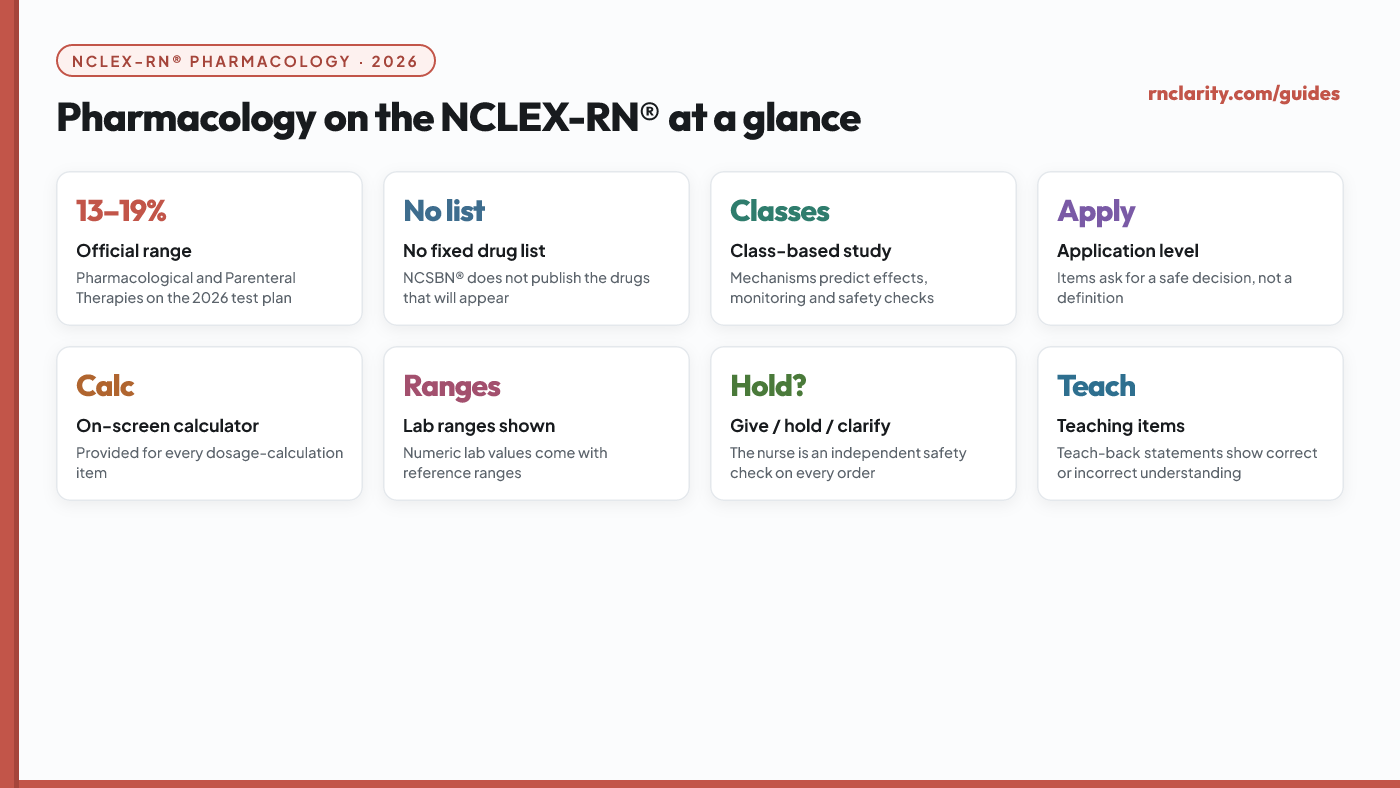
Remember: The examination question is rarely "What is this drug?" It is almost always "What should the nurse do about this drug, for this client, right now?"
2. How Pharmacology Is Actually Tested
Understanding how medication items are written changes how you should study. The 2026 NCLEX-RN® Test Plan describes activities such as administering medications safely, calculating dosages, monitoring for expected and adverse effects, managing intravenous therapy, administering blood products and evaluating the client's response to pharmacological interventions. Each of those activities becomes an item pattern.
Go deeper: For a full breakdown of the 2026 blueprint, Client Needs percentages and adaptive scoring, see the NCLEX-RN® test plan explained.
2.1 The five recurring question patterns
-
Safety-check items. A medication is ordered and something about the client makes administration questionable — an allergy, an abnormal laboratory value, a vital sign outside the safe range or an interacting drug. The correct answer is usually to hold and clarify, or to assess the specific parameter first.
-
Adverse-effect recognition items. The client has been receiving a medication and now presents with new findings. The candidate must recognize that the findings represent an adverse or toxic effect rather than a new disease process.
-
Monitoring and evaluation items. The item asks which laboratory value, vital sign or assessment finding indicates that the medication is working, is accumulating or requires intervention.
-
Teaching items. The client makes a statement about how they will take the medication at home. The candidate must identify the statement that indicates correct understanding, or the statement that indicates a need for further teaching.
-
Calculation and administration items. The candidate calculates a dose, a rate or a volume, or selects the correct administration technique for a specific route.
2.2 Where pharmacology hides outside its own category
Medication reasoning also appears in items classified elsewhere on the blueprint. A delegation item may ask whether medication administration can be assigned. A safety item may center on look-alike/sound-alike names, high-alert double checks or allergy verification. A Reduction of Risk Potential item may ask which client receiving a specific drug should be assessed first. Clinical judgment case studies frequently include a medication administration record tab that contains the decisive cue.
Go deeper: See how unfolding cases are built — and how to work the medication administration record tab by tab — in the NGN case studies guide.
2.3 Why class-based study wins
Adaptive examinations draw from very large item pools. No candidate can memorize every drug, and the examination is designed so that they do not need to. Drug classes share mechanisms, and mechanisms predict effects, adverse effects and monitoring. A candidate who understands that all adrenergic beta blockers reduce heart rate, contractility and renin release can reason about an unfamiliar "-olol" drug they have never seen. A candidate who memorized twelve isolated facts about metoprolol cannot.
3. The Seven-Point Class Framework
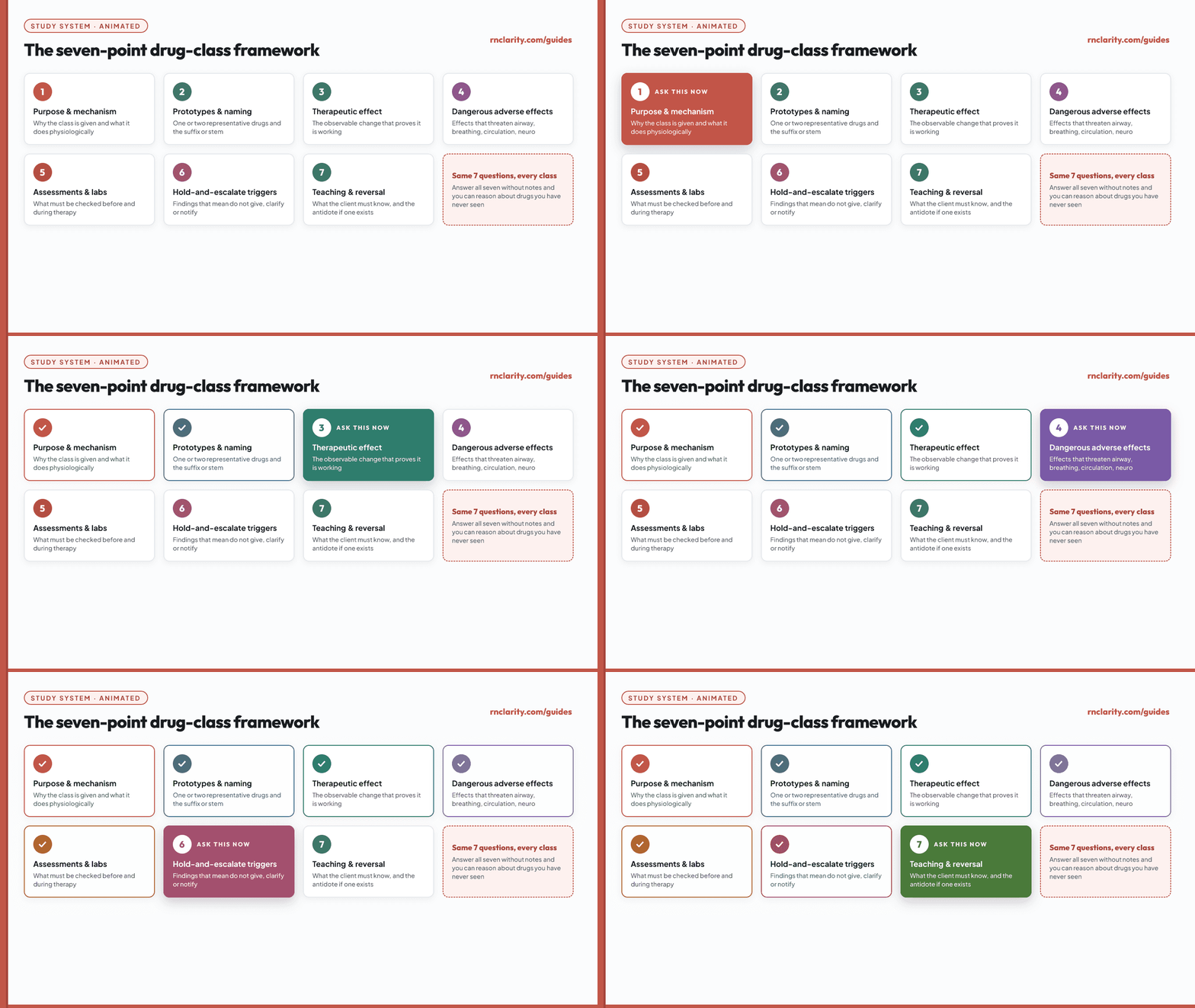
Study every medication class through the same seven questions. This creates a consistent mental template, which is exactly what adaptive questioning rewards.
-
Purpose and mechanism. Why is the class given, and what does it do physiologically?
-
Prototypes and naming pattern. Which one or two drugs represent the class, and is there a recognizable suffix or stem?
-
Expected therapeutic effect. What observable change proves the medication is working?
-
Dangerous adverse effects. Which effects threaten airway, breathing, circulation or neurologic function?
-
Assessments and laboratory monitoring. What must be checked before and during therapy?
-
Hold-and-escalate triggers. Which specific findings mean do not give, clarify the order or notify the provider?
-
Essential teaching and reversal. What must the client know, and is there an antidote or reversal strategy?
Practical check: If you can answer all seven questions for a class without notes, you are ready for any reasonable NCLEX-RN® item about that class — including drugs within it you have never heard of.
Go deeper: The retrieval techniques that make the seven-point framework stick — active recall, spaced review and error analysis — are covered in depth in the active learning guide.
4. Suffixes and Naming Patterns
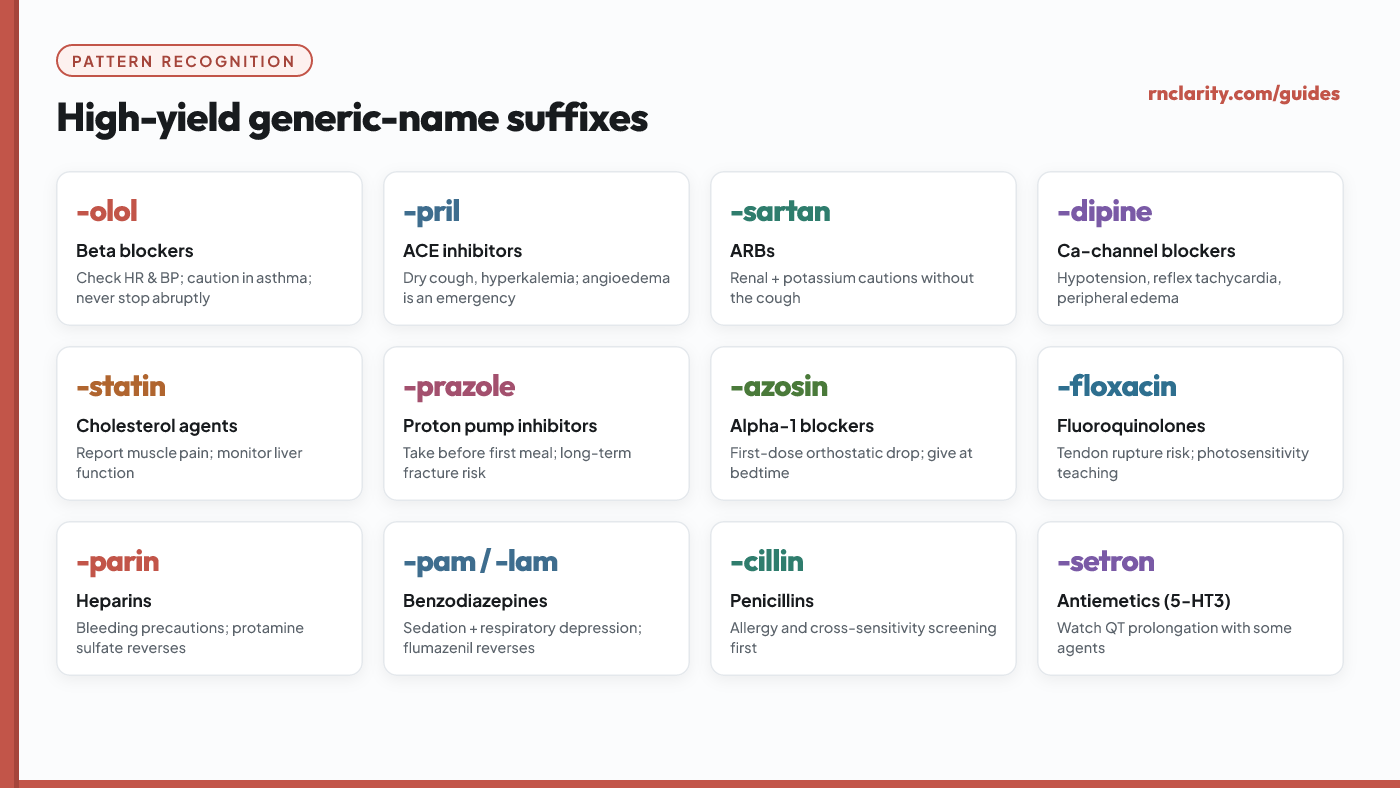
Generic-name stems are the fastest pattern-recognition tool in NCLEX-RN® pharmacology. They are not perfectly reliable — always confirm with context — but they turn an unfamiliar drug name into a testable hypothesis about its class.
Suffix or stem | Class | Core safety idea |
|---|---|---|
-olol | Beta-adrenergic blockers | Check heart rate and blood pressure; use caution in asthma; do not stop abruptly |
-pril | ACE inhibitors | Persistent dry cough; hyperkalemia; angioedema is an emergency |
-sartan | Angiotensin II receptor blockers | Similar renal and potassium cautions without the cough |
-dipine | Dihydropyridine calcium channel blockers | Hypotension, reflex tachycardia, peripheral edema |
-statin | HMG-CoA reductase inhibitors | Report muscle pain; monitor liver function |
-prazole | Proton pump inhibitors | Long-term fracture and infection considerations |
-tidine | Histamine-2 receptor blockers | Confusion risk in older adults |
-azosin | Alpha-1 blockers | First-dose orthostatic hypotension; give at bedtime |
-cillin | Penicillins | Allergy and cross-sensitivity screening |
-floxacin | Fluoroquinolones | Tendon rupture risk; photosensitivity |
-mycin / -micin | Aminoglycosides and related antibiotics | Ototoxicity and nephrotoxicity; monitor drug levels |
-cycline | Tetracyclines | Photosensitivity; avoid in pregnancy and young children |
-azole | Antifungals | Hepatotoxicity; many drug interactions |
-vir | Antivirals | Renal considerations and hydration |
-triptan | Serotonin agonists for migraine | Chest tightness; avoid with coronary artery disease |
-pam / -lam | Benzodiazepines | Sedation, respiratory depression; flumazenil reverses |
-caine | Local anesthetics | Assess return of gag reflex after throat anesthesia |
-parin | Heparins and low-molecular-weight heparins | Bleeding precautions; protamine sulfate reverses |
-gliptin / -glitazone / -glinide | Oral antidiabetic classes | Hypoglycemia awareness; class-specific cautions |
-setron | Serotonin antagonist antiemetics | QT prolongation with some agents |
Suffix knowledge is a starting hypothesis, not a guarantee. Confirm the class against the clinical context in the item before committing to an answer.
5. Medication Rights, Safety Checks and Error Prevention
Safe administration behavior is heavily tested because it maps directly to entry-level practice. The traditional rights of medication administration — right client, right medication, right dose, right route, right time, right documentation, plus right reason, right response and the client's right to refuse — appear across many item types.
5.1 Before the medication reaches the client
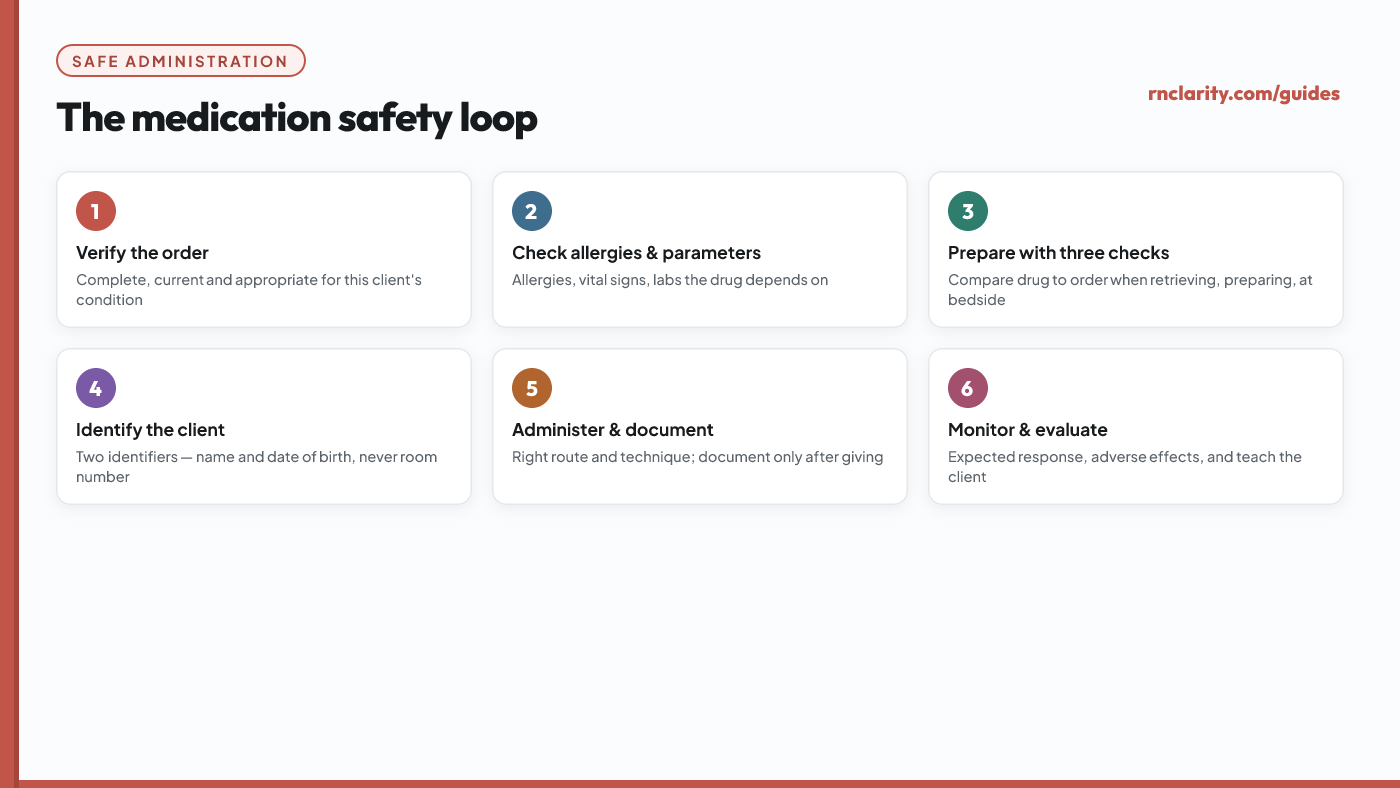
- Verify the order is complete, current and appropriate for this client's condition.
- Check allergies in the record and directly with the client, including cross-sensitivities.
- Review the relevant parameters: apical pulse before digoxin, blood pressure before antihypertensives, respiratory rate and sedation level before opioids, potassium before potassium-affecting drugs, renal function before renally cleared medications.
- Question orders that are illegible, incomplete, unusual in dose or route, or inconsistent with the client's status. Clarify with the prescriber — not with another nurse's guess.
- Identify the client using two acceptable identifiers, such as full name and date of birth. Room number is never an identifier.
Go deeper: For the before-during-after safety discipline, client identification practices, documentation principles and safety-culture habits that underpin every safe medication interaction, see the fundamentals of nursing guide.
5.2 Error-prevention behaviors the examination rewards
- Compare the medication against the order three times: when retrieving it, when preparing it and at the bedside.
- Never administer a medication prepared by someone else, and never document administration before it happens.
- Use independent double checks for high-alert medications when policy requires them.
- Do not use trailing zeros (write 2 mg, not 2.0 mg) and always use leading zeros (write 0.5 mg, not .5 mg).
- If an error occurs: assess the client first, notify the provider, implement orders, monitor, then complete an incident report. The incident report is not part of the medical record and is never referenced in the chart.
5.3 The client's right to refuse
A competent adult may refuse any medication. The nurse should explore the reason, educate about consequences, notify the provider when the refusal is clinically significant and document the refusal and teaching. Hiding medication in food without consent, or coercing a competent client, is never a correct answer.
Go deeper: For how medication safety fits into a full written plan of care — from risk diagnosis to interventions and evaluation — see the nursing care plans guide.
6. High-Alert Medications
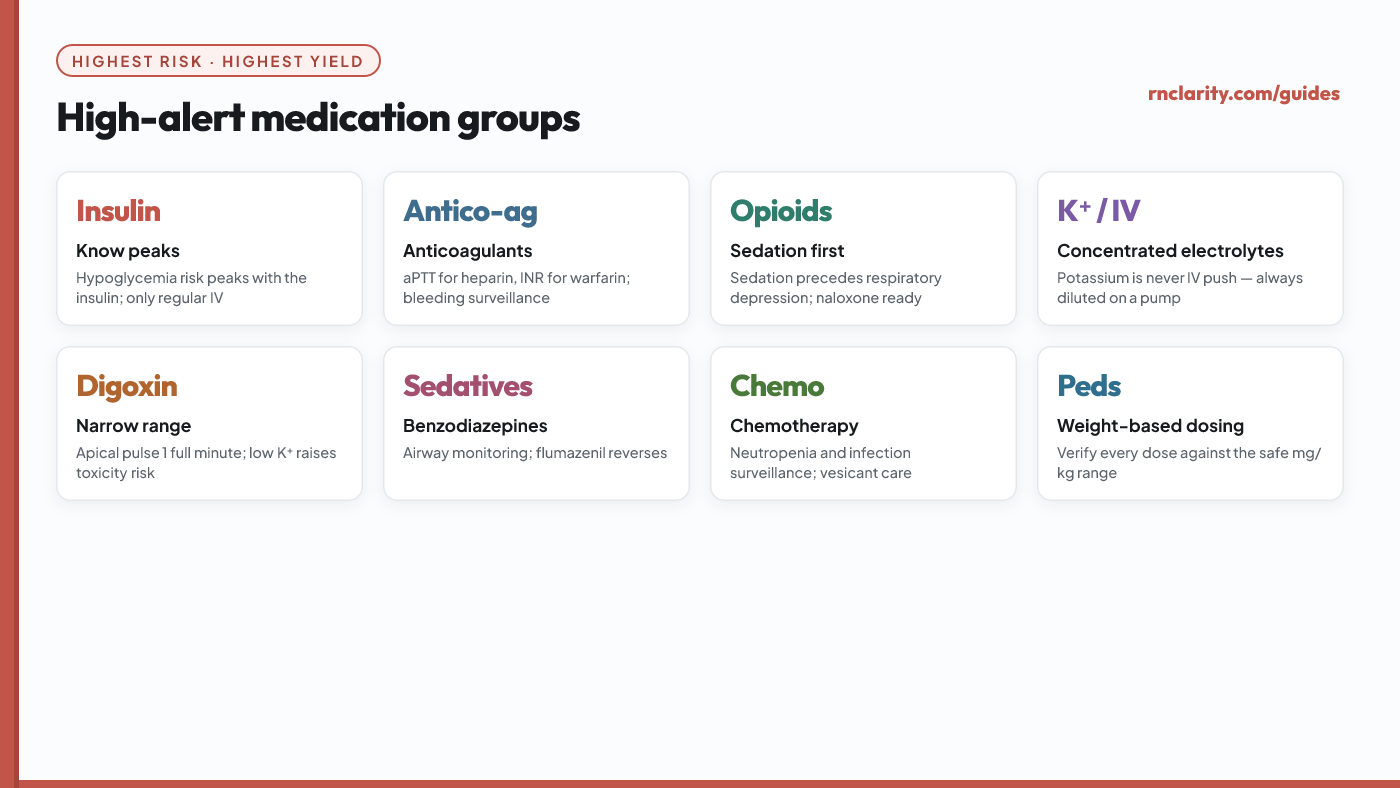
High-alert medications are drugs that carry a heightened risk of significant harm when used in error. They deserve disproportionate study time because they generate disproportionate examination items.
6.1 Insulin
- Know onset, peak and duration categories: rapid-acting, short-acting, intermediate-acting and long-acting. Hypoglycemia risk is greatest around the peak.
- Rapid-acting insulin must be followed promptly by food. Never administer it and walk away from a client whose meal has not arrived.
- Long-acting basal insulins are not mixed with other insulins and typically have no pronounced peak.
- Only regular insulin is given intravenously.
- Hypoglycemia findings — shakiness, sweating, tachycardia, confusion, irritability — demand immediate treatment: 15 g of fast-acting carbohydrate if the client can swallow safely; IV dextrose or glucagon if they cannot.
6.2 Anticoagulants and antiplatelets
- Heparin: monitored with aPTT (or anti-Xa); reversal is protamine sulfate. Watch for heparin-induced thrombocytopenia — a falling platelet count on heparin is a hold-and-notify finding.
- Warfarin: monitored with PT/INR; reversal is vitamin K. Teach consistent vitamin K intake, not elimination. Many interactions; therapeutic INR for most indications is roughly 2 to 3.
- Direct oral anticoagulants: fewer monitoring requirements, but renal function matters and missed-dose instructions differ from warfarin.
- All anticoagulated clients: bleeding precautions — soft toothbrush, electric razor, fall prevention — and immediate reporting of black stools, unusual bruising, hematuria or severe headache. A sudden severe headache in an anticoagulated client suggests intracranial bleeding and is an emergency.
6.3 Opioids
- Assess respiratory rate and sedation level before and after administration. Sedation precedes respiratory depression.
- Hold and escalate for a respiratory rate below the ordered or policy threshold, commonly fewer than 12 breaths per minute in adults.
- Naloxone reverses opioid effects; it is shorter-acting than many opioids, so re-sedation can occur and monitoring must continue.
- Anticipate constipation with ongoing use — prophylactic bowel management is expected, not optional.
- Patient-controlled analgesia buttons are for the client only. Family-pressed dosing is a safety violation.
6.4 Concentrated electrolytes
- Potassium is never given by IV push. It is always diluted and infused at a controlled rate, ideally by pump, with cardiac monitoring for higher rates. Verify urine output before administration.
- Hypertonic saline requires careful, monitored infusion, usually in a high-acuity setting, because rapid sodium correction can cause neurologic injury.
- Magnesium infusions require monitoring of deep tendon reflexes, respiratory rate and urine output; calcium gluconate is the antidote for magnesium toxicity.
6.5 Digoxin
- Check the apical pulse for one full minute; hold for a rate below 60/min in adults (per order or policy) and notify.
- Toxicity findings: anorexia, nausea, vomiting, bradycardia, dysrhythmias and visual changes such as halos or yellow-green tint.
- Hypokalemia dramatically increases toxicity risk — a low potassium plus a digoxin order is a classic examination trap.
- Therapeutic range is narrow; digoxin immune Fab treats serious toxicity.
7. Cardiovascular Medications
Cardiovascular drugs appear constantly because they connect directly to vital signs, perfusion and prioritization.
7.1 Antihypertensives
- ACE inhibitors and ARBs: monitor blood pressure, potassium and renal function. A persistent dry cough with an ACE inhibitor is expected and may prompt a switch; facial or airway swelling is angioedema — stop the drug and treat as an emergency. Both classes are avoided in pregnancy.
- Beta blockers: check heart rate and blood pressure before giving. They can mask tachycardic warning signs of hypoglycemia in diabetic clients and can worsen bronchospasm in asthma. Abrupt discontinuation risks rebound hypertension and angina — taper.
- Calcium channel blockers: hypotension and bradycardia (non-dihydropyridines), peripheral edema (dihydropyridines). Grapefruit juice increases levels of several agents.
- Diuretics: loop diuretics cause potassium loss — monitor potassium, daily weights and hearing with rapid IV dosing. Thiazides also waste potassium and can raise glucose and uric acid. Potassium-sparing diuretics risk hyperkalemia, especially combined with ACE inhibitors, ARBs or potassium supplements. Give diuretics in the morning to protect sleep.
7.2 Nitrates and antianginals
- Sublingual nitroglycerin for chest pain: one tablet every five minutes, up to three doses, with emergency services activated per protocol when pain persists.
- Expect headache and flushing; sit or lie down before dosing because hypotension is common.
- Phosphodiesterase-5 inhibitors (erectile dysfunction drugs) within the previous 24 to 48 hours contraindicate nitrates — the combination causes profound hypotension.
- Tablets are stored in the original dark glass container and replaced regularly.
7.3 Antidysrhythmics and cardiac emergencies
- Amiodarone affects thyroid, lungs, liver and eyes with long-term use, and interacts with digoxin and warfarin.
- Adenosine is pushed rapidly and can cause a brief pause in rhythm — clients should be warned about a momentary sensation of chest pressure.
- Atropine treats symptomatic bradycardia; epinephrine is central to anaphylaxis and cardiac arrest algorithms.
8. Endocrine and Diabetes Medications
8.1 Oral and non-insulin antidiabetics
- Metformin: first-line for type 2 diabetes; does not itself cause significant hypoglycemia; held around iodinated contrast procedures and in significant renal impairment because of lactic acidosis risk. GI upset is common early.
- Sulfonylureas: stimulate insulin release, so hypoglycemia is the key risk, especially with skipped meals or alcohol.
- GLP-1 receptor agonists: slow gastric emptying, cause nausea and support weight loss; injection technique and pancreatitis warning signs matter.
- SGLT2 inhibitors: glucose is excreted in urine — expect genitourinary infection risk and teach perineal hygiene and hydration.
8.2 Thyroid and adrenal drugs
- Levothyroxine: take on an empty stomach at the same time each morning, separated from calcium, iron and antacids. Signs of excess mimic hyperthyroidism: tachycardia, tremor, heat intolerance, insomnia. Therapy is usually lifelong; effects on TSH take weeks.
- Methimazole and propylthiouracil: report fever and sore throat immediately — agranulocytosis is the dangerous adverse effect.
- Corticosteroids: never stop abruptly after prolonged use because adrenal suppression causes crisis. Monitor glucose, watch for infection with blunted signs, protect bones and skin, give with food, and expect mood and sleep changes. Long-term therapy requires the client to carry identification and increase dosing during major stress only as directed.
9. Anti-Infective Medications
9.1 Universal anti-infective principles
- Obtain ordered cultures before the first antibiotic dose whenever feasible.
- Complete the full prescribed course even after symptoms resolve.
- Screen every client for allergy history, including reactions to related classes.
- Watch for superinfection: new white oral patches, vaginal itching or watery/bloody diarrhea during or after therapy. Severe diarrhea on antibiotics raises concern for C. difficile — do not give antidiarrheals reflexively; notify the provider.
- Anaphylaxis readiness: the first dose of a new agent deserves the closest observation. Stridor, wheezing, hypotension and swelling after a dose mean stop the infusion, stay with the client and activate the emergency response.
9.2 Class highlights
- Penicillins and cephalosporins: allergy and cross-sensitivity are the tested points.
- Vancomycin: infuse slowly; rapid infusion causes a flushing reaction of the face and torso. Monitor trough levels, renal function and hearing.
- Aminoglycosides: ototoxicity and nephrotoxicity; report tinnitus, hearing changes or declining urine output; peak and trough monitoring applies.
- Fluoroquinolones: tendonitis and tendon rupture — report tendon pain and avoid strenuous loading; photosensitivity teaching.
- Tetracyclines: photosensitivity; avoid in pregnancy and young children because of tooth and bone effects; separate from dairy, antacids and iron.
- Metronidazole: absolutely no alcohol during and shortly after therapy; metallic taste and dark urine are expected.
- Tuberculosis therapy: multi-drug regimens over months. Isoniazid — hepatotoxicity and peripheral neuropathy, give vitamin B6. Rifampin — harmless red-orange body fluids, reduces oral contraceptive effectiveness. Ethambutol — visual acuity and color discrimination monitoring. Adherence teaching decides examination answers.
10. Neurologic, Psychiatric and Pain Medications
10.1 Anticonvulsants
- Phenytoin: narrow therapeutic range (roughly 10-20 mcg/mL); gingival hyperplasia requires meticulous oral care; toxicity presents with nystagmus, ataxia and slurred speech; many interactions and reduced contraceptive effectiveness.
- Never stop anticonvulsants abruptly — rebound seizures result.
- Any client on anticonvulsants needs seizure precautions review and teaching about drowsiness and driving restrictions per local rules.
10.2 Parkinson's disease drugs
- Levodopa/carbidopa improves movement gradually; give consistently relative to protein intake because high-protein meals reduce absorption; orthostatic hypotension and dyskinesias are common; dark urine and sweat are harmless.
- "Wearing-off" periods near the end of a dose interval are reported, not ignored.
10.3 Antidepressants and mood stabilizers
- SSRIs: allow several weeks for effect; monitor for increased suicidal thinking early in therapy, especially in young clients; serotonin syndrome — agitation, fever, tremor, diaphoresis, hyperreflexia — is an emergency, particularly with drug combinations.
- MAOIs: tyramine-restricted diet (aged cheeses, cured meats, fermented products) to avoid hypertensive crisis; long washout periods before switching antidepressants.
- Lithium: narrow range (roughly 0.6-1.2 mEq/L maintenance); toxicity presents with coarse tremor, GI distress, confusion and ataxia. Stable sodium and fluid intake protect lithium balance — dehydration, vomiting, diuretics and NSAIDs raise levels. Regular level monitoring is mandatory.
10.4 Antipsychotics
- Extrapyramidal symptoms: acute dystonia (emergency airway concern when laryngeal), akathisia, parkinsonism and tardive dyskinesia (may be irreversible — report early tongue and facial movements).
- Neuroleptic malignant syndrome — severe rigidity, very high fever, autonomic instability, decreased consciousness — stop the drug and treat emergently.
- Second-generation agents: metabolic monitoring of weight, glucose and lipids. Clozapine adds agranulocytosis surveillance with scheduled blood counts; fever and sore throat are report-immediately findings.
10.5 Non-opioid analgesia
- Acetaminophen: hepatotoxicity above the daily maximum (commonly 4 g in healthy adults, lower with liver disease or alcohol use); count hidden acetaminophen in combination products; acetylcysteine is the antidote.
- NSAIDs: GI bleeding, renal impairment and increased cardiovascular risk; take with food; avoid with anticoagulants unless directed; watch older adults closely.
- Aspirin: bleeding, tinnitus with toxicity, Reye's syndrome risk in children with viral illness — never a correct pediatric fever answer.
11. Respiratory and Gastrointestinal Medications
11.1 Respiratory
- Short-acting beta agonists (albuterol): rescue inhaler for acute symptoms; tremor and tachycardia are expected; increasing rescue use signals worsening control and must be reported.
- Inhaled corticosteroids: controller therapy, never for acute attacks; rinse the mouth after use to prevent oral candidiasis.
- Sequence teaching: bronchodilator first, corticosteroid second, with a spacer when technique is poor.
- Theophylline: narrow range; toxicity causes tachycardia, nausea and seizures; caffeine adds stimulant load.
- Leukotriene modifiers (montelukast): prevention only; report mood or behavior changes.
11.2 Gastrointestinal
- Proton pump inhibitors: most effective before the first meal; long-term use associates with fractures, low magnesium and infection risk.
- Antacids: separate from most other oral drugs by one to two hours because they alter absorption.
- Sucralfate: coats ulcers; give on an empty stomach before meals and apart from other medications.
- Ondansetron: effective antiemetic; monitor for QT-related dysrhythmia risk and headache.
- Metoclopramide: promotility; extrapyramidal effects and tardive dyskinesia limit long-term use.
- Laxatives and stool softeners: verify bowel sounds and rule out obstruction before promotility or stimulant answers; bulk-forming agents require full glasses of water.
12. Dosage Calculation Without Panic
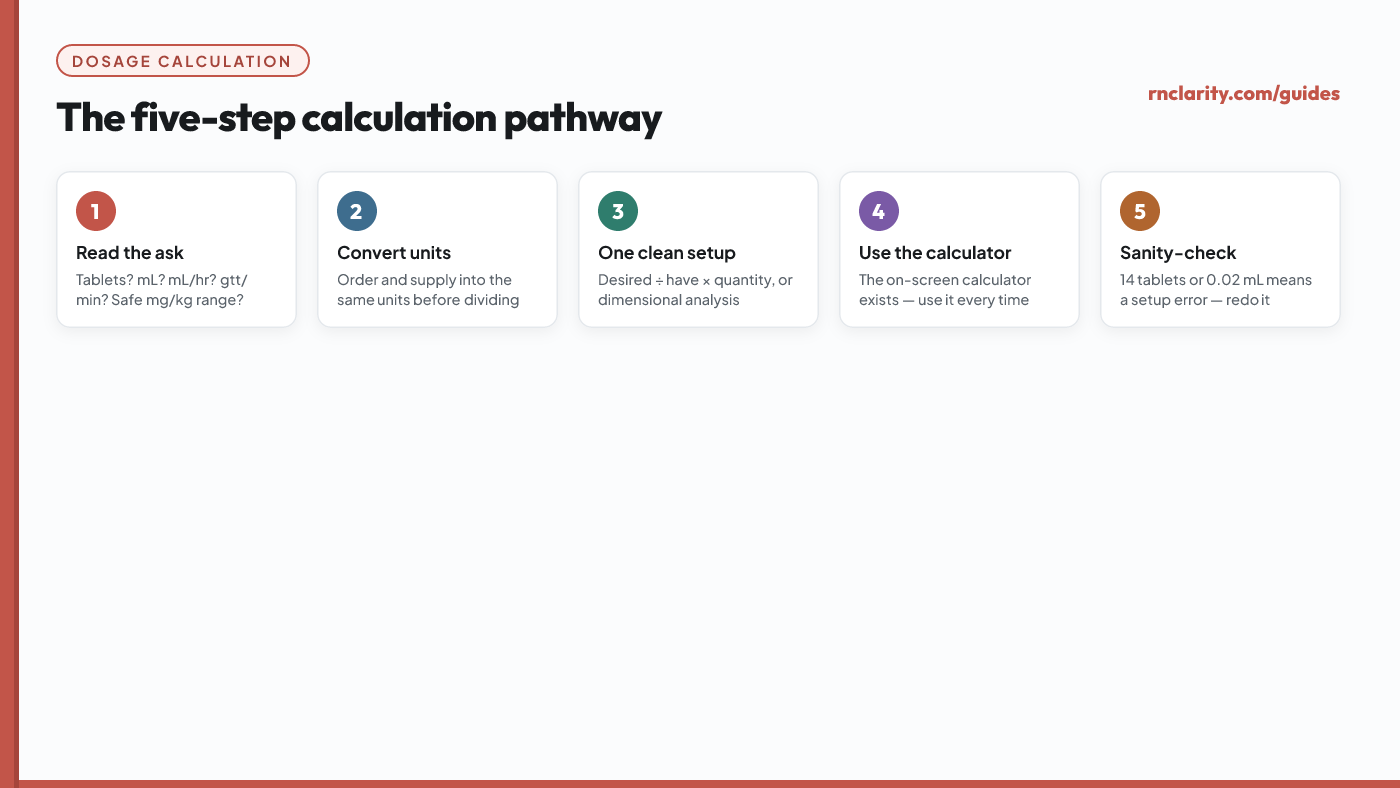
Calculation items are among the most controllable points on the examination: the method never changes, an on-screen calculator is provided, and the mathematics is deliberately reasonable.
12.1 The five-step pathway
-
Read what is actually asked. Tablets? Milliliters? mL/hr? gtt/min? mg/kg/day within a safe range?
-
Convert units first. Get the order and the supply into the same units before any division. Common conversions: 1 g = 1,000 mg; 1 mg = 1,000 mcg; 1 kg = 2.2 lb; 1 tsp = 5 mL; 1 oz = 30 mL.
-
Set up one clean equation. Desired ÷ have × quantity, or dimensional analysis — use whichever method you can perform identically every time.
-
Solve with the calculator. Do not do mental arithmetic under pressure when a calculator is on screen.
-
Sanity-check the result. Would you really give 14 tablets or 0.02 mL? An implausible answer means a setup or conversion error.
12.2 The formulas that cover nearly everything
- Basic dose: desired dose ÷ dose on hand × quantity of the supply.
- Weight-based dose: convert pounds to kilograms (divide by 2.2), multiply by mg/kg, and compare against the safe range when one is given. Pediatric items frequently ask whether an ordered dose is safe — calculate the range first, then judge the order.
- IV pump rate (mL/hr): total volume ÷ total time in hours.
- Drop rate (gtt/min): volume in mL × drop factor ÷ time in minutes.
12.3 Rounding rules
Follow the rounding instruction in the item exactly. When the item says round to the nearest whole number, do not report a decimal. Round only at the final step, never mid-calculation. Remember leading zeros and forbidden trailing zeros in any fill-in-the-blank response.
Go deeper: Learn how to drill calculation items — and every other question format — effectively in the practice questions guide.
13. IV Therapy, Blood Products and Parenteral Nutrition
13.1 IV therapy fundamentals
- Know your tonicity logic: isotonic solutions (0.9% saline, lactated Ringer's) expand volume; hypotonic solutions shift water into cells; hypertonic solutions pull water into the vascular space and demand careful monitoring.
- Infiltration: cool, pale, swollen site — stop the infusion, remove the catheter, elevate.
- Extravasation of a vesicant: stop immediately, leave the catheter for possible antidote administration per policy, and escalate.
- Phlebitis: red, warm, tender cord along the vein — stop, remove, warm compress, restart elsewhere and monitor.
- Central lines: sterile dressing technique, chlorhexidine antisepsis, daily necessity review, and air-embolism precautions during tubing changes (clamp, Valsalva positioning per policy). Sudden dyspnea and chest pain during central line manipulation suggests air embolism: clamp the line and position the client on the left side in Trendelenburg while calling for help.
13.2 Blood products
- Verify the product with two qualified staff members at the bedside, confirm client identity with two identifiers, and check blood type compatibility, product expiration and the order.
- Use only 0.9% sodium chloride with blood. Never add medications to the product line.
- Stay with the client for the first 15 minutes; most acute hemolytic reactions declare themselves early.
- Reaction findings — fever, chills, low back pain, dark urine, dyspnea, hypotension, itching or hives — mean stop the transfusion immediately, keep the line open with normal saline through new tubing, stay with the client, notify the provider and blood bank, and return the product per policy.
- Complete the transfusion within the required window (typically 4 hours per unit).
13.3 Parenteral nutrition
- Total parenteral nutrition runs through a central line by infusion pump; monitor glucose regularly because the solution is dextrose-rich.
- Never abruptly stop TPN — rebound hypoglycemia results. If the next bag is unavailable, infuse dextrose 10% per policy until it arrives.
- Change tubing and bags per schedule; lipid emulsions have their own hang-time limits.
- Weigh daily, monitor intake and output, watch for infection at the catheter site and expect scheduled laboratory monitoring of glucose, electrolytes and liver values.
14. Antidotes, Reversal Agents and Toxic Ranges
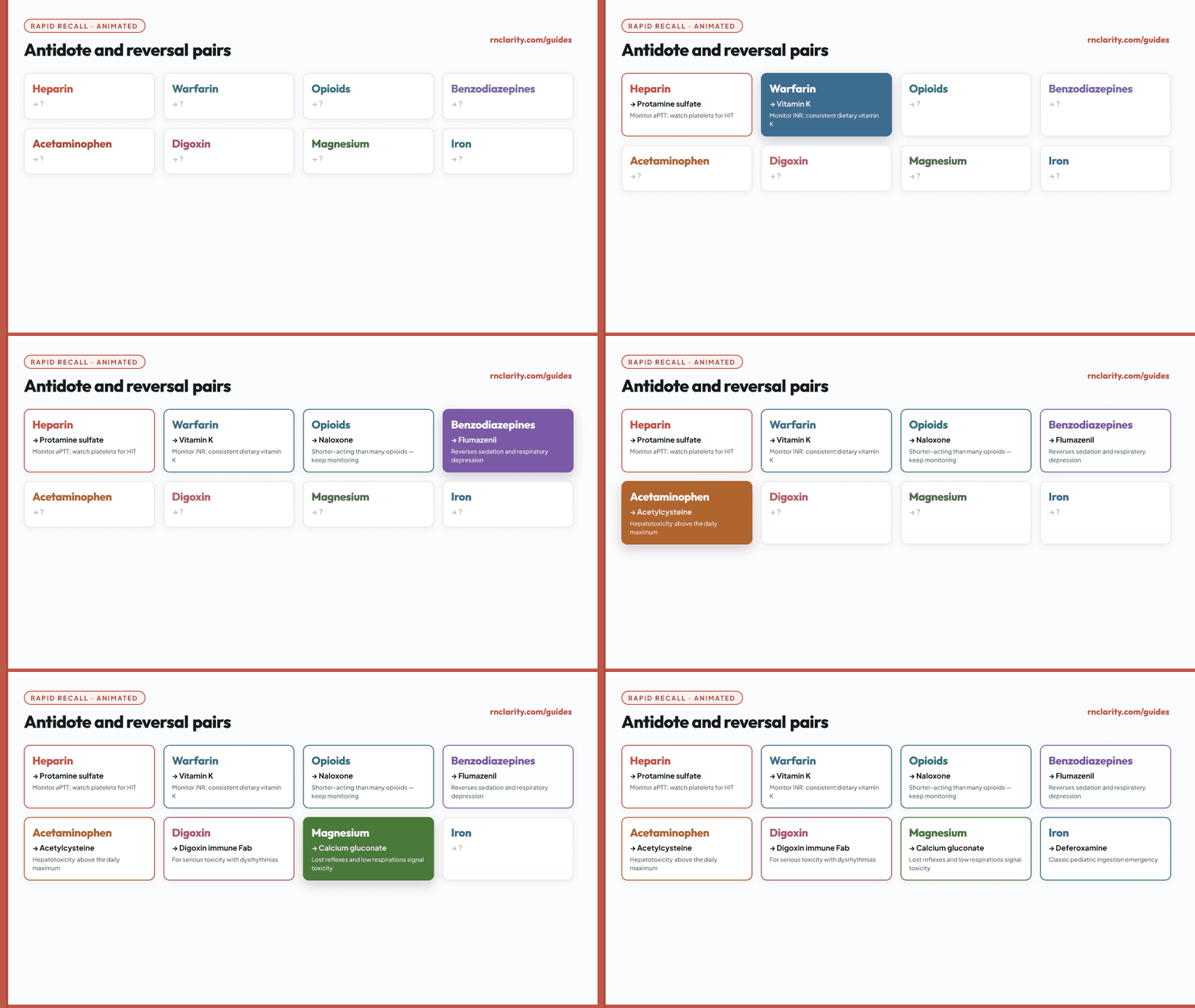
Antidote pairs are among the most efficient memorization investments in NCLEX-RN® preparation because they convert directly into correct answers.
Medication or toxin | Antidote or reversal |
|---|---|
Heparin | Protamine sulfate |
Warfarin | Vitamin K (phytonadione) |
Opioids | Naloxone |
Benzodiazepines | Flumazenil |
Acetaminophen | Acetylcysteine |
Digoxin | Digoxin immune Fab |
Magnesium sulfate | Calcium gluconate |
Iron | Deferoxamine |
Methotrexate | Leucovorin |
Cholinergic crisis | Atropine |
Extravasated vasopressors | Phentolamine |
Carbon monoxide | High-flow oxygen |
14.1 Narrow-therapeutic-range levels worth knowing
Drug | Commonly cited range | Toxicity signature |
|---|---|---|
Digoxin | 0.5-2.0 ng/mL | GI upset, bradycardia, visual halos |
Lithium | 0.6-1.2 mEq/L (maintenance) | Coarse tremor, confusion, ataxia, GI distress |
Phenytoin | 10-20 mcg/mL | Nystagmus, ataxia, slurred speech |
Theophylline | 10-20 mcg/mL | Tachycardia, nausea, restlessness, seizures |
Therapeutic INR (warfarin) | 2-3 for most indications | Bleeding above range; clotting below |
Reference ranges are provided in items that present numeric laboratory values, but knowing the toxicity signatures lets you connect a level to the client findings faster.
15. Laboratory Monitoring That Decides Answers
Many medication items are decided by a single laboratory value. Build reflexive drug-to-lab links.
Go deeper: Connect laboratory results with symptoms, trends and safe escalation in the lab interpretation guide.
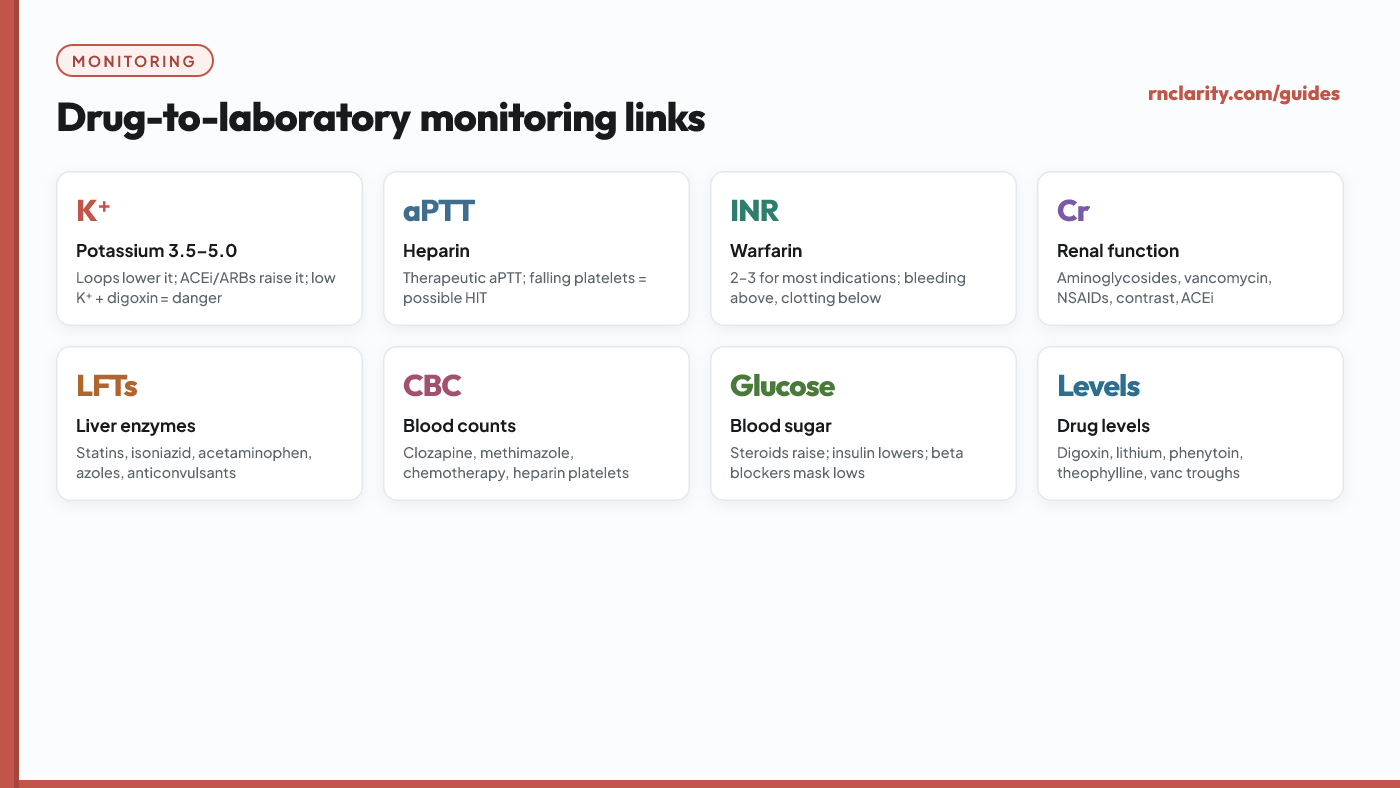
- Potassium (3.5-5.0 mEq/L): loop and thiazide diuretics push it down; ACE inhibitors, ARBs and potassium-sparing diuretics push it up; digoxin toxicity risk rises when it is low.
- Creatinine and urine output: aminoglycosides, vancomycin, NSAIDs, contrast media and ACE inhibitors all demand renal awareness.
- Liver enzymes: statins, isoniazid, acetaminophen, azole antifungals and many anticonvulsants.
- Complete blood count: clozapine (agranulocytosis), methimazole and propylthiouracil (agranulocytosis), chemotherapy (neutropenia and infection risk), heparin (platelets).
- Glucose: corticosteroids raise it; insulin and secretagogues lower it; beta blockers hide the warning signs.
- Coagulation studies: aPTT for heparin, INR for warfarin, and clinical bleeding surveillance for every anticoagulated client.
- Drug levels: digoxin, lithium, phenytoin, theophylline, vancomycin troughs, aminoglycoside peaks and troughs.
When an item pairs a scheduled medication with a fresh laboratory result, ask one question first: does this value make the next dose unsafe? If yes, the answer is almost always hold and notify, not administer and monitor.
Go deeper: For how monitoring data feeds the evaluation-and-revision step of the nursing process, see the nursing care plans guide.
16. Teaching, Adherence and Lifespan Considerations
16.1 Teaching answers that examiners reward
- Verify understanding with teach-back or return demonstration, never by asking "Do you understand?"
- Address the stated barrier: cost, complexity, side effects, beliefs or health literacy. The best teaching answer responds to the client's actual concern.
- Written materials supplement teaching; they do not replace it, and they must match the client's language and literacy.
- Herbal products and supplements count as medications. St. John's wort interacts with antidepressants, anticoagulants and contraceptives; ginkgo and garlic add bleeding risk; grapefruit juice alters the metabolism of statins and calcium channel blockers.
16.2 Older adults
- Reduced renal and hepatic clearance means standard doses can accumulate — "start low, go slow" is the prescribing philosophy and the examination philosophy.
- Polypharmacy multiplies interaction and fall risk; every new confusion or fall deserves a medication review before a new diagnosis.
- Anticholinergic burden (some antihistamines, tricyclics, bladder agents) causes confusion, urinary retention, constipation and dry mouth in older clients.
16.3 Pregnancy and lactation
- Verify pregnancy status before teratogenic drugs. ACE inhibitors, ARBs, warfarin, isotretinoin, methotrexate and tetracyclines are classic avoid-in-pregnancy answers.
- Magnesium sulfate in obstetric care requires monitoring of reflexes, respirations and urine output, with calcium gluconate available.
- When lactation questions appear, the safest answer verifies compatibility rather than assuming either safety or harm.
16.4 Pediatrics
- Doses are weight-based; safe-range verification is the nurse's responsibility even when the pharmacy calculated the dose.
- Liquid formulations require oral syringes, not household spoons.
- Never call medication "candy," and teach secure storage aggressively — accidental ingestion is a leading pediatric emergency.
17. A Four-Week Pharmacology Study Plan
This plan assumes pharmacology study alongside broader NCLEX-RN® preparation, roughly 45-60 focused minutes per day.
Go deeper: Want a week-by-week schedule for your whole NCLEX-RN® preparation, not just pharmacology? Use the NCLEX-RN® study plan builder.
Week 1: Safety systems and cardiovascular
- Days 1-2: medication rights, error prevention, high-alert concepts and calculation pathway drills.
- Days 3-5: antihypertensive classes through the seven-point framework; diuretics and potassium logic.
- Days 6-7: anticoagulants, antiplatelets and bleeding surveillance; mixed practice questions with full rationale review.
Week 2: Endocrine, anti-infectives and renal logic
- Days 1-3: insulin categories, hypoglycemia response, oral antidiabetics, thyroid and corticosteroids.
- Days 4-6: anti-infective principles and class highlights; superinfection and anaphylaxis recognition.
- Day 7: cumulative mixed questions from weeks 1-2; update the error log.
Week 3: Neuro, psych, pain, respiratory and GI
- Days 1-3: anticonvulsants, Parkinson's drugs, antidepressants, lithium and antipsychotic emergencies.
- Days 4-5: opioid safety, non-opioid analgesia and pain reassessment logic.
- Days 6-7: respiratory inhaler sequencing and GI classes; cumulative mixed questions.
Week 4: Parenteral therapy, integration and repair
- Days 1-2: IV complications, blood products, TPN and central line safety.
- Days 3-4: antidote pairs, narrow-range drugs and drug-to-lab links as rapid-recall drills.
- Days 5-7: mixed timed question blocks; repair the three most frequent error patterns from the log; re-drill calculations until error-free.
Error-log discipline: For every missed pharmacology question record the drug or class, the safety concept, why the wrong answer attracted you and the rule that prevents the repeat. Patterns in the log — not raw question volume — determine readiness.
18. Common Pharmacology Myths
Myth: The NCLEX-RN® tests hundreds of specific drugs you must memorize.
Fact: There is no published drug list. Class-based mechanisms, safety checks and monitoring principles answer the items.
Myth: Calculation questions are designed to be tricky.
Fact: They test a consistent, teachable method with an on-screen calculator. Errors come from skipped unit conversions, not hard math.
Myth: If a medication is ordered, the nurse should give it.
Fact: The nurse is an independent safety check. Holding and clarifying an unsafe order is the expected professional behavior and often the correct answer.
Myth: Side effects and adverse effects are the same thing.
Fact: Expected side effects are taught and managed; dangerous adverse effects are held, reported and escalated. Distinguishing them is exactly what many items test.
Myth: Assessment is always the right first step in a medication item.
Fact: When the item already gives you the decisive finding — respiratory depression after an opioid, anaphylaxis during an infusion — the correct answer acts on it.
Myth: Brand names matter on the examination.
Fact: The examination uses generic names. Study generics and their stems.
Myth: You should study pharmacology as a separate isolated subject.
Fact: Pharmacology answers live inside physiology. Understanding why a heart-failure client receives a loop diuretic makes the monitoring, teaching and hold criteria self-evident.
19. Frequently Asked Questions
How much of the NCLEX-RN® is pharmacology?
Pharmacological and Parenteral Therapies carries an official range of 13-19% on the 2026 test plan, and medication-safety reasoning also appears inside other content areas.
Is there an official list of drugs on the NCLEX-RN®?
No. NCSBN® does not publish a drug list. Class-based knowledge is the intended preparation strategy.
Should I memorize drug levels and lab ranges?
Reference ranges are provided when items present numeric laboratory values. Knowing common therapeutic ranges and toxicity signatures still speeds recognition, so learn the handful of narrow-range drugs well.
Is a calculator available for dosage calculations?
Yes, an on-screen calculator is provided. Personal calculators are not permitted.
How should I round calculation answers?
Follow the rounding instruction in the item exactly, round only at the final step, use leading zeros and never use trailing zeros.
How many pharmacology questions will I get?
The adaptive engine builds each examination individually within blueprint ranges, so the exact count varies by candidate and examination length.
What are the highest-yield drug classes?
Anticoagulants, insulin and antidiabetics, opioids, antihypertensives, diuretics, corticosteroids, anti-infectives, anticonvulsants, lithium and antipsychotics — plus IV therapy and blood-product safety.
What is the fastest way to learn suffixes?
Drill the stem-to-class map in short daily sessions, then confirm each one by answering practice questions where the stem identifies the class.
Do I need to know herbal supplements?
Know the classic interaction stories: St. John's wort, ginkgo, garlic and grapefruit juice. Treat every supplement as a medication in history-taking.
How do I decide between "give" and "hold" answers?
Check the parameter the drug affects. If the item includes a value or finding that makes the dose unsafe — low potassium before digoxin, bleeding signs on an anticoagulant, respiratory depression before an opioid — hold and notify.
Are IV push rates tested?
Concepts are tested: potassium is never IV push, vancomycin is infused slowly, and adenosine is pushed rapidly. Exact institutional rates are not the point; the safety principle is.
What should I do the week before the examination for pharmacology?
Re-drill antidote pairs, high-alert safety checks, insulin timing, calculation setups and your personal error-log patterns. Do not attempt new drug lists in the final week.
Go deeper: For a complete checklist of what to bring, what to expect at the test centre and how to pace the day itself, see the exam day guide.
How is blood transfusion safety tested?
Expect items about pre-transfusion verification, staying with the client for the first 15 minutes, recognizing reaction findings and the stop-the-transfusion response sequence.
Can pharmacology appear in NGN case studies?
Yes. Case studies frequently include a medication administration record tab, and medication decisions map naturally onto the six clinical judgment steps.
What if I blank on a drug I have never seen?
Use the stem to hypothesize the class, use the clinical context to confirm, and apply class-level safety logic. The item is answerable — that is why it was selected.
How many practice questions per day should be pharmacology?
There is no official number. A practical pattern is a daily mixed block plus a short pharmacology-focused drill, with every miss fully reviewed and logged.
20. Official Public References
2. 2026 NCLEX® Examination Candidate Bulletin
4. Official preparation resources and sample materials
5. Official frequently asked questions
6. Computerized adaptive testing explanation
7. Clinical Judgment Measurement Model overview
8. FDA Drug Safety Communications
9. Institute for Safe Medication Practices — High-Alert Medications
10. CDC — Medication Safety Program
21. Educational, Non-Affiliation and Trademark Disclaimer
Educational disclaimer: This guide is provided by RN Clarity for general educational and informational purposes only. It is not a substitute for the official 2026 NCLEX-RN® Test Plan, the current Candidate Bulletin, nursing-school instruction, current drug references and prescribing information, institutional policy, professional clinical judgment or individualized medical advice. Medication indications, dosing, safety information and examination policies change; always verify against current official sources and facility policy before clinical decisions. Use of this guide does not guarantee a passing result.
Non-affiliation statement: RN Clarity is an independent educational resource. RN Clarity is not affiliated with, endorsed by, sponsored by, approved by or officially connected with the National Council of State Boards of Nursing, Inc., the U.S. Food and Drug Administration, the Institute for Safe Medication Practices or the Centers for Disease Control and Prevention.
Trademark notice: NCLEX®, NCLEX-RN®, NCLEX®-PN® and NCSBN® are registered trademarks of the National Council of State Boards of Nursing, Inc. All trademarks belong to their respective owners. Their use in this guide is solely for identification, commentary and educational reference. RN Clarity does not claim ownership of these trademarks, official examination content, NCSBN® logos or proprietary examination materials.