Nursing Diagnoses Explained: The Complete Guide to Writing Accurate Nursing Diagnoses
Learn how to write accurate nursing diagnoses using assessment data, cue clustering, PES statements, risk factors, priorities and clinical judgment — aligned with the NCLEX-RN® Test Plan effective April 2026.
1. What a Nursing Diagnosis Is
A nursing diagnosis is a clinical judgment about a human response to an actual or potential health condition, life process, or vulnerability. It names what the nurse can assess, prevent, reduce, monitor, support, or manage — independent of, and complementary to, the medical diagnosis.
A nursing diagnosis is not a medical diagnosis. A physician diagnoses pneumonia. The nurse identifies the human responses that pneumonia produces: impaired gas exchange, discomfort, activity limitation, aspiration risk, anxiety, self-management learning needs. Those responses are what nursing care addresses.
A nursing diagnosis is not a nursing intervention. "Suction the airway" is an action. "Risk for aspiration related to impaired swallowing as evidenced by wet voice and reduced gag reflex" is a judgment about vulnerability that the action is meant to prevent.
A nursing diagnosis provides the reasoning link between what the nurse observes and what the nurse does. Without it, care becomes a list of tasks. With it, every goal, intervention, and evaluation connects back to a clearly stated clinical problem.
Why accuracy matters: An inaccurate nursing diagnosis leads to goals that do not measure the right thing and interventions that do not address the real concern. NCLEX-RN® clinical judgment items test whether candidates can select the most accurate diagnosis from a set of plausible alternatives.
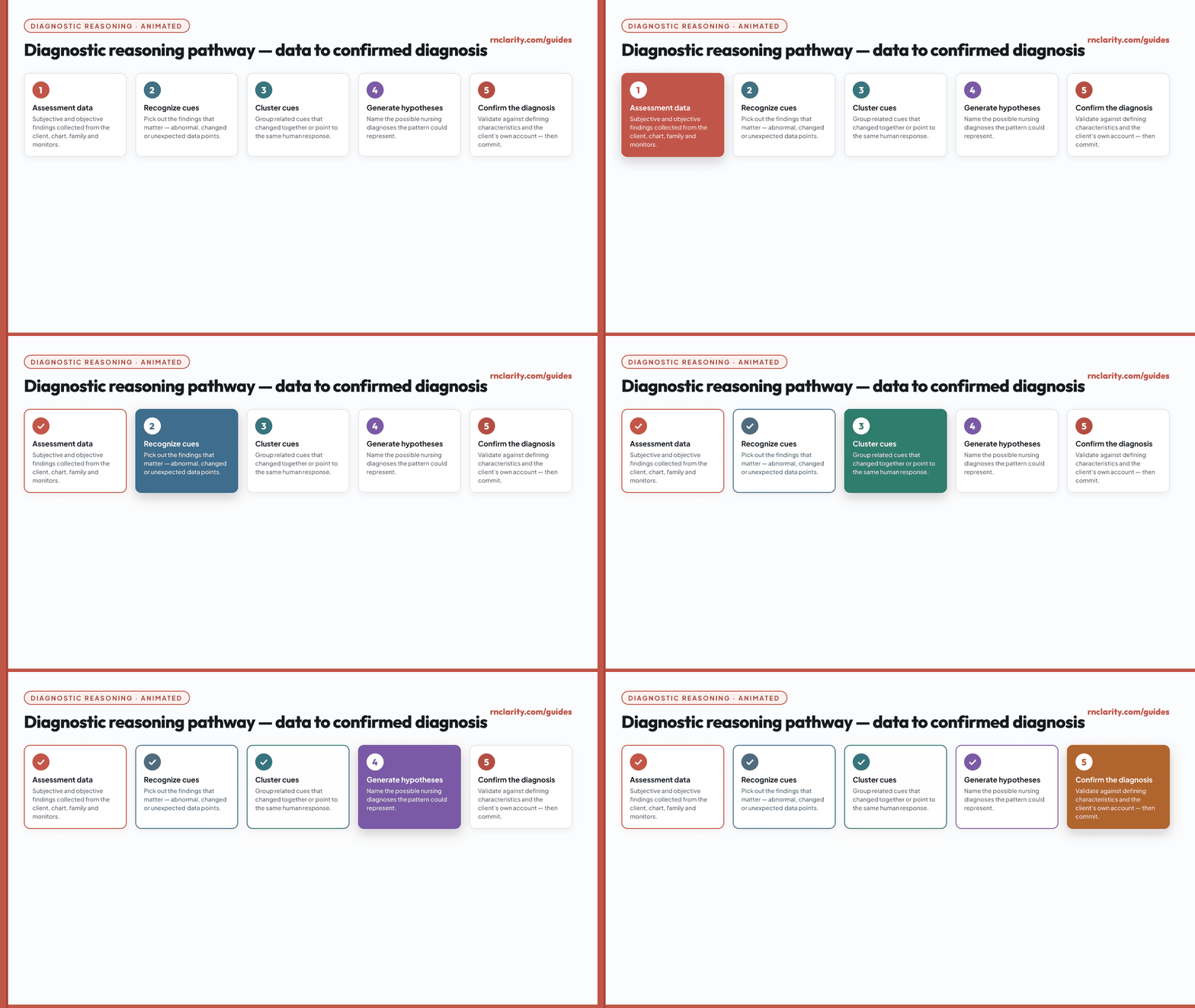
Go deeper: See how this reasoning pathway maps to the six CJMM steps in the clinical judgment guide.
2. History and Authority of Nursing Diagnoses
Nursing diagnosis as a formal concept was introduced at the First National Conference on the Classification of Nursing Diagnoses in 1973. The North American Nursing Diagnosis Association, now called NANDA International (NANDA-I), has curated and published the taxonomy ever since.
The current authoritative reference is Nursing Diagnoses: Definitions and Classification, 2024–2026, 13th Edition, published by NANDA-I. This edition contains over 300 approved nursing diagnoses, each with a label, definition, defining characteristics (signs and symptoms), related factors (for problem-focused diagnoses), and risk factors (for risk diagnoses). The edition adds new diagnostic concepts, refines existing ones, and retires labels that no longer reflect evidence.
Nursing students must use the edition and exact terminology required by their school. Different programs, workplaces, and countries may follow different taxonomies or use different formats for the diagnostic statement. This guide explains the reasoning principles common to all versions; the specific label wording must be verified against the authorized source in each setting.
Academic integrity note: Reproducing NANDA-I diagnostic labels and definitions without authorization may infringe copyright. This guide teaches the underlying reasoning and uses illustrative examples of the diagnostic process rather than reproducing proprietary classification content.
3. Alignment with the April 2026 NCLEX-RN® Test Plan
The official NCLEX-RN® Test Plan effective April 2026 integrates the nursing process — assessment, analysis, planning, implementation, and evaluation — across all eight content areas. The Analysis step is where nursing diagnosis lives.
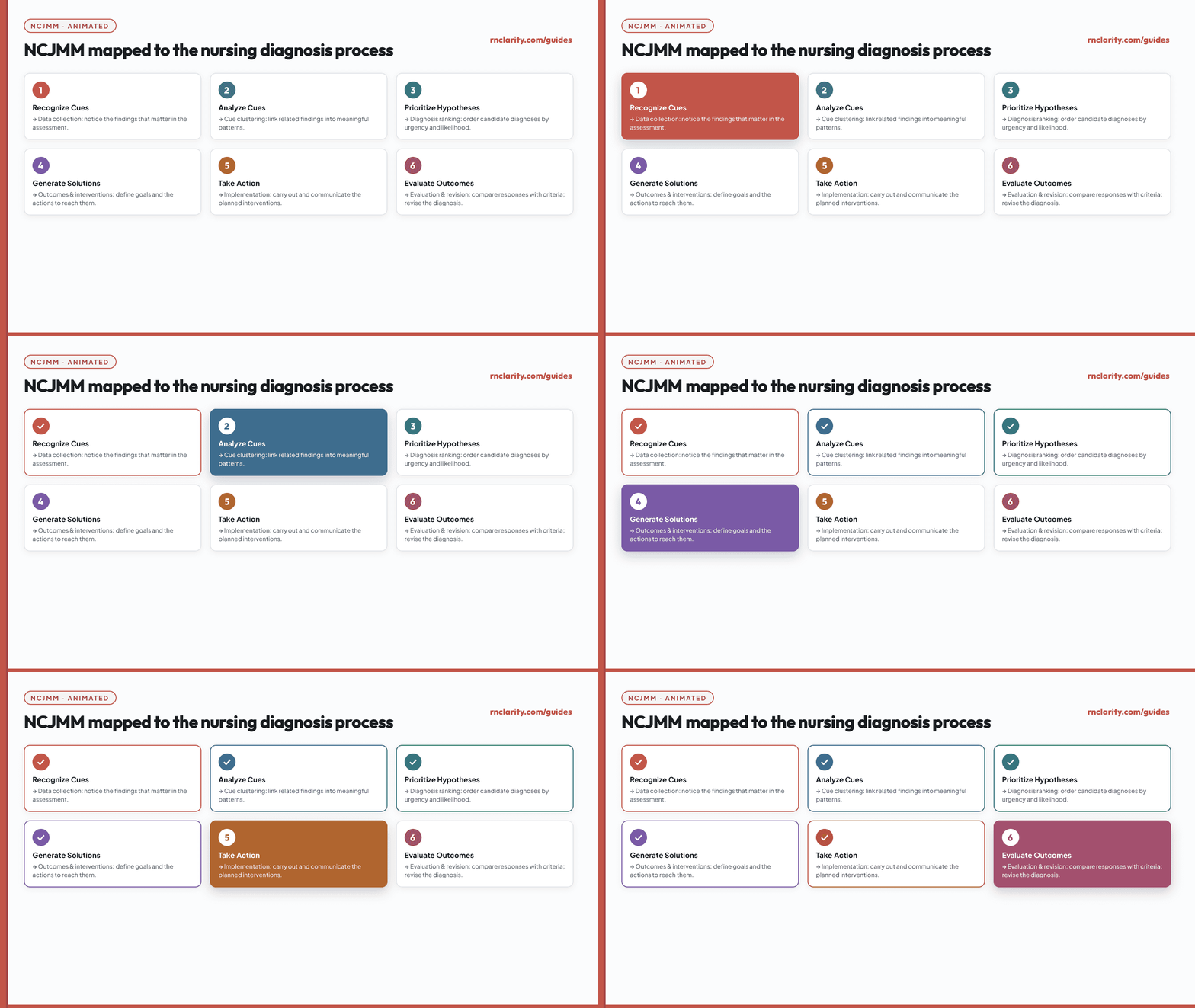
The test plan also embeds the NCSBN Clinical Judgment Measurement Model (CJMM), whose six measurable steps are: recognize cues, analyze cues, prioritize hypotheses, generate solutions, take action, and evaluate outcomes. Nursing diagnosis is the output of the analyze-cues and prioritize-hypotheses steps. Candidates who understand how to move from assessment findings to an accurate, prioritized nursing problem will perform better on every item type, not just stand-alone diagnosis questions.
| NCLEX-RN® process concept | Nursing-diagnosis connection |
|---|---|
| Assessment | Collect assessment data that support or refute the diagnosis. |
| Analysis | Cluster cues, generate hypotheses, select the most supported diagnosis. |
| Planning | Set outcomes and interventions based on the selected diagnosis. |
| Implementation | Act to address the diagnosis and its contributing factors. |
| Evaluation | Compare the client's response with the expected outcome and revise the diagnosis if needed. |
| Clinical judgment — Recognize cues | Identify which findings are relevant to a nursing problem. |
| Clinical judgment — Analyze cues | Determine what pattern the cues form and which diagnosis they best support. |
| Clinical judgment — Prioritize hypotheses | Rank competing diagnoses by urgency, likelihood, and risk. |
Go deeper: For the full 2026 test plan, adaptive scoring, and passing standard, see the NCLEX-RN® test plan explained.
Go deeper: For how the nursing process and all six CJMM clinical judgment steps connect to everyday foundational nursing care — including assessment, documentation, safety, and clinical reasoning in any setting — see the fundamentals of nursing guide.
4. The Relationship Between Medical and Nursing Diagnoses
A persistent source of confusion for nursing students is the overlap between medical and nursing diagnoses. Understanding the distinction protects the student from writing statements that are outside nursing scope and from missing the nursing responses that matter clinically.
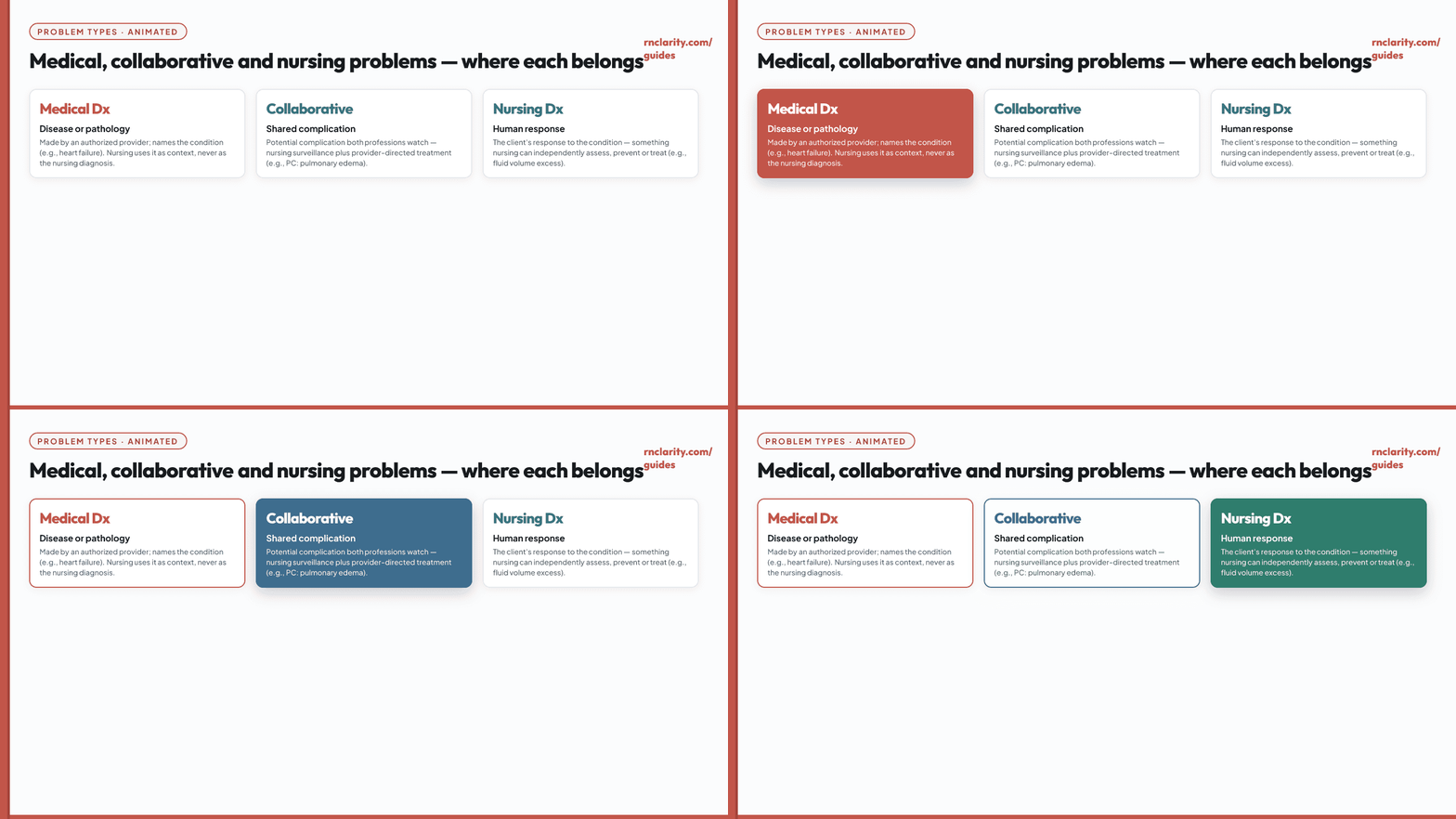
4.1 Medical diagnosis
A medical diagnosis names a disease, injury, or pathological condition. It is made by an authorized provider and guides medical treatment decisions. Examples: heart failure, type 2 diabetes mellitus, community-acquired pneumonia, ischemic stroke, hip fracture.
The nurse uses the medical diagnosis as clinical context — to understand the pathophysiology, anticipate complications, implement medical orders safely, and recognize deterioration. But the nurse does not write a medical diagnosis as the primary nursing problem statement, because it does not identify a response nursing can independently address.
4.2 Nursing diagnosis
A nursing diagnosis names a human response, functional problem, risk, learning need, or readiness. Examples: impaired gas exchange, acute pain, fall vulnerability, deficient knowledge, readiness to improve self-management.
The nurse generates, validates, documents, and revises nursing diagnoses as part of the nursing process. A client admitted with heart failure may simultaneously require care for impaired oxygenation response, excess fluid volume response, activity limitation, and self-management learning needs — all nursing diagnoses separate from the medical diagnosis of heart failure itself.
4.3 Collaborative problem
A collaborative problem describes a potential or actual complication that requires both nursing surveillance and medical treatment. The nurse monitors for the complication, recognizes early signs, implements authorized treatment orders, and escalates quickly. Examples: potential for postoperative hemorrhage, potential for dysrhythmia related to electrolyte imbalance, potential for hypoglycemia.
Collaborative problems are not independent nursing diagnoses but they are an important part of the nursing plan. Ignoring them because they are "medical" rather than "nursing" creates an incomplete and unsafe plan.
5. Types of Nursing Diagnoses: An Overview
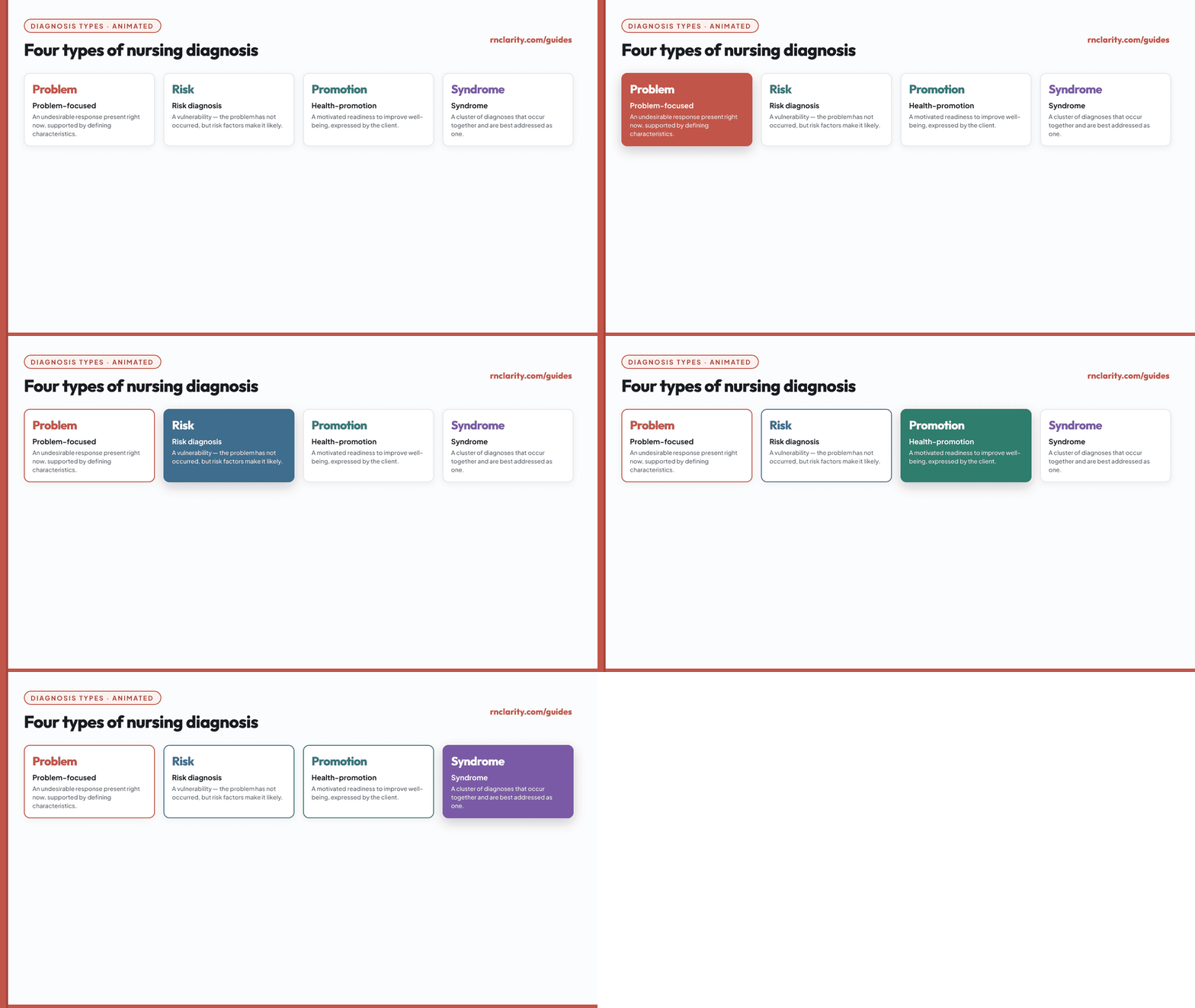
NANDA-I classifies nursing diagnoses into seven types, though many programs use a simplified four-category framework. The principles described here apply to the most commonly used categories.
| Type | When present | Evidence required | Key question |
|---|---|---|---|
| Problem-focused | A human response is currently present. | Defining cues (signs and symptoms) support the diagnosis. | What is happening now? |
| Risk | The response is not present but vulnerability is significant. | Risk factors support potential occurrence; signs of the problem are absent. | What could happen if nursing does not act? |
| Health-promotion | The client is ready or motivated to improve health or well-being. | Client motivation, expressed goals, or readiness cues. | What does the client want to strengthen or develop? |
| Syndrome | A recognized cluster of nursing diagnoses is expected together. | The clinical context supports the syndrome label. | Does this situation reliably predict multiple related responses? |
Important selection rule: If the response is currently present, use a problem-focused diagnosis. If the response is not present but vulnerable, use a risk diagnosis. Do not add signs and symptoms to a risk diagnosis — their presence would suggest the problem is actual rather than potential.
6. The Anatomy of a Nursing Diagnosis Statement
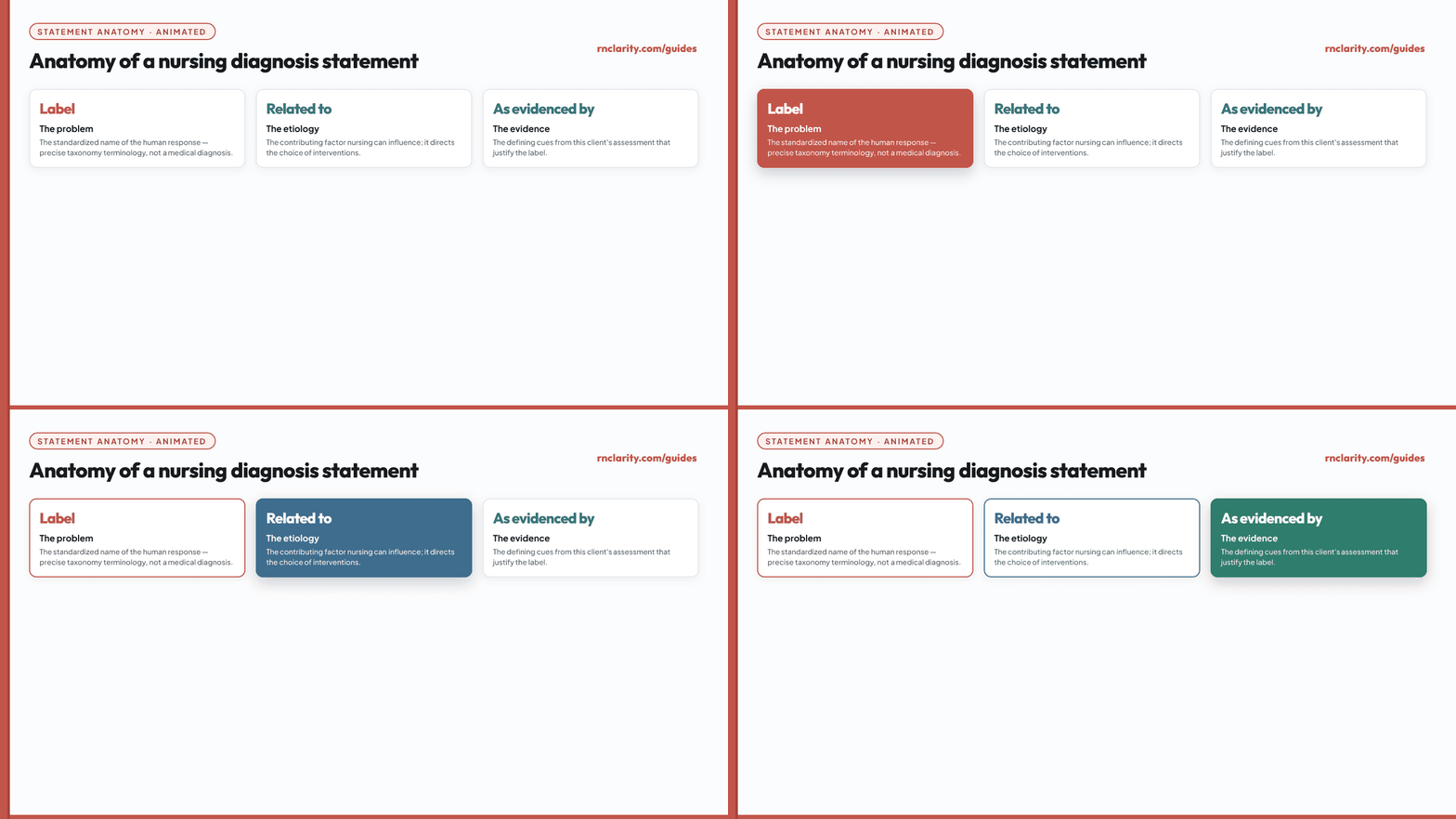
Every nursing diagnosis statement has predictable components, regardless of whether the school uses a full three-part PES format, a two-part format, or a single-label format. Understanding each component makes writing and evaluating any format easier.
6.1 The problem label
The problem label is the name of the nursing diagnosis — the human response, risk, or readiness the nurse has identified. It is derived from an authorized taxonomy and must be used with the exact wording required by the program or workplace.
The label should accurately reflect the client's situation. Choosing a vague or broad label weakens the entire plan. "Impaired skin integrity" is more precise than "alteration in skin." "Risk for aspiration" is more precise than "unsafe swallowing."
6.2 The related factor or etiology
The related factor — sometimes called the etiology, linked factor, or "related to" part — identifies a contributing factor, underlying condition, or context that helps explain why this response is occurring for this client. It should be something that nursing interventions can directly or indirectly influence.
Effective related factors:
- Are specific to this client, not generic to the diagnosis.
- Identify something modifiable or that nursing can monitor and support.
- Help explain the mechanism connecting the risk or response to the contributing condition.
Weak related factors:
- Simply repeat the medical diagnosis ("impaired gas exchange related to heart failure").
- Are untestable or outside nursing scope ("…related to poor compliance with diet").
- Blame the client without clinical basis.
6.3 The defining cues (signs and symptoms)
For problem-focused diagnoses, the "as evidenced by" component lists the specific assessment findings — signs the nurse observed or symptoms the client reported — that confirm the diagnosis. These are also called defining characteristics.
Choose cues that are directly relevant to the stated problem. A long list of every abnormal finding is not more convincing than two or three precisely selected cues that specifically support the nursing response being named. The cues also become evaluation targets: if the problem resolves, these findings should improve.
Go deeper: For how NGN case study items test the ability to match cues to the correct nursing problem, see the NGN case studies guide.
7. Cue Clustering: From Raw Data to Pattern
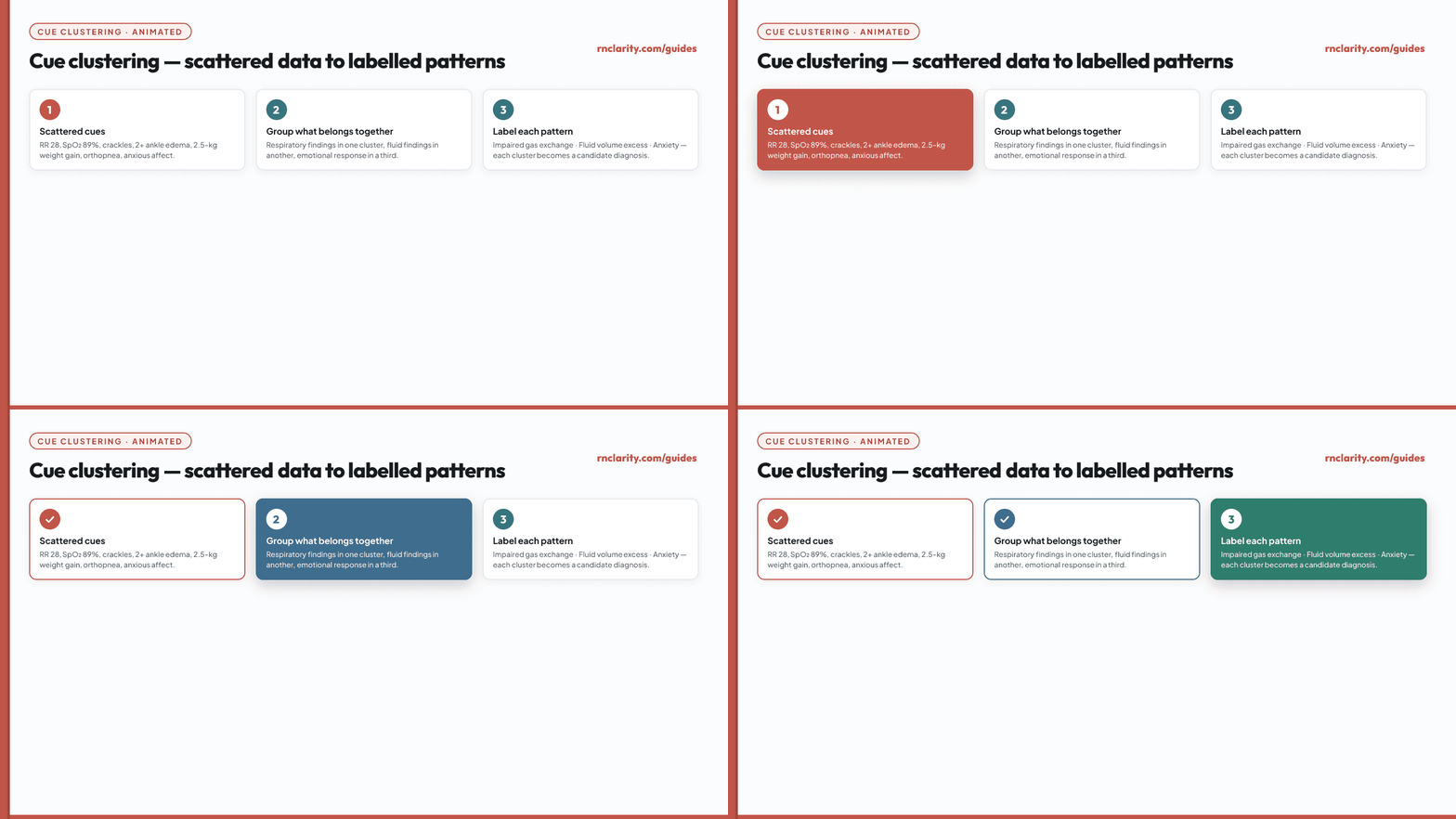
A nursing diagnosis does not arise from a single data point. It arises from a cluster of related findings that, taken together, support a clinical judgment. This process of grouping and interpreting related assessment data is called cue clustering.
7.1 Step-by-step cue clustering
- List all assessment findings — vital signs, subjective symptoms, objective observations, laboratory values, history, functional status, psychosocial data, safety risks, and learning needs.
- Identify abnormal, unexpected, or high-risk findings — compare with baselines and normal ranges; note new changes or trends.
- Group related findings — which cues point to the same physiological, functional, psychosocial, or safety problem?
- Name the pattern — what response, risk, or need does this cluster support?
- Validate the cluster — does each finding in the cluster actually support the named pattern? Is any essential data missing?
- Consider competing explanations — could the same findings support a different diagnosis? What additional assessment data would help distinguish?
7.2 Common clustering errors
| Error | Example | Correction |
|---|---|---|
| Single-cue diagnosis | Naming "anxiety" from one complaint of nervousness. | Seek additional supporting cues: restlessness, physiological signs, cognitive interference, or escalating distress. |
| Over-inclusive cluster | Putting unrelated findings in one cluster to write fewer diagnoses. | Each cluster should reflect one coherent nursing response; separate clusters yield separate diagnoses. |
| Ignoring missing data | Proceeding without clarifying an ambiguous or contradictory finding. | Validate the uncertain cue before naming a diagnosis. |
| Clustering without context | Treating every cue as equally weighted regardless of acuity. | Prioritize cues that signal urgency, instability, or high risk. |
Go deeper: For the systematic assessment approach, subjective and objective data collection methods, and the before-during-after discipline that generates accurate cues for clustering, see the fundamentals of nursing guide.
8. Writing the PES Statement for Problem-Focused Diagnoses
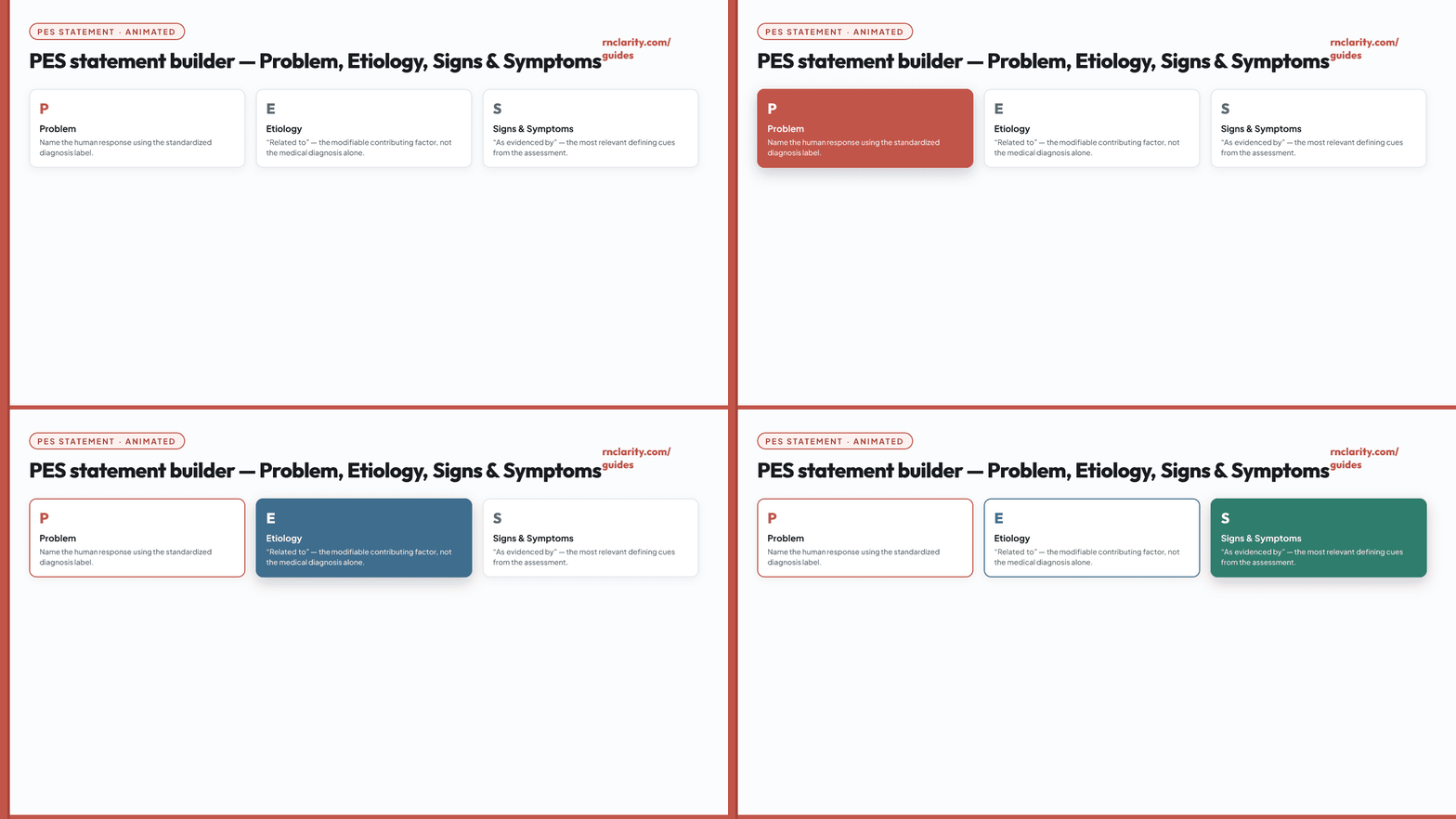
The PES format — Problem, Etiology, Signs and Symptoms — is the most commonly taught structure for problem-focused nursing diagnoses in pre-licensure nursing programs. It produces a three-part statement linked by "related to" and "as evidenced by."
8.1 The full PES format
[Problem label] related to [contributing factor] as evidenced by [defining cues].
Example:
Acute pain related to tissue trauma from abdominal surgery as evidenced by client report of pain 8/10, guarding of the incision site, and shallow respirations.
Each part of this statement serves a specific purpose:
- Acute pain — names the response so the plan focuses on the right problem.
- related to tissue trauma from abdominal surgery — explains the contributing mechanism that interventions will need to address (pain management, wound care, positioning).
- as evidenced by pain 8/10, guarding, shallow respirations — shows the specific client data that confirm the diagnosis and will be used to evaluate improvement.
8.2 Quality checks for the PES statement
Run through these questions before finalizing:
- Does the problem label reflect an actual, current response in this client?
- Is the label from the authorized taxonomy used by the program?
- Does the etiology name something modifiable, and is it supported by assessment data?
- Are the cues specific to this client — not generic to the diagnosis class?
- Would the outcome clearly measure improvement in the stated problem?
- Do the interventions address both the problem and the etiology?
- Is the statement free from blame, stigmatizing language, or assumptions?
- Is a higher-priority problem being addressed first?
8.3 Avoiding common PES mistakes
| Weak statement | Why it fails | Improved version |
|---|---|---|
| Impaired gas exchange related to pneumonia as evidenced by cough. | Etiology names the medical diagnosis; cough alone is too vague. | Impaired gas exchange related to alveolar-capillary membrane impairment as evidenced by oxygen saturation 88% on room air, increased work of breathing, and altered mental status. |
| Pain related to surgery. | Missing the "as evidenced by" cues; etiology is too vague. | Acute pain related to tissue trauma from appendectomy as evidenced by pain score 7/10, facial grimacing, and refusal to deep breathe. |
| Noncompliance related to lack of motivation. | Noncompliance is stigmatizing and blames the client; motivation is assumed. | Ineffective health management related to knowledge deficit and limited access to prescribed diet as evidenced by reports of difficulty affording recommended foods and inconsistent medication schedule. |
9. Writing Risk Diagnoses
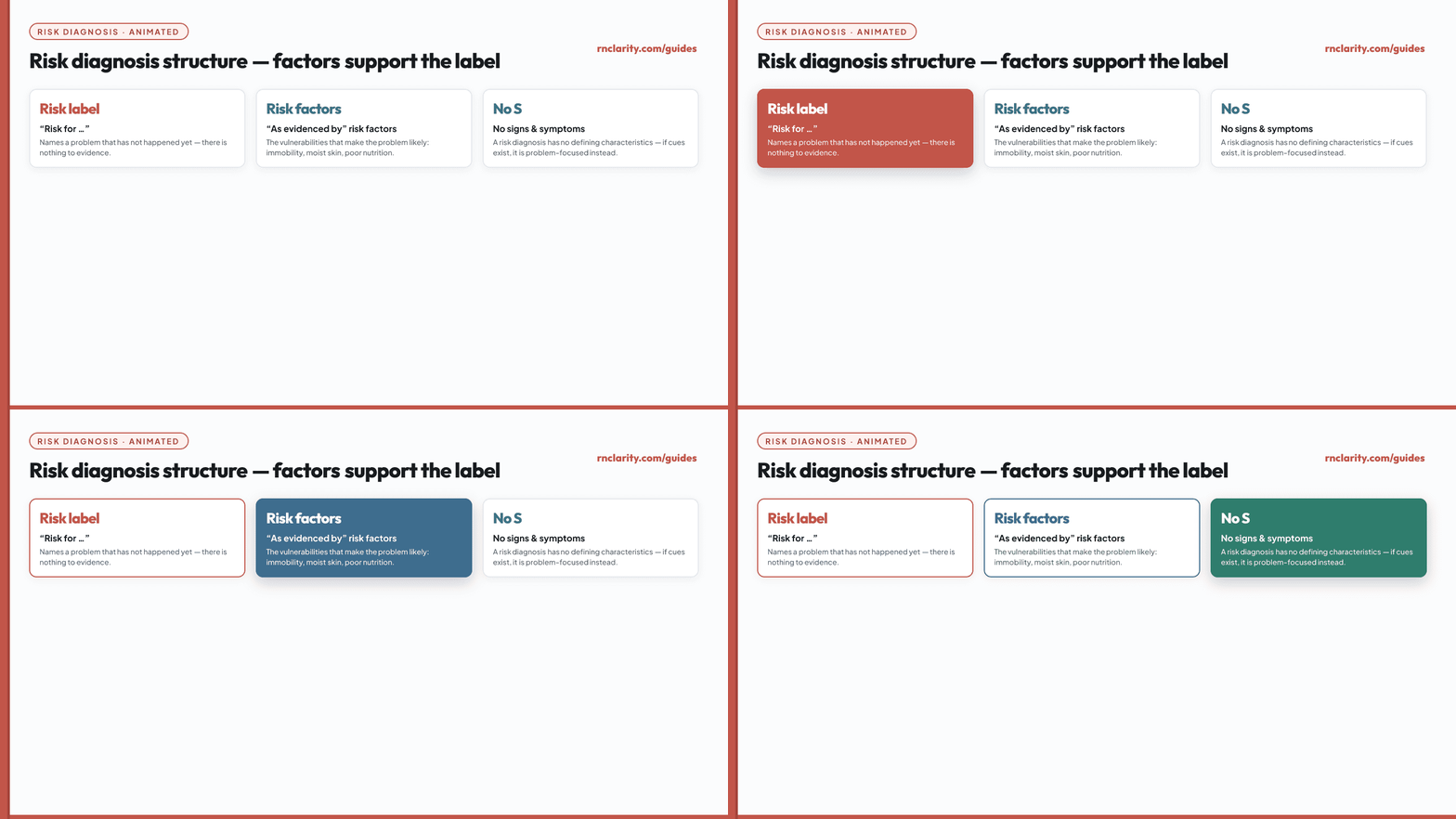
A risk diagnosis identifies a vulnerability — a human response that has not yet occurred but is likely to occur without nursing intervention. Because the problem is not currently present, there are no defining cues (signs or symptoms of the problem itself). Instead, risk diagnoses are supported by risk factors.
9.1 The risk diagnosis format
Risk for [label] related to [risk factors].
Some programs use "as evidenced by" in risk diagnoses to list the risk factors. Others reserve that phrase for problem-focused diagnoses only. Follow the format required by the program.
Example:
Risk for falls related to unsteady gait, sedating medication, unfamiliar environment, and urgent toileting needs.
9.2 When to use a risk diagnosis
Use a risk diagnosis when:
- The assessment shows significant risk factors for a specific harmful response.
- The response itself (signs and symptoms of the problem) is not yet present.
- Nursing intervention can reduce the likelihood or severity of the potential response.
Do not use a risk diagnosis when:
- The problem has already occurred — in that case, a problem-focused diagnosis is more accurate.
- Risk factors are generic rather than specific to this client.
- The probability of occurrence is negligible given the clinical context.
9.3 Prioritizing risk diagnoses against problem-focused diagnoses
A risk diagnosis can take priority over a problem-focused diagnosis when:
- The potential outcome is life-threatening or catastrophic.
- The probability of occurrence is high and the time window is short.
- The risk is preventable only through immediate action.
For example, "Risk for airway obstruction related to post-extubation edema" may take priority over "Acute pain related to surgical incision," even though pain is a current, confirmed problem.
Common NCLEX® trap: Assuming that actual problems always outrank potential ones. When the potential event is immediately life-threatening and time-sensitive, it often does take priority.
10. Writing Health-Promotion Diagnoses
A health-promotion nursing diagnosis identifies an opportunity to strengthen a client's health behaviors, knowledge, motivation, or self-care capacity. It is used when the client or family expresses readiness, motivation, or a desire to move toward better health or well-being.
The health-promotion diagnosis is not appropriate merely because the nurse wants to teach. The assessment must show that the client is ready, motivated, or asking to improve — not just that an educational need exists.
Examples of appropriate situations:
- A prenatal client asks how to prepare a home environment for a new baby.
- A client recovering from a first cardiac event says they want to change their diet and start an exercise program.
- An older adult requests information about fall prevention after reading about a neighbor's injury.
Format:
Readiness for enhanced [area] as evidenced by [motivational cues, expressed goals, or readiness behaviors].
Example:
Readiness for enhanced self-health management as evidenced by client's request for written medication instructions, questions about blood-pressure monitoring, and identification of a support person.
Go deeper: For how health-promotion diagnoses connect to NCLEX-RN® active-learning strategies and teaching-learning principles, see the active learning guide.
11. Etiology Selection: Finding the Right Related Factor
The etiology — the "related to" part of a nursing diagnosis — is the most consequential choice in the statement after the label itself, because it determines what the interventions must address. An inaccurate or non-modifiable etiology produces a plan that cannot succeed.
11.1 Three tests for a strong etiology
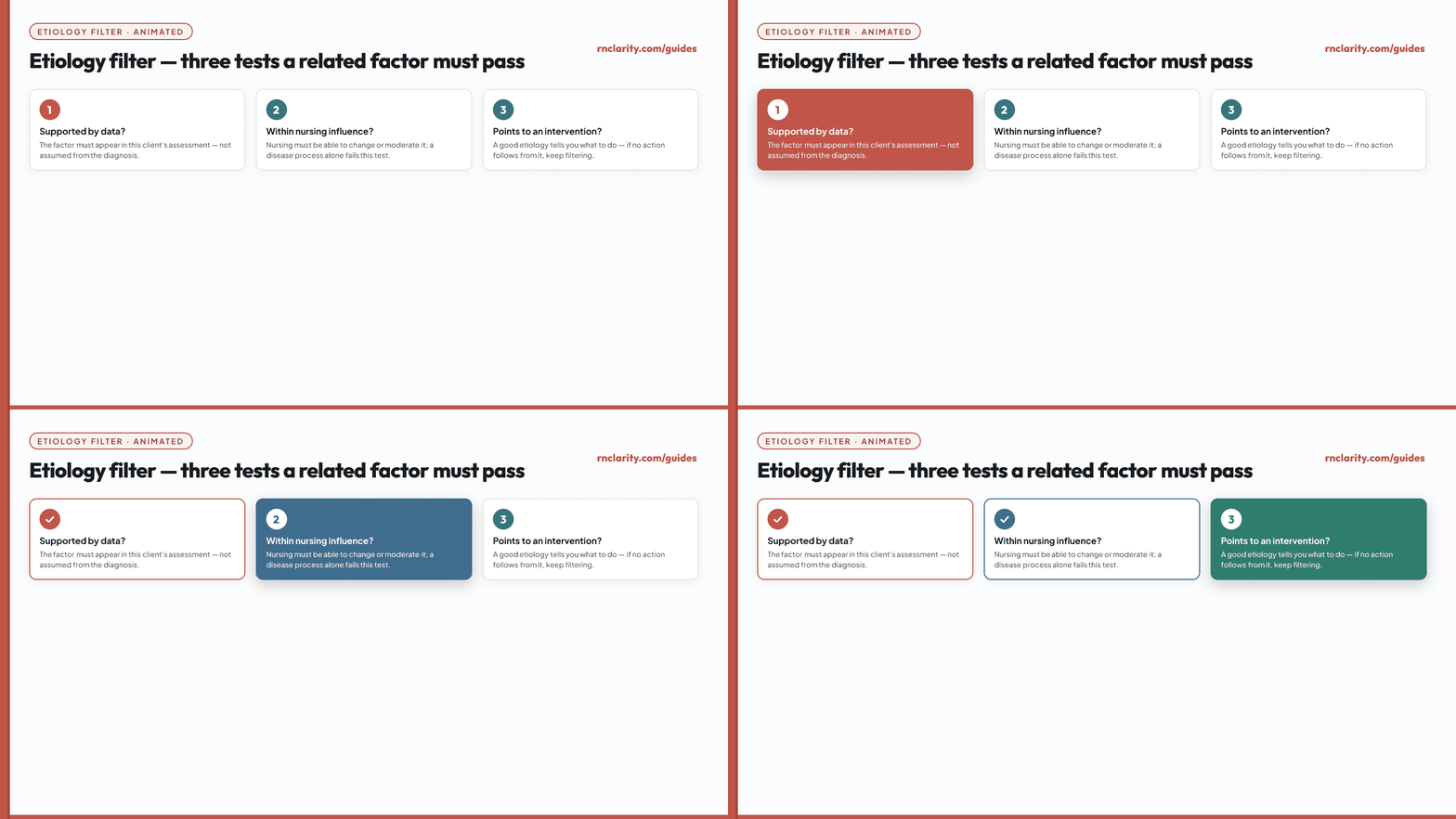
Test 1: Supported by assessment data. The related factor should be identifiable from the assessment, not assumed. If the etiology is "related to poor understanding of medication schedule," the nurse must have assessed the client's actual knowledge, not assumed it from the medical history.
Test 2: Within nursing influence. If the nurse cannot influence the related factor at all — not through independent action, collaborative referral, education, or escalation — the intervention chain breaks. A related factor does not need to be fully resolvable by nursing, but it must be addressable.
Test 3: Points to an addressable intervention. The etiology should guide the nurse toward specific interventions. "Related to fluid and electrolyte imbalance" suggests monitoring, fluid therapy management, and dietary teaching. "Related to the disease process" provides no guidance at all.
11.2 Multiple etiologies
A nursing diagnosis can have more than one related factor. List the most relevant contributing factors, but prioritize those most important to the interventions. Listing every possible contributing cause dilutes focus.
Example with multiple factors: Acute pain related to tissue trauma from surgery and inadequate pharmacological support as evidenced by pain score 9/10, refusal to reposition, and absence of prescribed analgesic administration.
In this statement, both the surgery and the inadequate pain management are listed as contributing factors — the first because it explains the source, the second because it identifies an immediately addressable intervention opportunity.
11.3 When the etiology is unknown
If the cause of the response is not yet identified — for example, acute confusion of unclear etiology — it is acceptable to write "related to unknown cause under investigation" or equivalent language, noting that the etiology will be updated as assessment continues.
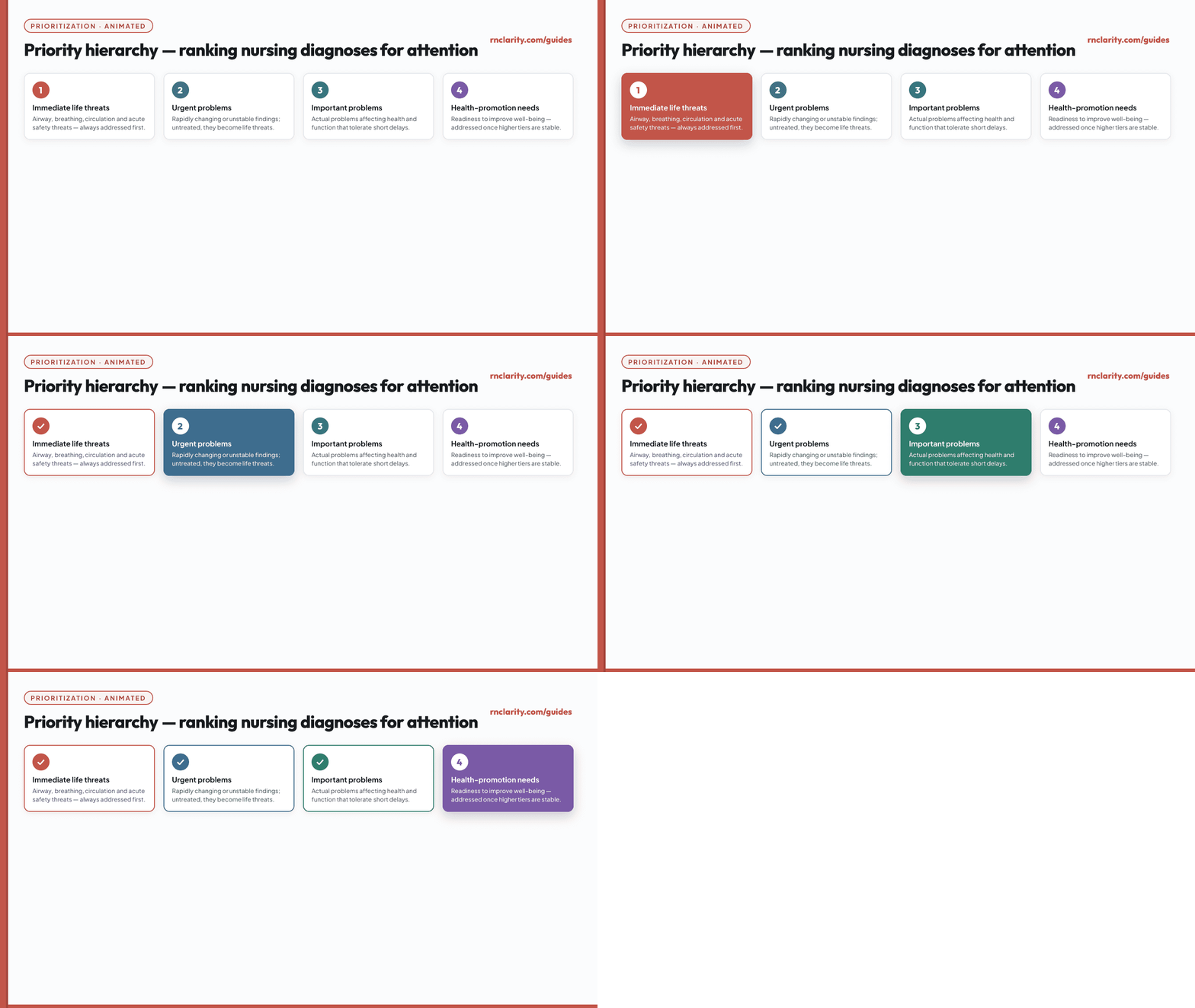
12. Prioritizing Nursing Diagnoses
A client may have three, five, or ten valid nursing problems simultaneously. The nurse cannot address them all at once. Prioritization is the process of deciding which problem requires first attention.
12.1 Prioritization frameworks
No single rule answers every situation. Safe prioritization combines several frameworks:
| Framework | How it helps | Limitation |
|---|---|---|
| ABC — Airway, Breathing, Circulation | Identifies immediate physiological threats. | Do not apply mechanically; some non-ABC threats are more urgent in a specific scenario. |
| Unstable before stable | Highlights rapidly changing, unexpected, or deteriorating findings. | A stable client may still have an unrecognized time-sensitive risk. |
| Acute before chronic | Focuses attention on new or worsening problems. | Chronic problems can become acutely unstable. |
| Actual before potential | Gives weight to current confirmed responses. | High-probability, high-severity potential events can outrank current lower-risk problems. |
| Maslow's hierarchy | Helps compare physiological, safety, love/belonging, esteem, and self-actualization needs. | Not a rigid rule; clinical acuity overrides hierarchy in emergencies. |
| Time sensitivity | Identifies problems where delay changes outcome. | Urgency should be supported by the scenario, not fear or assumption. |
| Client goals and preferences | Supports person-centred care. | Preferences are honoured within safety, legal, and ethical constraints. |
12.2 Writing a priority justification
A useful practice is to write one complete sentence justifying the first-priority diagnosis: "This problem is first because…" and completing it with specific assessment evidence.
Example:
Impaired gas exchange is the first priority because this client has a new oxygen saturation of 84% on room air, increasing respiratory rate of 30/min, and altered mental status, all of which represent an immediate threat to life.
This sentence forces the nurse to connect the priority choice to actual client data rather than to a memorized rule.
12.3 Reprioritizing
Priorities must be reassessed continuously. A client whose first priority was pain management may suddenly develop signs of respiratory compromise, requiring immediate reassignment of priorities. A care plan that is not reassessed after a significant change is unsafe.
Go deeper: For how NCLEX-RN® priority questions test this reasoning across item types, see the practice questions guide.
13. Nursing Diagnoses and the Nursing Care Plan
A nursing diagnosis does not exist in isolation — it is the second step in the nursing process and drives every subsequent step of the nursing care plan. Understanding this chain helps students and nurses keep care plans coherent and individually tailored.
The chain: Assessment findings → Cue clustering → Nursing diagnosis → Expected outcome → Nursing interventions → Rationales → Implementation → Evaluation → Reassessment
When the nursing diagnosis is accurate and specific, the expected outcome can be written in measurable terms that directly reflect the named response. When the expected outcome is measurable, evaluation is straightforward. When the interventions are selected specifically for the stated diagnosis and etiology, the rationale is defensible. The chain holds together when the diagnosis is right.
When the diagnosis is wrong — too vague, too broad, or not supported by the cues — the chain fractures. A goal that does not measure the actual problem cannot show improvement even when the client improves. Interventions that do not address the stated etiology cannot be justified by it.
Go deeper: For a full step-by-step walkthrough of writing a nursing care plan from assessment to evaluation, see the Nursing Care Plans guide.
14. Worked Example 1: Postoperative Client
Clinical situation: A 62-year-old client is 18 hours post right hip arthroplasty. Assessment reveals: pain score 7/10, guarded movement, shallow breathing with rate 22/min, oxygen saturation 94% on 2 L nasal cannula, temperature 38.1°C, last ambulation 6 hours ago, surgical drain with 80 mL serosanguineous drainage, unable to perform deep-breathing exercises correctly.
Step 1 — List and cluster cues:
Cluster A — comfort and mobility: Pain 7/10, guarded movement, shallow breathing, last ambulation 6 hours ago.
Cluster B — respiratory status: Shallow breathing, respiratory rate 22/min, oxygen saturation 94%, unable to perform deep-breathing exercises.
Cluster C — surgical status and infection risk: Temperature 38.1°C, surgical drain 80 mL, 18 hours postoperative.
Step 2 — Name each cluster:
- Cluster A: Acute pain response
- Cluster B: Impaired deep breathing contributing to inadequate gas exchange; risk for retained secretions
- Cluster C: Risk for surgical site infection; need to monitor drain output
Step 3 — Prioritize and write the priority diagnosis:
Cluster B is most urgent because the respiratory findings (oxygen saturation 94%, rate 22/min, shallow breathing) represent a current physiological compromise with risk of deterioration.
Priority nursing diagnosis: Ineffective breathing pattern related to pain-guarded respirations and inability to perform respiratory exercises, as evidenced by respiratory rate 22/min, oxygen saturation 94% on supplemental oxygen, and shallow chest excursion.
Step 4 — Check the statement:
- Problem: accurately names the respiratory pattern concern. ✓
- Etiology: pain-guarded breathing is modifiable through pain management. ✓
- Cues: respiratory rate, saturation, and shallow excursion are specific and measurable. ✓
Step 5 — Expected outcome:
Within 2 hours of pain management and respiratory coaching, the client will demonstrate at least five repetitions of deep-breathing and coughing exercises, respiratory rate will decrease to ≤18/min, and oxygen saturation will reach ≥96% on the current supplemental oxygen.
Step 6 — Additional diagnoses in priority order:
- Ineffective breathing pattern (as above)
- Acute pain related to surgical tissue trauma — to be addressed in parallel with respiratory care
- Impaired physical mobility related to postoperative pain and activity restriction
- Risk for surgical site infection related to open wound and invasive drain
- Deficient knowledge about postoperative respiratory exercises related to inability to demonstrate technique
15. Worked Example 2: Medical-Surgical Client with Heart Failure Exacerbation
Clinical situation: A 74-year-old client is admitted for worsening heart failure. Assessment reveals: dyspnea at rest, oxygen saturation 90% on room air, crackles bilateral lower lobes, respiratory rate 28/min, +2 pitting ankle edema, 3-kg weight gain in 2 days, orthopnea, urine output 200 mL in 8 hours, blood pressure 162/98 mmHg, states "I didn't know I was supposed to call the doctor — I thought the swelling was just getting older."
Cue clusters:
Cluster A — oxygenation: Dyspnea at rest, saturation 90%, crackles, respiratory rate 28, orthopnea.
Cluster B — fluid volume: 3-kg weight gain, ankle edema, reduced urine output, crackles, orthopnea.
Cluster C — knowledge and self-management: Statement about not knowing when to call, no contact despite worsening symptoms over 2 days.
Priority nursing diagnoses:
-
Impaired gas exchange related to fluid accumulation in alveoli as evidenced by oxygen saturation 90% on room air, crackles, respiratory rate 28/min, and dyspnea at rest.
-
Excess fluid volume related to compromised cardiac pump function as evidenced by 3-kg weight gain in 48 hours, bilateral ankle edema, orthopnea, and urine output 200 mL in 8 hours.
-
Deficient knowledge related to symptom recognition thresholds for heart failure exacerbation as evidenced by client's statement that she did not know weight gain and swelling required medical contact.
16. Worked Example 3: Psychiatric–Mental Health Setting
Clinical situation: A 28-year-old client is admitted voluntarily for severe depression. Assessment reveals: reported passive suicidal ideation with no current plan, PHQ-9 score 21 (severe), has not eaten in 2 days, sleep only 2–3 hours per night, withdrawn and avoids eye contact, tearful, states "there's no point in anything," supportive partner present and engaged.
Cue clusters:
Cluster A — immediate safety: Passive suicidal ideation (no current plan), PHQ-9 severe score.
Cluster B — physiological: No food intake for 2 days, 2–3 hours sleep.
Cluster C — psychosocial function: Withdrawal, avoidance, statements of hopelessness.
Cluster D — resource: Supportive partner present.
Priority nursing diagnoses:
-
Risk for self-directed violence related to severe depressive episode and passive suicidal ideation as evidenced by PHQ-9 score 21 and statement of hopelessness.
-
Imbalanced nutrition: less than body requirements related to depressive anorexia as evidenced by no food intake for 48 hours.
-
Disturbed sleep pattern related to depression as evidenced by reported 2–3 hours sleep per night.
-
Social isolation related to withdrawal from usual activities and relationships as evidenced by avoidance of eye contact and reports of isolating behavior.
Note: The presence of a supportive partner is a protective factor that should be incorporated into the interventions and outcomes.
17. Worked Example 4: Pediatric Client
Clinical situation: An 8-year-old client is admitted with status asthmaticus. Assessment reveals: respiratory rate 38/min, SpO₂ 88% on high-flow oxygen, accessory muscle use, audible wheeze, PICU transfer ordered, parent at bedside appearing extremely anxious, asking questions rapidly and interrupting nursing assessments.
Priority nursing diagnoses:
-
Impaired gas exchange related to bronchospasm and airway inflammation as evidenced by SpO₂ 88% on high-flow oxygen, respiratory rate 38/min, accessory muscle use, and audible wheeze.
-
Anxiety (caregiver) related to acute respiratory deterioration in child as evidenced by high-frequency questioning, visible agitation, and interrupting care activities.
Note: The caregiver's anxiety diagnosis does not take priority over the child's airway problem, but ignoring it completely creates a barrier to obtaining the history, providing consent for procedures, and supporting the child's recovery. A concurrent brief therapeutic intervention — brief acknowledgment, clear updates, a designated nurse to answer questions — allows both priorities to be addressed without delaying emergency care.
18. Nursing Diagnoses Across Specialty Settings
18.1 Maternity nursing
Common nursing diagnoses in the perinatal period include: risk for ineffective childbearing process, labor pain response, risk for impaired parent-infant attachment, risk for infection (postpartum), and readiness for enhanced family coping.
When writing nursing diagnoses in maternity care, the plan often encompasses both the mother and the newborn as separate clients with separate assessments, diagnoses, and goals. A diagnosis for the neonate must reflect neonatal physiology and developmental context.
18.2 Community and home care
In community nursing, diagnoses frequently address functional independence, safety in the home environment, self-management of chronic conditions, caregiver strain, social support deficits, health literacy, and access to care. The care plan must fit what can actually be carried out in the home — equipment, resources, caregiver capacity, cost.
18.3 Pediatric care
Pediatric nursing diagnoses must reflect developmental stage. Fear, separation anxiety, caregiver anxiety, developmental milestone concerns, and family-centred care outcomes are frequently relevant. Medication calculations, fluid management, and communication approaches differ by weight and age.
18.4 Critical care
In ICU settings, nursing diagnoses commonly address impaired gas exchange, decreased cardiac output, risk for aspiration, impaired skin integrity, risk for infection (lines and devices), altered consciousness, and caregiver strain. Outcomes are often measured in hours rather than days, and the plan changes rapidly.
Go deeper: For how prioritization works in NCLEX-RN® scenarios involving multiple competing diagnoses, see the practice questions guide.
19. Nursing Diagnoses and Clinical Judgment: The CJMM Connection
The NCSBN Clinical Judgment Measurement Model describes how nurses think, not just what they do. Every step of the CJMM can be mapped directly onto the nursing diagnosis process.
| CJMM step | Nursing diagnosis application |
|---|---|
| Recognize cues | Identify which assessment findings are relevant to a potential nursing problem. |
| Analyze cues | Cluster cues, determine what pattern they form, and identify candidate diagnoses. |
| Prioritize hypotheses | Rank competing diagnoses by urgency, likelihood, and consequence of delay. |
| Generate solutions | Write expected outcomes and select interventions based on the priority diagnosis. |
| Take action | Implement the interventions, document care, and communicate the plan. |
| Evaluate outcomes | Compare the client's actual response with the expected outcome; revise the diagnosis if needed. |
The NCLEX-RN® NGN case studies explicitly test all six steps. A student who understands the nursing diagnosis process will recognize that the "analyze cues" item in a case study is asking them to perform the same clinical judgment they use when selecting a nursing diagnosis.
Go deeper: For full case study walkthroughs applying all six CJMM steps in NGN format, see the NGN case studies guide.
20. Nursing Diagnoses in School Assignments
Writing nursing diagnoses for school assignments follows the same clinical reasoning as in practice, but the format must follow the instructor's rubric exactly. Before writing a single diagnosis, read the rubric to identify:
- Which taxonomy edition and exact label wording are required.
- How many diagnoses are expected and in what order.
- Whether a PES format, two-part format, or other structure is required.
- Whether collaborative problems should be included.
- What citation style is required for rationales.
- How diagnoses should be documented (table, care-plan template, narrative).
A reliable assignment workflow:
- Read the rubric before reviewing the case.
- Complete a systematic assessment and list all significant findings.
- Separate subjective and objective data; note baseline versus new findings.
- Cluster related cues into patterns.
- Name the pattern using the required taxonomy — verify exact label wording.
- Prioritize diagnoses and write a justification sentence for each priority decision.
- Write expected outcomes in measurable terms directly tied to the diagnosis.
- Select interventions that address both the problem and the etiology.
- Write rationales from peer-reviewed, textbook, or official sources; cite correctly.
- Review alignment: every cue → diagnosis → outcome → intervention → rationale.
- Check for scope violations, stigmatizing language, and unsupported assumptions.
- Proofread the entire plan before submission.
Alignment check before submission: Draw a line from each cue to the diagnosis it supports, then from the diagnosis to its outcome, then from each intervention to the diagnosis or etiology it addresses. If any line breaks, revise before submitting.
Go deeper: For strategies to connect school assignments to NCLEX-RN® clinical judgment item practice, see the active learning guide.
21. Evaluating and Revising Nursing Diagnoses
A nursing diagnosis is a judgment, not a permanent label. It must be evaluated and revised as the client's condition changes, new data arrive, or the original diagnosis proves inaccurate.
Evaluation asks two questions:
- Was the diagnosis accurate?
- Has the client's response to the diagnosis changed?
A diagnosis should be revised when:
- New assessment data do not support the original diagnosis.
- The problem has resolved — it should be closed or marked "resolved."
- The problem has changed in severity, acuity, or contributing factors.
- A new problem has emerged that requires a new or reprioritized diagnosis.
- The original diagnosis was an accurate risk that has now become an actual problem.
Documentation of evaluation: Most clinical documentation systems require the nurse to note whether an outcome was met, partially met, or not met — and to update the plan accordingly. Documenting "outcome met" without revising the plan when a new problem has emerged is a documentation and safety error.
Do not carry forward outdated diagnoses: A care plan from admission that is unchanged on day four despite significant clinical changes is not a valid nursing care plan — it is a record of what the nurse failed to update.
22. Twenty-Five Practice Questions and Answers
Activity 1: Identify the diagnosis type
Scenario: A client with a new colostomy repeatedly turns away when the nurse approaches to change the appliance, states "I cannot stand to look at it," and refuses to learn self-care.
Which diagnosis type fits best: problem-focused, risk, or health-promotion?
Answer: Problem-focused. The response is currently present: the client is demonstrating avoidance and distress, not merely at risk for it.
Activity 2: Choose the stronger etiology
Scenario: A client with type 2 diabetes has inconsistent blood-glucose monitoring. Assessment reveals the client cannot afford testing supplies, has limited health literacy, and recently moved away from a supportive family network.
Which etiology is stronger: "related to diabetes" or "related to limited access to supplies and inadequate support network"?
Answer: The second option. It identifies modifiable contributing factors that interventions can address (cost assistance, social support coordination, simplified education).
Activity 3: Identify the error
Scenario: The nurse writes: "Risk for falls related to frequent falls in the past week as evidenced by two falls recorded in the chart."
What is the error?
Answer: Two errors. First, if the client has already fallen twice this week, an actual problem-focused diagnosis ("injury response" or relevant actual diagnosis) may be more appropriate, not just a risk. Second, falls that have already occurred are not "evidence" for a risk diagnosis — they may be cues for an actual diagnosis. Clarify whether the client is currently injured and update the diagnosis accordingly.
Activity 4: Prioritize the diagnoses
Scenario: A postoperative client has the following nursing diagnoses:
- Risk for thromboembolism related to immobility
- Acute pain related to surgical incision
- Deficient knowledge about wound care
- Ineffective breathing pattern related to pain and splinting
Which should receive first attention? Why?
Answer: Diagnosis 4 — ineffective breathing pattern. Impaired ventilation creates immediate risk for respiratory complications including hypoxia and atelectasis, which are time-sensitive physiological threats. Pain management (diagnosis 2) should be addressed in parallel because it is also contributing to the breathing problem. The thromboembolism risk and knowledge deficit are important but less immediately acute.
Activity 5: Write a PES statement
Scenario: A client admitted for a urinary tract infection is an 82-year-old living alone. Assessment: confused (baseline is alert), temperature 38.8°C, urine output 180 mL over 8 hours, dry mucous membranes, reports not drinking fluids "because it hurts to urinate."
Write one priority nursing diagnosis in PES format.
Answer (one acceptable version):
Deficient fluid volume related to inadequate oral intake secondary to painful urination as evidenced by urine output 180 mL in 8 hours, dry mucous membranes, and temperature 38.8°C.
Activity 6: Write a risk diagnosis
Scenario: A 45-year-old client undergoes laparoscopic cholecystectomy and is discharged home the same day. Assessment at discharge: ambulates independently, pain 3/10 at rest, lives alone, has not used opioid analgesics before, prescribed oxycodone 5 mg every 4 hours as needed.
Write one appropriate risk diagnosis.
Answer (one acceptable version):
Risk for acute pain unrelief related to first-time opioid use, living alone, and no instruction in non-pharmacological comfort strategies.
Activity 7: Identify the stronger cues
Scenario: A nurse is writing a nursing diagnosis of Impaired skin integrity.
Which group of cues is stronger: (A) "skin appears dry" or (B) "stage 2 pressure injury 2 × 3 cm on sacrum with serosanguineous exudate, skin warm and intact around wound edges"?
Answer: Option B. Specific, observable, measurable cues provide a clear baseline for evaluation and confirm the diagnosis much more precisely than a generic descriptor.
Activity 8: Evaluate the outcome
Scenario: The nurse wrote this outcome: "By end of shift, client's pain will decrease."
What is wrong with this outcome as written?
Answer: It lacks measurable specificity. "Decrease" is not a defined threshold, making evaluation subjective. A stronger version: "By 20:00, client will report pain ≤3/10 at rest and ≤5/10 with movement after analgesic administration."
Activity 9: Select the priority diagnosis
Scenario: A client with acute pancreatitis has four nursing diagnoses: acute pain, imbalanced nutrition, risk for infection, deficient fluid volume with current findings of BP 88/52 mmHg, HR 118, and urine output 25 mL/hour.
Which diagnosis is first priority?
Answer: Deficient fluid volume. The hemodynamic findings indicate significant hypoperfusion with immediate risk for shock-related organ injury. This is a current, life-threatening physiological crisis that outranks the other valid diagnoses.
Activity 10: Distinguish diagnosis types
Match each situation to the correct diagnosis type:
a. A client with a new chronic obstructive pulmonary disease diagnosis says: "I really want to quit smoking. My grandson just started school and I want to be there for him." b. A client in the ICU has a pulmonary artery catheter inserted. No signs of infection yet. c. A client with a hip fracture reports pain 8/10 and is unable to bear weight. d. A post-stroke client has a wet voice after drinking water.
Answers: a. Health-promotion — readiness and motivation expressed. b. Risk — potential for infection without current signs. c. Problem-focused — the response (pain, impaired mobility) is currently present. d. Risk — the wet voice is a cue for risk of aspiration; swallowing impairment without confirmed aspiration event suggests a risk diagnosis.
Activities 11–25
Activity 11: A client states: "I always feel watched and people are listening to my conversations." There is no evidence of an actual safety threat. What diagnosis category applies?
Answer: Problem-focused — disturbed thought process is a current response, not merely a risk.
Activity 12: A nurse writes "Ineffective coping related to cancer diagnosis." What key piece is missing?
Answer: The "as evidenced by" cues — what specific behaviors, statements, or findings support the diagnosis? Examples: frequent crying, inability to make care decisions, reports of feeling overwhelmed.
Activity 13: A client with a stroke has one-sided weakness, needs assistance with all ADLs, and is frustrated with loss of independence. List two appropriate problem-focused diagnoses.
Answer (acceptable versions): (1) Impaired physical mobility related to neuromuscular impairment as evidenced by one-sided weakness and inability to complete transfers without assistance. (2) Situational low self-esteem related to sudden dependence for ADLs as evidenced by client's expressed frustration and statements about loss of independence.
Activity 14: When is it appropriate to change a risk diagnosis to a problem-focused diagnosis?
Answer: When assessment reveals that the problem is now actually present — that is, when defining cues (signs and symptoms of the problem itself) appear. The plan should be updated immediately.
Activity 15: A nurse uses the same three nursing diagnoses for every client on the unit without changing the etiology or cues. What is wrong with this approach?
Answer: The diagnoses are not individualized. A care plan that is not tailored to the specific client's assessment findings does not meet professional standards and may guide inappropriate or incomplete care.
Activity 16: A client's nursing diagnosis from admission was "acute pain related to surgical incision." On day three, the incision is healing well, pain is 1/10, and the client is ambulating independently. What should the nurse do?
Answer: Evaluate the diagnosis as "resolved" and document that the outcome was met. If a new priority has emerged (e.g., self-management readiness for discharge), write a new diagnosis.
Activity 17: Is "noncompliance" an appropriate nursing diagnosis label?
Answer: Most current taxonomies do not include "noncompliance" as a standard label because it implies blame and does not identify a modifiable nursing problem. It should be replaced with labels such as "ineffective health management," "insufficient knowledge," or other appropriate diagnoses supported by the assessment.
Activity 18: A client who has experienced a myocardial infarction asks the nurse to explain when to take nitroglycerin and when to call 911. Which diagnosis type is most appropriate?
Answer: Health-promotion or deficient knowledge. The client is demonstrating motivated readiness to learn — this is a teaching opportunity and an appropriate health-promotion or knowledge-deficit diagnosis.
Activity 19: A nurse identifies five nursing diagnoses but documents them without any priority order. What risk does this create?
Answer: Other team members may address lower-priority issues first, leaving the most urgent problem unaddressed for longer than is safe. Priority documentation is a safety and communication responsibility.
Activity 20: Write an expected outcome for: "Risk for impaired skin integrity related to moisture, pressure, and impaired mobility."
Answer (acceptable version): During hospitalization, the client's skin will remain intact with no new redness, breakdown, or moisture-related lesions, confirmed at each position-change assessment.
Activity 21: A client receiving tube feeding through a nasogastric tube has an elevated residual volume. Which risk diagnosis is most appropriate?
Answer (acceptable version): Risk for aspiration related to tube feeding and impaired airway protective reflexes.
Activity 22: A nurse writes: "Anxiety related to surgery as evidenced by surgery scheduled for tomorrow." What is wrong?
Answer: The cue — "surgery scheduled tomorrow" — is an event, not an assessment finding that shows the anxiety response in this client. The cues should reflect the client's observable anxiety: diaphoresis, restlessness, reports of fear, elevated heart rate, inability to concentrate, or similar findings.
Activity 23: A client with chronic kidney disease and a new diabetic foot ulcer is admitted. The nurse identifies six nursing diagnoses. Which framework should guide prioritization?
Answer: Begin with physiological safety: assess for infection signs, hemodynamic stability, pain, and oxygenation. Apply Maslow's hierarchy and the actual-before-potential framework. Prioritize the most urgent physiological problem, then wound care, then chronic disease self-management, then education and discharge readiness.
Activity 24: What is the difference between a nursing diagnosis and a nursing goal?
Answer: A nursing diagnosis names the current or potential human response. A nursing goal (expected outcome) describes the measurable change the client should show if nursing care succeeds. The goal measures improvement in the diagnosed problem.
Activity 25: A nursing student writes: "Impaired gas exchange related to respiratory rate 24/min as evidenced by low oxygen saturation." What is the structural error?
Answer: The etiology should name a contributing factor (e.g., pneumonia-related alveolar consolidation, excessive secretions, bronchospasm) — not an assessment finding. A sign or symptom (respiratory rate 24/min) belongs in the "as evidenced by" cues, not in the "related to" position.
23. Four-Week Mastery Plan
Week 1: Build the foundation
- Study nursing diagnosis types: problem-focused, risk, health-promotion, and syndrome.
- Practice distinguishing medical diagnoses, nursing diagnoses, and collaborative problems.
- Review the PES format and write five original PES statements from case scenarios.
- Study the NANDA-I taxonomy structure (do not memorize all labels — understand how to navigate the reference).
Week 2: Develop cue-clustering skills
- Practice clustering cues: take 10 NCLEX®-style scenarios and cluster the data before attempting any question.
- Work on choosing etiologies: for each scenario, identify the most modifiable related factor.
- Practice writing risk diagnoses and distinguishing them from problem-focused diagnoses.
- Connect each diagnosis to expected outcomes: write SMART outcomes for each diagnosis you write.
Week 3: Practice prioritization
- Take 20 multi-diagnosis scenarios and rank the diagnoses with written justification.
- Focus on the common NCLEX® traps: potential threats that outrank current problems, and teaching/documentation questions that appear urgent but are not.
- Connect prioritization to the CJMM: identify the "prioritize hypotheses" step in every item.
- Complete Activities 1–25 above and review any missed items.
Week 4: Integration and exam preparation
- Complete full case studies that require all six CJMM steps.
- Review common nursing-diagnosis errors and verify your statements against the quality checklist.
- Practice evaluating and revising diagnoses as new case data appear.
- Take timed NCLEX®-style practice questions focused on clinical judgment and analysis items.
24. Frequently Asked Questions
What is the difference between a nursing diagnosis and a medical diagnosis?
A medical diagnosis names a disease or pathological condition and is made by an authorized provider. A nursing diagnosis names a human response — a physiological, functional, psychosocial, safety, or learning need — that the nurse can assess and address. The nurse uses the medical diagnosis as context but does not replace it with a nursing diagnosis, and does not treat medical diagnoses with nursing care plans.
Can two clients with the same medical diagnosis have different nursing diagnoses?
Yes — and they often should. Two clients with pneumonia may have different nursing priorities based on their assessment. One may be most urgently in need of care for oxygenation. Another, who is younger and more physiologically stable, may have a primary need for pain management, self-care guidance, or activity management. The nursing diagnosis reflects the individual client's responses, not the disease category.
Do nursing diagnoses have to come from NANDA-I?
Most North American nursing programs use NANDA-I as the required taxonomy. Some international programs use other taxonomies, such as ICNP or Omaha. Workplace documentation systems may use modified language. Whatever taxonomy is required, the underlying reasoning process — assessment, clustering, hypothesis selection, prioritization — is the same.
Can a nurse write too many nursing diagnoses?
Yes. A care plan that lists fifteen nursing diagnoses without prioritizing them is not more complete — it is harder to act on and may obscure what is most urgent. A focused, accurate, prioritized set of three to five diagnoses is usually more clinically useful than an exhaustive list. The number should reflect what nursing can realistically address in the care setting and timeframe.
What does "as evidenced by" mean, and when should it be used?
"As evidenced by" introduces the defining cues — the specific client signs and symptoms that confirm the diagnosis. It is used in problem-focused diagnoses where the problem is currently present. It is not used in risk diagnoses (the problem is not present) or in health-promotion diagnoses (the evidence is motivational, and some programs prefer different wording for these).
What if the assessment does not support any nursing diagnosis?
It is possible to complete an assessment of a healthy, well client who has no current or risk nursing diagnoses requiring a care plan. In that case, the assessment should still be documented accurately, and health-promotion diagnoses may be appropriate if the client expresses interest in improving well-being. In practice, most clients receiving nursing care have at least some nursing needs.
Can a nursing diagnosis change during a hospital stay?
Yes — it should, as the client's condition changes. A nursing diagnosis written at admission may resolve, worsen, or be replaced by a more urgent new priority within hours. The care plan is a living document that must be updated to reflect the current clinical picture. A plan that is never updated despite significant changes is a safety and documentation concern.
Is it acceptable to use a nursing diagnosis without the "related to" part?
Some programs accept single-label diagnoses without the related factor for health-promotion diagnoses or in certain documentation systems. For learning purposes, the related factor is essential because it determines the interventions. Without it, the plan has no etiology to address. Check the program's required format.
How does a risk diagnosis differ from a collaborative problem?
A risk nursing diagnosis identifies a potential human response that nursing can prevent or reduce through independent nursing action. A collaborative problem identifies a potential medical complication that requires shared medical and nursing management — the nurse monitors and escalates, but treatment also requires a physician order. Risk for falls is a nursing diagnosis; potential for postoperative pulmonary embolism managed through ordered anticoagulation is a collaborative problem.
What should the nurse do when two or more diagnoses seem equally urgent?
When two diagnoses are equally urgent, nursing resources permitting, both should be addressed simultaneously. When a single priority decision is required, consider: which problem has the more immediate time-sensitive consequence, which intervention prevents the greater harm, and which is most directly supported by the current assessment data. Document the reasoning.
How specific should the etiology be?
The etiology should be specific enough to guide the interventions. "Related to physiological factors" is too vague — it provides no direction. "Related to pain-limited deep breathing" is specific enough to direct pain management and respiratory coaching. The right level of specificity is the level that a nurse who did not assess the client could understand and act on.
Can the nurse modify a NANDA-I diagnosis label?
No. The label itself must be used exactly as published in the authorized edition. The related factor and defining cues are individualized by the nurse, but the label wording cannot be changed without making it a non-standard term that may not be recognized by colleagues or documentation systems.
How do nursing diagnoses relate to clinical practice guidelines and evidence-based care bundles?
Clinical practice guidelines and care bundles specify what should be done for a particular condition. Nursing diagnoses describe why — what human response exists that requires the action. For example, a ventilator-associated pneumonia prevention bundle specifies positioning, oral care, and circuit management. The nursing diagnoses that support these actions might include: risk for aspiration, impaired oral mucous membranes, and risk for infection. The diagnoses make the clinical reasoning visible and keep it linked to assessment.
What is the most common mistake nursing students make with nursing diagnoses?
The most frequently observed errors are: using the medical diagnosis as the nursing etiology, listing a symptom as the etiology instead of a contributing factor, writing vague or unmeasurable outcomes that do not reflect the diagnosis, and failing to individualize the cues to the specific client's assessment data. All of these errors break the chain of reasoning that connects assessment to evaluation.
25. Summary and Official References
Nursing diagnoses are the clinical judgments that connect assessment data to everything that follows in the nursing process. They are not a bureaucratic requirement — they are the reasoning that makes nursing care purposeful, individualized, and evaluable.
The key principles this guide covers:
- A nursing diagnosis names a human response, risk, or readiness — not a medical condition.
- The PES format links the problem to its etiology and to specific client cues.
- Risk diagnoses name vulnerabilities; they are supported by risk factors, not by the signs and symptoms of the problem itself.
- Cue clustering is how the nurse moves from scattered data to a supportable pattern.
- Prioritization requires clinical reasoning, not mechanical rule-following.
- Every nursing diagnosis should link directly to measurable outcomes, specific interventions, and documented evaluation.
- Nursing diagnoses must be revised whenever the client's condition changes.
Official and public references used in developing this guide:
- NANDA International (NANDA-I). Nursing Diagnoses: Definitions and Classification, 2024–2026, 13th Edition. Thieme Medical Publishers.
- National Council of State Boards of Nursing (NCSBN). 2026 NCLEX-RN® Test Plan. ncsbn.org. Effective April 1, 2026.
- NCSBN. NCSBN Clinical Judgment Measurement Model (CJMM). ncsbn.org.
- American Nurses Association (ANA). Nursing: Scope and Standards of Practice, 4th Edition. nursesbooks.org.
- Herdman, T. H., Kamitsuru, S., & Lopes, C. T. (Eds.). (2024). NANDA-I Nursing Diagnoses: Definitions and Classification 2024–2026. Thieme.
RN Clarity is not affiliated with or endorsed by NANDA International, the National Council of State Boards of Nursing, Inc., or the American Nurses Association.